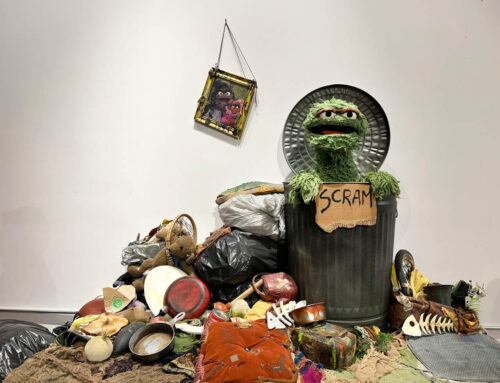


We asked educators using AI to share their experiences and predictions about artificial intelligence in the classroom.
By Gia Miller
Photography by Justin Negard
It’s been nearly four years since ChatGPT burst onto the scene, and today, large language models (LLMs) like ChatGPT, Gemini and Claude are more present in students’ lives than ever before. At least 60 percent are using them for homework, including to better understand a concept, brainstorm ideas, research facts and get writing assistance. Yet ask an educator about AI, and many will express dread, fear, ignorance, skepticism or overwhelm. Very few will share feelings of curiosity, hope or even excitement. That might be because, according to Project Tomorrow’s 2025 Speak Up Report, only 13 percent of teachers nationwide say they are very confident using AI tools.
This disconnect between the number of students using AI for schoolwork and the number of teachers who are comfortable using AI is startling. So to combat AI use and force independent thinking, some teachers are going in the opposite direction, a move The New York Times detailed in its April 30 article titled “How AI Killed Student Writing (and Revived It).” One of the teachers featured, local resident and John Jay High School English teacher Jessica Binney, is part of a nationwide trend to lock down technology. Binney has replaced her three-to-five-page at-home writing assignments with in-class essays written by hand or on a laptop with a locked-down browser. While Binney told The Times she mourns the loss of depth once required in student essays, her new approach guarantees that her students are producing their own work.
While, as a professional journalist, I agree that writing requires independent thinking and the writer’s own words, and I applaud teachers who help students develop those skills, I’ve spent the past few years wondering what it would look like if our local high schools embraced AI. What if they taught students how to use it to enhance their education, including their writing? What would that look like, and would it actually work?
To find out, we hosted five seasoned educators/administrators, who have embraced AI, for dinner at the Bedford Post Inn Tavern. The goal was to learn what AI actually looks like when woven into an educational setting. They shared their insights, fears and innovative strategies for navigating the AI frontier in and out of their classrooms. What we learned was that AI is transforming classrooms in a way previous technologies never could.
Removing the stigma and fear
In March, Common Sense Media released a report that found that 68 percent of kids and teens, along with 52 percent of parents, believe schools have a responsibility to teach students how to use AI responsibly. But, as previously mentioned, only 13 percent of U.S. teachers say they are very confident using AI tools. One possible reason for this disparity is because although states appear to recognize the importance of AI-related teacher training, there are currently no state-level standards for programs or funding, so it’s left up to school districts and individual schools to create and fund AI training. However, according to Stanford University’s 2026 AI Index Report, only 15 percent of teachers nationwide believe their school or district provides them with enough professional development to use AI well in the classroom.
Perhaps part of the reason schools aren’t empowering teachers to use AI is because, according to Daniel Block, the English department chair and digital wellness coordinator at King School in Stamford, discussions surrounding AI in schools often focus solely on students’ inappropriate use of AI. While all educators, including Block, believe concerns about academic integrity are a critical part of the discussion, Block says teachers and school administrators often get stuck on the topic. “There’s more to the conversation than academic integrity, but academic integrity takes up most of the oxygen in the room,” he notes. “If student use of AI is like an American football game, and teachers are always playing red zone defense, then we’re never talking about what productive things students could do. For example, how can AI help support a student when they are struggling with a math practice problem at home and want another explanation?” Block believes schools need to learn about how the various AI platforms work, the ethics, their impact, the environmental costs and more. “Schools need to clearly communicate to students when (if ever) the light turns from red, which signifies no AI use whatsoever, to yellow, which is a targeted use for a specific purpose.”
But, as Jeannine DiBart, co-owner of Katonah Playcare Early Learning Center, points out, some of this stuckness also stems from how teachers and administrators feel about AI. “We need to tackle those emotions that come with using AI—the guilty feeling that you’re doing something wrong,” she says. “I think a lot of people wonder if using AI means they are cheating, and that’s a huge part of it.”
To get past this, Jamiylah Jones, Ed.D., an educator, edupreneur and founder/owner of Creative Transformations in White Plains, believes schools should begin by helping teachers understand acceptable uses. “If administrators want their teachers to use AI, they should clarify what they want them to use it for,” she explains. “Is it the lesson plan? Is it about meeting the needs of their population?” Jones says schools could encourage teachers to use AI for everything from a translation tool for students who are learning English to differentiating a lesson plan for a student with a 504 Plan or an Individualized Education Program (IEP).
At John F. Kennedy Catholic Preparatory School in Somers, Father Mark Vaillancourt, the school’s president and a Latin teacher, regularly invites AI experts to show teachers how to implement AI in a safe and effective manner. The school utilizes a program called Nectir, a controlled AI domain that allows teachers to upload specific information and parameters for their students. “My goal is to raise the overall perception and attitude that teachers have toward AI,” he explains. “We want them to be open to it and know how to use it. We train by department because each department has a different application based on what they’re doing.”
Even in preschool, where screens are not allowed, AI has become a practical platform for administrative tasks. DiBart Gail Porter, and her co-owner, say they and their teachers use ChatGPT primarily for parent communication, especially when they need to write something “tricky.” “We’ll ask if we’re hitting the tone we want,” DiBart explains. “And we’ll also ask it if we’re saying exactly what we want to express.” In the past, the directors and teachers would spend hours drafting and redrafting these sensitive messages, but now AI saves them countless hours.
Bringing AI into the classroom
There’s definitely a learning curve to implementing AI into a syllabus. Once teachers are comfortable with the basics, they need to “student-proof” their lessons. The easiest way for teachers to prevent students from using AI is, ironically, to use AI. On Jones’ YouTube channel, her video “Make any assignment AI-proof in 15 minutes” walks viewers through the process. First, she instructs teachers to copy and paste their assignment into an LLM and write the following: Review this assignment and identify every part a student could complete entirely with AI in under two minutes. “What comes back,” she explains in the video, “is your vulnerability map. It shows you exactly where the cognitive work is disappearing.” Next, she suggests teachers ask AI to rewrite the assignment, requiring students to “demonstrate their reasoning and make at least one meaningful choice and justify it.” Her video goes on to advise how teachers can complete the lesson, all with AI’s help.
For schools that use controlled domains like Kennedy Catholic and King School (King uses one called MagicSchool), teachers have the ability to create in-class assignments where students can use AI. But this requires advanced planning. Teachers must set lesson parameters, instructing the AI chatbot on what it can and cannot do. For example, when Block’s students read Descartes’ “Meditations,” a notoriously dense and technical philosophical text, he instructed the school’s AI chatbot to respond to students in the voice of Descartes. “I programmed it to not give students the answers but to act as Descartes and explain his philosophy to an interested high school junior in Descartes’ voice,” Block explains. “If students get stuck on a concept or a piece of language that’s unfamiliar to them, I instruct the AI to translate it into a more modern language. It becomes an access point. But letting students lead the inquiry requires me to lay the groundwork first so I can guide their learning.”
The next step to incorporating AI into the classroom is substantial: allowing AI to help students with their homework. Vaillancourt says that when his AP Latin students use the school’s designated AI properly, they come to class better prepared. “If I’m doing Virgil’s ‘Aeneid,’ and I give them a couple of lines, they can type it into AI, and it’ll translate for them,” he explains. “It’ll tell them the subject, the object, the prepositional phrase and the subordinate clause. It’ll tell them how it’s used and even a little bit about the author, which enhances the learning experience.”
AI can also allow teachers’ creativity to shine. For example, Block says one teacher at King School asks students to use AI image generators to create pictures of complex scientific concepts. To do this task well, students must fully understand the concepts and describe them in their own words; if they can’t, the AI won’t create an accurate image. As they adjust the inaccurate image, students fine-tune their grasp of the material.

We held our discussion at The Bedford Post Tavern.
Teaching students the “right way” to use AI
Before students can talk to Descartes, understand the original Latin version of the “Aeneid” or create images of complex scientific concepts, they must learn how to use AI properly. Block talks to his students about what he calls the AI sandwich. “It’s human first, human last,” he explains. “My seniors develop a persuasive essay project where they define a debate question, research sources, take a position on that question and write an annotated bibliography where they’re evaluating those sources. Next, I have them ask the AI chatbot to find the flaws, notable counterarguments and objections about what they plan to argue.” Once they explore potential counterarguments from their conversation with the AI chatbot, Block requires his students to reexamine the sources they’ve chosen, their initial approach and possibly conduct additional research. “That pushes them back into their writing, and that’s really empowering for them,” he adds.
But this is where things can quickly go wrong. As a journalist who happily swapped Google Scholar for Perplexity (which annotates every fact it provides) several years ago, I’m highly aware of the errors AI can make. Journalists are trained to fact-check everything—every person we interview, every piece of research or article we read and reference, everything. When it comes to AI, our default is to find the original sources and confirm AI’s statement with the research. Even when using Perplexity, I’ve found errors (yet far fewer than other LLMs). And what I’ve learned from teaching our editorial team acceptable fact-checking protocols is that fact checking is a skill that must be taught; it doesn’t come naturally to students or adults. This skill is a necessity when using AI and, in my opinion, is the very first thing that every student using AI should learn.
Block says he teaches his students the “SIFT” method, which stands for Stop, Investigate, Find and Trace. With SIFT, students are taught to stop and investigate the source, then find better coverage and trace claims/quotes/media back to their original context. Without lessons like these, even a highly intelligent rule follower might not realize that AI’s “answer” is one of many potential responses and far from definitive. Plus, while some schools use controlled domains, students won’t always use, or have access to, these safe platforms.
When should AI literacy begin?
Opinions on the right age to begin discussing AI vary. Vaillancourt says Kennedy Catholic doesn’t allow students younger than ninth grade to use AI because he believes younger students need solid fundamentals, and they want to “guarantee that it’s used responsibly.”
However, the other experts argued that AI education begins long before a child ever logs onto a computer—as early as preschool. DiBart points out that even if schools ban AI, children are already interacting with it in their living rooms. “When they’re at home, I assume they’re asking Alexa questions, like, ‘Why is the grass green?’ So you’ve got to start at home. Parents need to give their kids a basic understanding of what they can and cannot do and how to use it. That’s a very preschool thing to say, but you have to start off on the right foot at home.”
Porter adds that young children are also learning from AI. She recently witnessed her grandson speak to Alexa in a “not very nice way.” So Alexa responded with, “That’s not an appropriate way to talk.” Porter says she “was floored” and wasn’t aware Alexa could do that. But, she says, her grandson took Alexa’s advice and began speaking more kindly.
DiBart also points out that preschoolers are learning foundational skills, including how to ask a question, knowing where to source information and understanding how to take turns, which she believes are the building blocks of future AI literacy. Their “Star of the Week” presentations are a key example. Students practice asking the “Star” questions, learning that human teachers and peers are the primary sources of information. This, DiBart believes, sets them up to navigate a complex, tech-heavy world later on.
Jones says she builds foundational technology literacy with elementary students without asking them to use AI. For example, with first graders, Jones will place items like a laptop, a cell phone, a candle and a pencil on a table. She then asks the students to define what makes an item “smart” versus “not smart.” The children sort the items, realizing that “smart” objects listen, respond and perform actions.
Supporting children with varying needs
The educators we spoke with are finding unique ways to use AI to support students with special needs and behavioral challenges.
In the preschool setting, where children are just beginning to learn how to regulate themselves, DiBart says she and her staff use AI to create social stories. When a child struggles with a morning routine, for example, DiBart can input the parameters into an LLM and generate what’s called a social story that helps walk the child through the regular activities, giving parents a tangible tool to hold and read with their child.
Jones adds to this concept, saying she encourages teachers to be proactive and use AI to generate scripts for how to respond to specific behavioral outbursts. “Have a plan instead of trying to live through it in the moment,” she recommends. AI, she explains, can provide new strategies and explanations that can help teachers take a different approach. “My goal is to show the world of education how we can leverage AI properly for good and to help schools better meet the needs of all students and staff,” she says.
It’s a concept that DiBart says they hope to implement at their preschool. “A teacher will come into the office and say, ‘Something is off with a student,’” she explains. “They’ll say, ‘I don’t know what’s wrong, but we need to figure it out because they need help.’” They know AI cannot and should not diagnose students, but they want to explore whether it could help them better understand the students’ behavior and provide useful suggestions.
While AI can offer incredible support in these areas, Block cautions against relying on it entirely. “There’s a balancing act,” he says. “It’s one tool among many. AI should not substitute the expertise of the school’s counselors and learning specialists with whom teachers can have an extended back-and-forth to understand the context.”
What the future looks like
While these educators are the AI trailblazers, they are not without their fears. When looking toward the future, their primary concern was a potential loss of rigor. “Problem-solving gives students a depth of understanding,” Vaillancourt explains. “If you take that away, I feel like your knowledge becomes more superficial.” DiBart and Porter agree. “I always tell parents,” says Porter, “when you experience something, rather than somebody just telling you the answer, it becomes part of you.”
Jones, however, has a broader existential fear that education as a whole is turning into something unrecognizable. “They’re saying college is not going to be relevant anymore,” she points out. “What are we going to do? We’ve created something, and we don’t really have the answers for what happens as a result of it. I’m fearful of the fact that we created it; we unleashed it; it’s doing certain things like disrupting our ecosystem; and we don’t know what it’s going to look like on the other side.”
Block is concerned about the same concept, but from a slightly different angle. He’s worried about how we will evaluate and pursue an education. And he believes there’s one key question everyone should ask: How can we teach kids how to work well with machines? “This challenges some of the foundational paradigms of education today: among them, the tendency to value product over process, the assumption that a work product accurately reflects a student’s thinking, capabilities and the prioritization of individual autonomy over group work.” He believes that how a teacher teaches hasn’t changed much over the centuries. “It’s, ‘Here is how I do it; here is how my teacher did it, all the way back to John Dewey,’” he says. “So I am worried that the rigidity of our educational paradigms will become a stumbling block.”
But our experts also recognize the positive. Jones, for example, envisions a future where the model of K-12 education might actually mirror preschool—a system of active learning. She imagines high school students utilizing virtual reality headsets to act as tour guides in ancient Egypt or stepping into virtual hazmat suits in a simulated science lab.
Vaillancourt likens it to Spock’s education in “Star Trek.” “He would just touch things, and then it would quiz him,” he remembers. “He enhanced his own learning one-on-one with the machine. I believe that will be developed. There will be an element where a student enhances their own knowledge of a particular subject by interacting with the machine.” But, he points out, school is about more than just knowledge. “It’s also about what kind of person you’re going to be,” he says. “And how are you going to grow and mature? Who are you meant to be? Schools can even give them purpose. AI can’t do that.”
As the conversation drew to a close, the experts emphasized what they believe is the single most critical component of education: the human element. “These large language models weren’t designed for children,” says Block. “They were designed to process massive amounts of data, find patterns and predict the next token in a sequence. It’s a huge leap to put them in front of young children and say, ‘See what you can do.’ It takes a great deal of judgment, discernment and discretion as adults to provide them with targeted, specific, prosocial learning activities that will help them.”
Porter likens it to reading to a young child, explaining that a computer cannot replace what a teacher does when they read a story to their class. “A teacher who is connecting with every child in that room is totally different,” she says.
“I tell my teachers, ‘You’re forever written on the soul of your students,’” Vaillancourt says. “For better or worse, they’ll always remember you.” These educators made one thing abundantly clear: Whether AI is poking holes in a student’s research or taking them on a journey to an ancient land, it is a powerful new tool in the educational toolbox, but the heart of learning will always remain fiercely human.
This article was edited by Isabella Aranda Garcia and fact-checked by Virna Sandler. Photography was captured with Panasonic Lumix optics and edited in Adobe Creative Suite.
This article was published in the September/October 2026 edition of Connect to Northern Westchester.

Gia Miller is an award-winning journalist and the editor-in-chief/co-publisher of Connect to Northern Westchester. She has a magazine journalism degree (yes, that's a real thing) from the University of Georgia and has written for countless national publications, ranging from SELF to The Washington Post. Gia desperately wishes schools still taught grammar. Also, she wants everyone to know they can delete the word "that" from about 90% of their sentences, and there's no such thing as "first annual." When she's not running her media empire, Gia enjoys spending quality time with friends and family, laughing at her crazy dog and listening to a good podcast. She thanks multiple alarms, fermented grapes and her amazing husband for helping her get through each day. Her love languages are food and humor.

Justin is an award-winning designer and photographer. He was the owner and creative director at Future Boy Design, producing work for clients such as National Parks Service, Vintage Cinemas, The Tarrytown Music Hall, and others. His work has appeared in Bloomberg TV, South by Southwest (SXSW), Edible Magazine, Westchester Magazine, Refinery 29, the Art Directors Club, AIGA and more.
Justin is a two-time winner of the International Design Awards, American Photography and Latin America Fotografia. Vice News has called Justin Negard as “one of the best artists working today.”
He is the author of two books, On Design, which discusses principles and the business of design, and Bogotà which is a photographic journey through the Colombian capital.
Additionally, Justin has served as Creative Director at CityMouse Inc., an NYC-based design firm which provides accessible design for people with disabilities, and has been awarded by the City of New York, MIT Media Lab and South By Southwest.
He lives in Katonah with his wonderfully patient wife, son and daughter.