
By Julie Schwietert Collazo Artwork by Aeneas Eaton
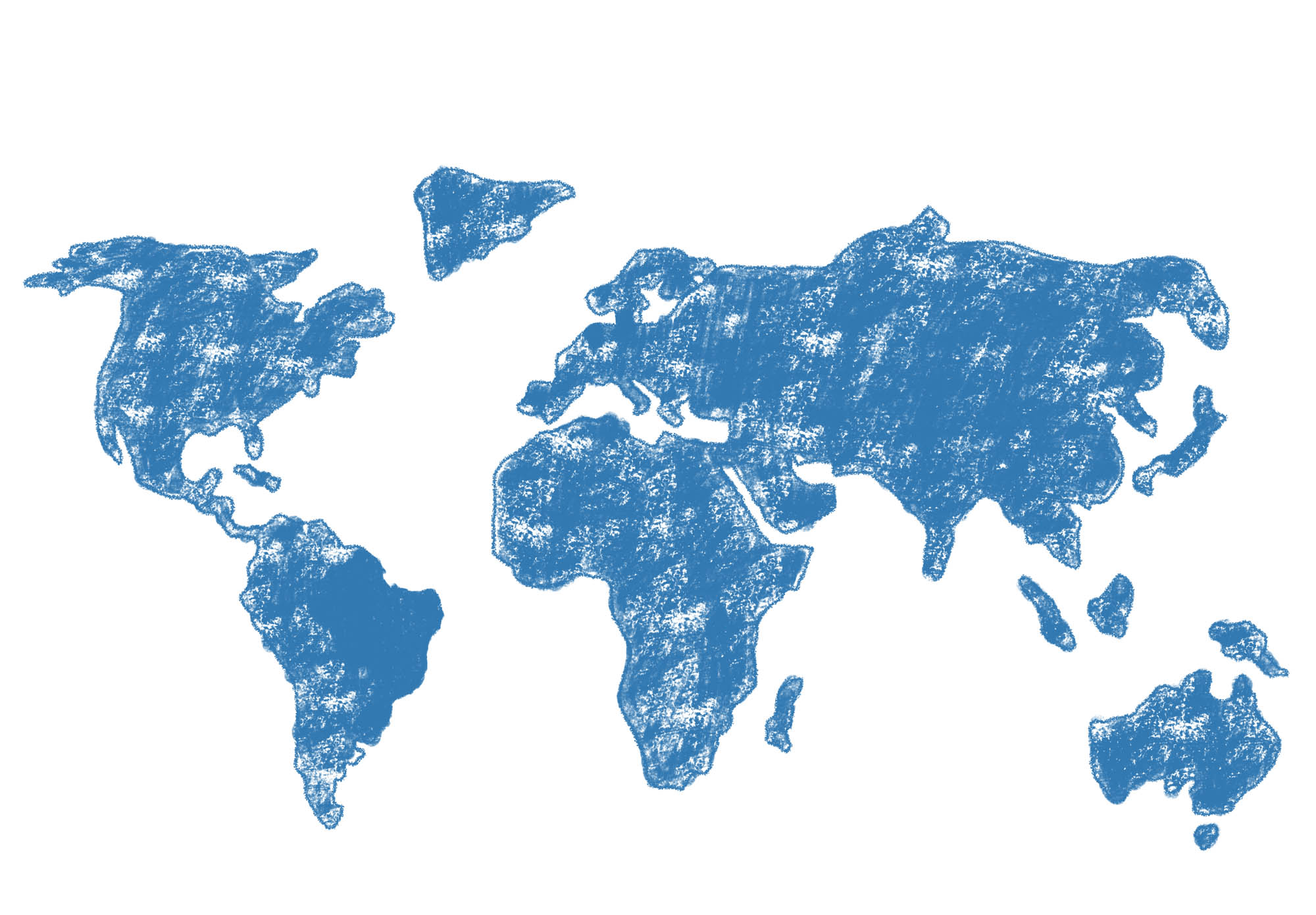
Every town, state and country grapples with the same set of problems: homelessness, loneliness/social disconnection and urban planning, among them. But pick any problem, and you can likely find a country that’s implemented a viable solution. Here are four approaches from four countries that took a seemingly unsolvable problem and developed a creative—and effective—intervention.
Rwanda
Following the 1994 genocide, Rwanda needed to physically rebuild and mend its social fabric. In an effort to address both needs simultaneously, the government revived a cultural tradition, Umuganda; loosely translated, it means “coming together in common purpose to achieve an outcome.” On the last Saturday of every month, locals between the ages of 18 and 65 assembled for three hours of mandatory community service, from planting trees and cleaning drainage ditches to building schools and roads; it’s a practice that continues today, mainly because it continues to achieve both goals. Whether you call it Umuganda or something else, building or rebuilding infrastructure is a low-resource way to improve your community and strengthen relationships amongst its members.
Denmark
Doing things together to strengthen ties is also the main idea of Denmark’s communal dinners, called fællesspisning (which loosely translates to “communal dining”). Held in community centers and other venues across Copenhagen, strangers from all walks of life gather each night at long communal tables to share an affordable, tasty meal. At some dinners, the menu changes nightly; at others, the meal options are entirely vegetarian or vegan, and diners are expected to wash their own plates and utensils. Similar projects have been implemented in other countries; famed Italian chef Massimo Bottura and his wife/business partner Lara Gilmore launched a series of “Reffetorio” around the world, providing dignified communal dining to unhoused people and others in need. There are about a dozen Refettori around the globe, from Sydney and Australia to Harlem.
Brazil
Not all impactful ideas are initially popular. Take the 1972 story of architect Jaime Lerner, mayor of Curitiba. Lerner wanted to create a car-free downtown, and anticipating resistance from shopkeepers, he sent a crew in to stage an “overnight coup.” In just one weekend, pavement was torn up, and gardens and pedestrian-friendly spaces were installed. The following weekend, members of a local automobile club showed up, planning to drive through the pedestrian zone in protest. Lerner checkmated them, deploying a cadre of kids to sit on the former roadways and make art. Within less than a month, shopkeepers came around, asking Lerner to expand the pedestrian zone, as sales had increased. Today, the car-free zone extends more than 20 blocks.
Lerner died in 2021, but his legacy lives on. More than 50 years after pedestrianizing large swathes of downtown, Curitiba is recognized as a model green city, inspiring other municipal governments to favor pedestrians over cars.
These projects have one central theme: they challenge the assumption that certain problems are simply a fixture of our societies. Their successes show that when we turn conventional models upside down, we can often find effective solutions. And while some of these projects depend on government initiatives, others can begin with ordinary people choosing to turn an idea into action. Perhaps one of them will begin with you.
This article was edited by Meryl Kaye and fact-checked by Liz Colombini. The artist used Adobe Creative Suite.

Julie Schwietert Collazo
Julie Schwietert Collazo is a writer, editor, fact-checker, and translator. She is also author of the travel guidebooks MOON New York State and the forthcoming MOON Hudson Valley and the Catskills.

Aeneas Eaton
Based in northern Westchester, Aeneas is a graphic designer, creative and artist who has a fondness for print design and bold colors. He enjoys turning the wacky and eccentric ideas that come to his mind into reality, whether it be on the computer or through painting.