
Consider this your curated shortlist of nine standout discoveries from the latest health research.
By Isabella Aranda Garcia
Photography by Justin Negard
1. Our body’s “security guards” just won the biggest prize of all.
Sometimes, our immune system fights off illnesses and diseases we may never know we had. Other times, our immune system mistakenly attacks our healthy cells, causing an autoimmune disease. If you’ve ever wondered which cells are responsible for this, then you’re in good company (award-winning company, in fact). Between 1995 and 2003, scientists Mary E. Brunkow, Fred Ramsdell and Shimon Sakaguchi published separate discoveries about our body’s “security guards,” more formally titled regulatory T cells (or Tregs for short).
These security guards (or peacekeepers, depending on how you look at it) prevent immune cells from attacking our body. They can calm an overactive immune system, help damaged tissues heal and even direct our immune system’s response so it attacks the right things (like cancer or infections) instead of our organs. It’s a huge breakthrough that explains why we don’t all develop serious autoimmune diseases.
Between 2003 and 2025, the researchers put their discoveries to the test via a series of clinical trials and—eventually—life-saving treatments. Last year, those three scientists won “the prize”—the 2025 Nobel Prize in Physiology or Medicine—demonstrating that their discoveries were a “great benefit to humankind.” Today, these cells are advancing toward use as living drugs in clinical trials and other possible applications. As of last year, over 200 active clinical Treg trials had been registered. Researchers are currently focused on upgrading Tregs by extracting them from the body, growing them in a lab, and enhancing their stability and precision before reintroducing them into the body.
2. The kids are not alright. (It’s worse than you think.)
U.S. kids are facing a tough reality, and, thanks to researchers from the University of Pennsylvania, we now know why. Last summer, they published the results of their comprehensive review of five national surveys along with electronic health records from 10 pediatric health systems and concluded that a lot has changed from 2007 to 2023:
- American kids’ life expectancy has dropped since 2007, with the leading cause of death being gun violence.
- Our children are 15 percent to 20 percent more likely to have chronic diseases like anxiety, vision problems or autism.
- Mental health is declining, with children reporting feelings of sadness, loneliness and hopelessness.
- 50 percent more often over the last 14 years.
- Obesity is still on the rise, affecting 17 percent of children.
- Girls are going through puberty earlier, with 1 in 7 beginning menstruation before the age of 12. This results in more physical, emotional and social challenges, as well as higher long-term risks for several health conditions, such as obesity and cardiovascular disease.
3. Some scientists are convinced hormone replacement therapy (HRT) can help prevent dementia. Some are not. Some say, “It depends.”
Did you know that nearly two-thirds of Alzheimer’s patients are women? It seems like Alzheimer’s researchers may have been missing a pretty major clue as to why: menopause, or so many scientists believe. More scientists are starting to connect the dots between midlife hormonal changes and neurological decline, pointing to early menopause, ovary removal, frequent hot flashes and the frustrating brain fog as possible warning signs. Now, researchers are taking a closer look at menopausal hormone replacement therapy (HRT) as a way to protect against dementia, but the findings are still unclear.
But before we present the recent research, we need to explain the history. In 2003 and 2004, the Women’s Health Initiative Memory Study (WHIMS) published the results of research they conducted with postmenopausal women ages 65 to 79 who were not already taking hormone therapy. They concluded that women who took estrogen-progestogen therapy had twice the risk of dementia compared to those who took the placebo, while women who only took estrogen appeared to not demonstrate a significant increase. The results were not clear enough to provide certainty, however. This research solidified the healthcare industry’s thinking about HRT, even though some scientists argued that WHIMS may have asked the wrong questions since it only studied older women without menopausal symptoms. They wondered if there might be a “window of opportunity” when hormones can decrease the risk of dementia.
Fast forward to 2025, where several conflicting studies on the same topic are released. A meta-analysis that included more than 50 clinical trials and observational studies with women of an average age of 51 showed that women who started hormone therapy within five years of menopause could lower their risk of Alzheimer’s by 20 to 32 percent, while beginning hormone therapy at age 65 or later can increase their risk by up to 38 percent. But another 2025 systemic review, which pooled one randomized controlled trial and nine observational studies, found no significant association between hormone therapy and the risk of mild cognitive impairment or dementia.
So, hormone therapy might help lower the risk, or it might not. Researchers are still debating the issue. However, if hormone therapy is one of the biggest pieces of this puzzle, then it seems timing is everything.

Baby KJ, the first human to receive a fully personalized gene-editing treatment. Photo courtesy of CHOP.
4. Scientists are cracking the genetic code and kicking harmful diseases to the curb.
We’ll start this one off with a story. Baby KJ was only days old when he was diagnosed with a rare genetic disorder, one that’s typically treated with a liver transplant. But he was too small and too sick to survive that kind of surgery. So he was transferred to Children’s Hospital of Philadelphia (CHOP), where doctors tried something that had never been done in a human before: a fully personalized gene-editing treatment designed just for him. One year later, KJ is walking, talking and thriving—a massive breakthrough for the future of medicine.
That future isn’t just this one breakthrough; it’s a whole new toolbox of ways to edit or remove gene mutations. Today’s gene editing falls into a few main buckets:
- CRISPR: A “classic” tool that acts as programmable “molecular scissors.” It cuts DNA so cells repair or alter the sequence.
- Newer precision editors: These can perform tasks such as base and prime editing, which tweak individual letters or short words in the genetic code without fully cutting the DNA.
- Emerging “cut‑and‑paste” systems: This includes therapies like recombinases and bridge recombinases that use guide RNA‑like targeting to bring two pieces of DNA together and swap in much larger stretches—up to whole paragraphs or chapters of genetic text. If you’ve heard the terms “ultra‑long editing” or “bespoke/made‑to‑order edits” that are tailored to a specific mutation or patient (like KJ), this is what they’re referring to.
5. Cancer treatments are having a moment, a really big moment.
New mRNA cancer vaccines are making headlines, like the personalized biomaterial-based vaccine from the Wyss Institute and Dana-Farber, which was shown to be safely manufactured and used in its first human trial, with evidence of immune activation in patients with metastatic melanoma. In parallel, Moderna’s personalized vaccine, currently in phase 3 trials, has so far been found to lower the risk of recurrence or death in melanoma; it’s now being tested for multiple other cancer types as well during its phase 3 trial. And the good news keeps coming. Several companies are developing neoantigen vaccines that train the immune system to target tumor-specific mutations, a strategy that grew out of the success of the COVID mRNA vaccine.
There are also several new targeted drugs advancing through trials. Amgen’s Imdelltra is a bispecific T-cell engager (BiTE) immunotherapy that targets a protein on small cell lung cancer cells; it was fully approved in late 2025. For muscle-invasive bladder cancer, the FDA approved a checkpoint immunotherapy drug called durvalumab last March. This drug is added to the standard chemo protocol, which is given before surgery for this type of cancer, and it helps the immune system locate and fight cancer cells. Clinical trial patients lived longer overall and experienced fewer cancer recurrences or less spread.
Now for breast cancer. There’s a new first-line treatment protocol for adults with metastatic HER2-positive cancer (that’s when the cancer cells have too much of a growth signal protein called HER2, making the cancer grow and spread faster). The treatment protocol uses a combination of Enhertu and pertuzumab, replacing the previous protocol of chemo plus trastuzumab, which commonly causes hair loss. During clinical trials, this protocol extended progression-free survival from 26.9 months to 41 months (a 44 percent risk reduction of death or progression of the disease).
Cancer surgery is also getting a big upgrade with smarter robotic platforms and smaller-incision techniques. These advances are making surgeries more precise, resulting in reduced blood loss and trauma, more organ preservation, better organ function, shorter hospital stays and faster recoveries.
And finally, let’s talk about AI, which is transforming cancer care with tools that enhance diagnosis, prognosis, screening and disease monitoring. Several recent studies have found that AI improves radiologists’ performance, treatment response assessment, diagnostics precision and decision-making in tough cases, like spotting subtle tumors on scans or predicting chemotherapy success. Think of it as a super-smart assistant that flags what humans might miss. However, most of this new technology isn’t clinic-ready just yet, as more studies need to be conducted to verify these technologies will work across diverse populations. And, of course, medical professionals will need training to use them properly.
6. Ticks haven’t increased, but Lyme has.
A study spanning 1989 to 2021 in northeastern states—Connecticut, New Hampshire, Vermont, Maine and, of course, New York—found that tick populations have remained stable. But in 1989, there were just over 8,800 reported cases of Lyme disease, compared to an estimated 89,000 reported cases in 2023. So what’s causing the jump in the reported cases of Lyme? The increase in dangerous pathogens. In fact, according to the Dartmouth researchers, 50 percent of adult black-legged ticks and 25 percent of younger ones carry Lyme disease. That, in turn, increases human risk, especially for more outdoorsy types who may experience symptoms but not get diagnosed until much later, causing more serious complications such as meningitis, Bell’s palsy, carditis, arthritis and more. Moral of this story? Before you go for a hike or jog in the woods, and even before you spend time outside in your own yard (or a friend’s), protect yourself with tick repellent and wear protective clothing (long pants and shirts). Then check yourself thoroughly for ticks afterwards.
7. It might be time to rethink your views about BCI (brain-computer interface) chips. They’re helping people with paralysis recover movement and sensations.
Here’s another story to make the scary, well, less scary. In 2020, Keith Thomas dove into a pool and broke his neck, causing him to become quadriplegic. Three years later, a research team at Northwell Health’s Feinstein Institutes for Medical Research developed a first-of-its-kind “double neural bypass” system using BCI chips, AI and stimulation technology to link Thomas’ brain, spinal cord and body together to restore some movement and his sense of touch. In a 15-hour surgery, doctors placed five tiny, fragile electrode arrays in the hyper-specific regions of Thomas’s brain that control movement and sensation. Now, post-surgery, when Thomas thinks about a movement, his brain signals are detected by the BCI chips and sent to a high-performance computer running the AI algorithms via an HDMI cable. That computer then sends signals to electrodes on Thomas’ skin that stimulate the muscles he needs to move to perform the task.
One year later, Thomas more than doubled his arm strength. He could also drink from a cup and feel his dog’s fur. Today, Thomas continues to improve, experiencing greater sensitivity in his wrist and hand, along with improved arm strength and shoulder mobility that now allow him to scratch his face. Most significantly, even when Thomas’ system is turned off, he continues to retain his range of motion and sensation.
Now Thomas is part of a new study that seems like science fiction. Named the Human Avatar, this AI-powered BCI technology allows one paralyzed person to create movements in another paralyzed person’s body. Here’s how it works: Researchers connect the BCI chips in Thomas’ brain to a computer. As Thomas thinks of a movement, like picking up a water bottle, an AI tool deciphers the types of movements he’s thinking about. Those decoded thoughts are sent over to a wireless device, called NeuStim, that Kathy (the other paralyzed person) wears on her arm. It activates her muscles and allows her to pick up the bottle, while Thomas feels the sensations associated with grasping and picking it up. “Keith is helping Kathy move, and Kathy is helping Keith regain sensation,” says lead researcher and bioengineer Chad Bouton, Ph.D., in a video describing the process.
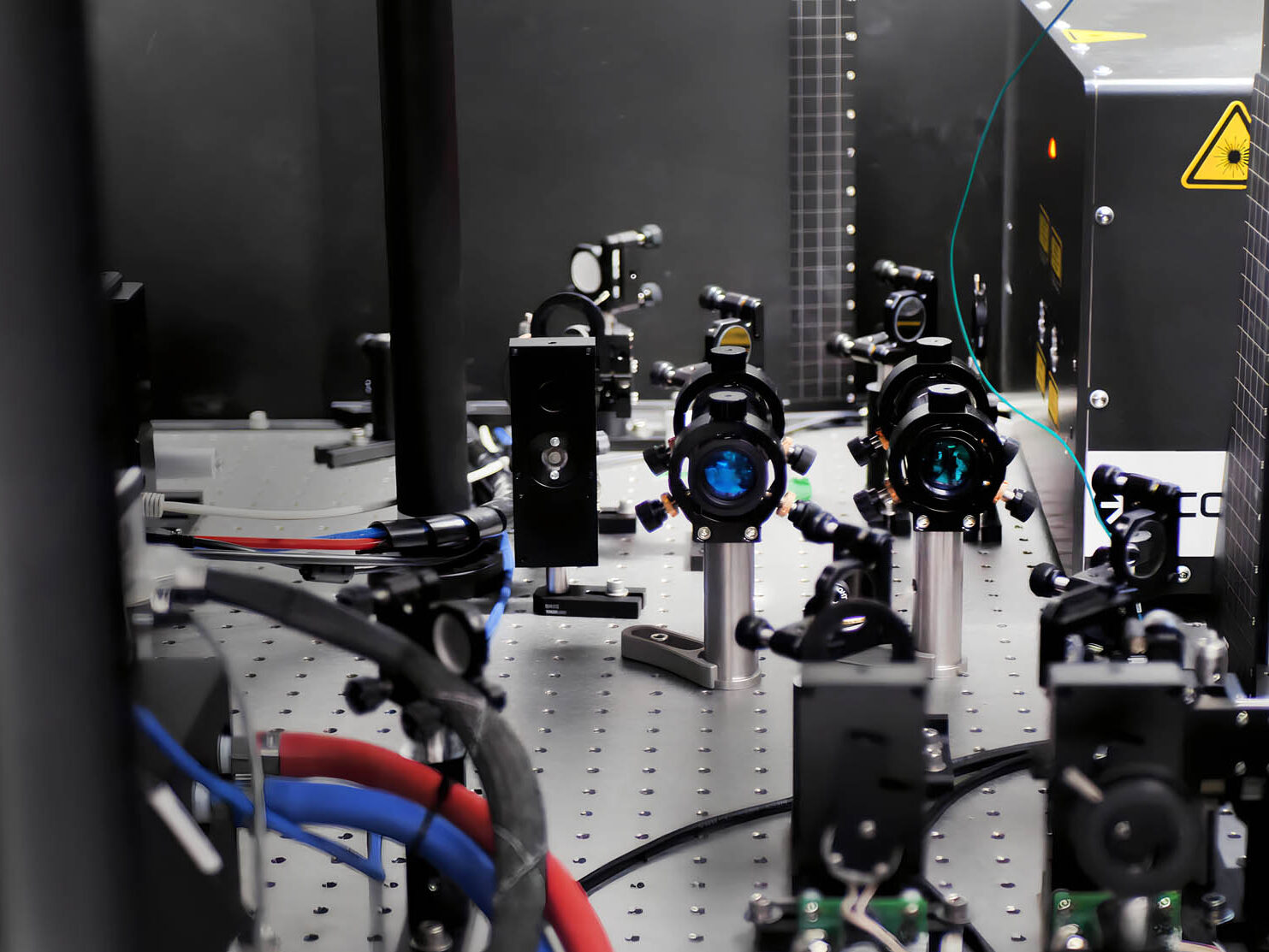
And just down the road at Burke Neurological Institute in White Plains, researchers are working to create a chip with the goal of repairing people’s vision. Their research involves a unique two-photon microscope (there are only three in the country) that you can see by heading to the video section of our website. And in the city, researchers at Columbia University have partnered with New York-Presbyterian, Stanford University and the University of Pennsylvania to create a silicon BCI chip that they claim is “orders of magnitude faster and smaller” than others. This chip is so thin that it can sit directly on the brain’s surface, between the brain and the skull, aiming to be minimally invasive. It will stream brain data in real time and could treat spinal cord injuries, ALS, strokes and blindness. They say it could also help manage seizures and restore motor, speech and visual function. Early human trials are currently underway.
8. Want to protect your heart? Brush & floss daily.
Did you know your mouth and your heart health are connected? It’s true. And the American Heart Association has found growing evidence that gum disease isn’t just a mouth problem—it may also be linked to a higher risk of heart attack and stroke. Here’s what happens: Poor oral health can result in bacteria entering the bloodstream, and over time that can contribute to inflammation in the body. That inflammation can build up in the blood vessels and therefore increase the risk of heart disease.
Gum disease affects 40 percent of U.S. adults over the age of 30, with the earliest stage being gingivitis, which can progress to periodontitis, increasing the risk of infection. Common signs include bleeding gums, bad breath or gum tenderness. People with conditions like diabetes or hypertension, as well as smokers, may be at an even higher risk for both gum disease and heart disease. So make sure to take those extra minutes to brush and floss, and don’t miss out on regular dental checkups (you should go twice a year).
9. We’re one step closer to seeing a male birth control option, and, if we’re being honest, it’s about time.
Finally, men might soon be able to pop a pill, rub an ointment or get an implant to prevent pregnancy too. YourChoice Therapeutics’ nonhormonal male pill, named YCT-529, passed its first human safety trial in early 2025, demonstrating it was well tolerated with no serious side effects in 16 vasectomized men. (In case you’re wondering, the researchers chose to enroll men with vasectomies as an extra precaution to avoid the risk of permanently affecting fertility.) This pill reversibly halts sperm production by blocking a vitamin A pathway in the testes—no hormones or related side effects like mood/libido changes required.
Another form of male birth control in the works is a topical hormonal gel contraceptive NES/T—a once-daily gel featuring the progestin Nestorone and testosterone that’s rubbed on the shoulders and upper arms. This topical suppresses sperm while maintaining normal testosterone levels, and planning is underway for the first-ever phase 3 male hormonal trial. If successful, it could reach the market in 2028-2030 as the first new male option since vasectomy. Their biggest hurdle might be that regulators need male-specific pregnancy prevention proof to approve this gel.
There is also the possibility of a nonhormonal male contraceptive implant. RISUG (Reversible Inhibition of Sperm Under Guidance) is somewhat similar to a hormone-free IUD. But instead of a plastic frame, a hormone-free gel (made with a special plastic-like chemical) is injected into the vas deferens (the tubes that transport sperm from the testicles) to block sperm from leaving the body. Once injected, it sticks to the inner wall and slowly reacts with water in the body to form an acidic, electrically charged coating. As sperm swim through that coated section, they receive an electric “shock” and break so they cannot fertilize an egg. RISUG completed phase 3 trials in India in 2020, demonstrating 82.7 percent of men achieved sustained azoospermia (that means total absence of sperm in ejaculate) within one month—temporary scrotal enlargement and mild pain were the main adverse effects. Despite strong results, it has not been formally rolled out in India nor has it received approval from any Western regulators (like the U.S.).
Other pills, ointments and implants are also in development or in trials. We look forward to a future where men can have more control and choice when it comes to family planning—something long overdue.
This article was edited by Gia Miller & Julie Schwietert Collazo. It was medically reviewed by the following researchers & doctors from Northwell Health: Dr. Anna Komorowski, regional director, Cancer Institute (1 & 5); Dr. Maryann Buetti-Sgouros, chair of pediatrics (2 & 6); Dr. Anna Hohler, regional director of neurology (3 & 4); Chad Bouton, PhD, VP, director of the Neural Bypass and BCI Laboratory (7); Dr. Navjot Sobti, interventional cardiologist (8); and Dr. Geetika Arora, endocrinologist (9).
This article was published in the May/June 2026 edition of Connect to Northern Westchester.

Isabella Aranda is a designer, writer and social media specialist with an M.A. in emerging media from the New Media Institute at the Grady College of Journalism & Mass Communication. Driven by curiosity and inspired by timeless modern design, she blends creativity and strategy to craft compelling narratives that engage diverse audiences.
Her expertise spans digital marketing, content creation and UX design, with notable achievements such as co-creating the Georgia On Your Mind podcast and leading digital campaigns that significantly boosted engagement. A Venezuelan immigrant, Isabella brings a multicultural perspective to her work, enhancing her ability to connect with and inspire others.

Justin is an award-winning designer and photographer. He was the owner and creative director at Future Boy Design, producing work for clients such as National Parks Service, Vintage Cinemas, The Tarrytown Music Hall, and others. His work has appeared in Bloomberg TV, South by Southwest (SXSW), Edible Magazine, Westchester Magazine, Refinery 29, the Art Directors Club, AIGA and more.
Justin is a two-time winner of the International Design Awards, American Photography and Latin America Fotografia. Vice News has called Justin Negard as “one of the best artists working today.”
He is the author of two books, On Design, which discusses principles and the business of design, and Bogotà which is a photographic journey through the Colombian capital.
Additionally, Justin has served as Creative Director at CityMouse Inc., an NYC-based design firm which provides accessible design for people with disabilities, and has been awarded by the City of New York, MIT Media Lab and South By Southwest.
He lives in Katonah with his wonderfully patient wife, son and daughter.