
By Ilyssa Panitz
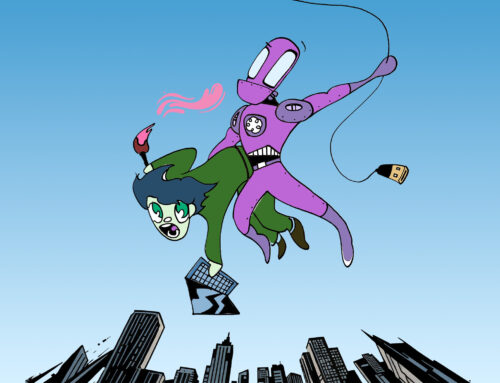
Artwork by Aeneas Eaton
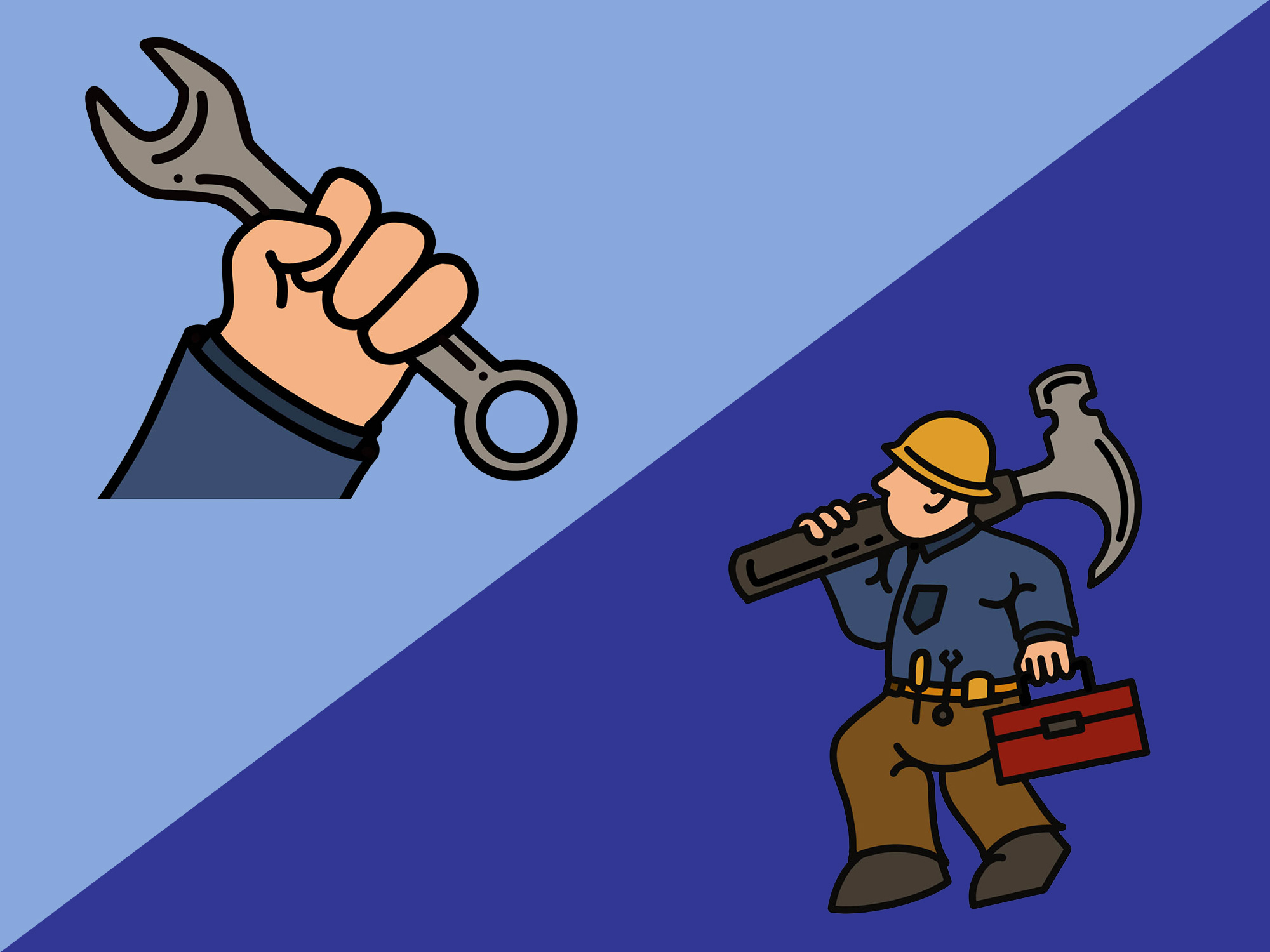
The phrase “roll up your sleeves” dates to the 19th century, when U.S. work was far more physically demanding than it is today. Agriculture employed roughly half the workforce by 1870, and many others worked in manufacturing, construction, transportation, maintenance and manual labor. Fast-forward to today, and while technology has transformed nearly every aspect of our lives, those same hands-on professions remain as essential as ever.
Despite rising tuition costs and growing interest in alternative career paths, most American parents still see college as the ideal next step after high school. But the workplace is changing rapidly, and workers are feeling the uncertainty: 52 percent of U.S. workers say they are worried about AI’s future impact in the workplace, while nearly one-third believe it could mean fewer job opportunities for them in the long term, according to a February 2025 report from Pew Research.
The white-collar conundrum
The roots of today’s technological revolution stretch back decades. Large electronic computers were first used in the 1940s to break military codes and calculate artillery trajectories. By the 1970s and 1980s, computers became increasingly common in businesses, and during the 1990s they found a permanent place on nearly every office desk. The first commercial cell phone debuted in 1983, and by the early 2000s, 50 percent of Americans had cell phones. Social media first appeared in the late 1990s, with half of Americans sharing their daily lives by 2009. Then, in late 2022 and early 2023, AI made its public appearance.
Artificial intelligence has dramatically reshaped the employment landscape. According to the Challenger, Gray & Christmas’ July Job Cuts Report, the technology sector has faced the most job cuts in 2026, totaling 149,023 as of the end of July. And the reason for these layoffs is almost always AI. But industries ranging from finance to media as well as professional services (accounting, risk, fraud, etc.) are all feeling the impact. The fast-food giant McDonald’s is testing a new AI-powered drive-thru technology at five U.S. locations that could replace real-life employees taking your order. Professions once considered untouchable are also evolving, including law firms as AI becomes part of legal research, while other professions are turning to AI-powered chatbots for emotional support as the cost of traditional therapy continues to soar and therapists are overbooked. So, what is a new grad or perpetual job seeker to do if they want a career and not just a job to pay the bills? Consider the trade industry.
The blue-collar solution
Despite all of the technological advances we’ve experienced, one thing has remained remarkably consistent: many skilled trades still require human expertise. Technology simply can’t replace the judgment, knowledge, talent and physical presence many blue-collar careers demand.
“There is a tremendous window of opportunity for people who want to work in the trades,” says John Cooney Jr., executive director of the Construction Industry Council (CIC) of Westchester and Hudson Valley, Inc. While workers in some white-collar industries face increasing uncertainty, Cooney says construction and related trades continue to struggle to fill open positions. “All someone needs is the willingness to learn,” he explains. And it also takes dedication.
For nearly five decades, the CIC has represented a wide range of skilled trades, including laborers, operating engineers, teamsters, carpenters, ironworkers, electricians and dock builders. Entering those professions requires training, some of which can be extensive. “Our union employees come through New York State-certified apprenticeship programs, union skills training and specialty schools,” Cooney says. “If you want to operate a crane, for example, you must complete the Occupational Safety and Health Administration’s (OSHA) 30-hour safety course. AI can’t do any of that, nor is it capable of replacing the judgment and experience required on a jobsite.”
Behold, the ample career choices
If hands-on careers aren’t a fit, there are plenty of other opportunities available. Garage door installation, for example, requires a basic understanding of mechanics, construction and engineering; it’s a field where human bodies and skills remain indispensable.
According to Joe Graham, the shop manager at Auto-Magic Door Opener Corporation in Yonkers, every installation and repair requires precision and experience. “Installing and repairing garage doors is a hands-on job that requires dexterity,” Graham says. “Technicians must determine the correct torsion and extension springs, properly balance the system, check the tension, align every component and tighten the hardware to ensure everything operates safely. It’s skilled labor. You have to physically work with the equipment to make sure it functions properly. That’s something AI simply can’t do.”
But that’s not the only automotive-related job outside of a repair shop or factory. The automotive detailing industry tells a similar story. With over 297 million registered vehicles in the United States in 2024, the car wash and detailing industry is a multibillion-dollar business with around 17,500 professional car wash facilities nationwide.
Sure, automated equipment handles some of the heavy lifting, but people are still needed to vacuum interiors, polish paint, remove contaminants and inspect every inch of a vehicle before it’s returned to the customer. Peter Rossi of Somers knows that firsthand. After leaving a career in public relations, Rossi launched a professional car detailing business, Professor Detail Auto Care, in March 2026, turning a longtime passion for cars into a successful career. “I found the corporate environment very black and white,” Rossi, who is 23 years old, says. “AI is fundamentally changing how Gen Z views their long-term careers. Every decision now ends with, ‘Will this line of work still exist a decade from now?’”
Rossi says he felt his path was predetermined when working in the corporate world. “From the start, it was begin here at this salary; end here at that salary,” he says. “A few months into my business, and my average monthly income already beats what I was making at my old marketing job, and it’s only going up. My income is tied directly to how many cars I detail and how I scale—mobile units, add-ons, memberships—so there’s no ceiling.” Having worked at a local detailing shop during college, Rossi says he ‘saw firsthand how it can be a very lucrative business.’” He also recognizes that while AI can do many tasks faster and more accurately than a human, it still can’t roll up its sleeves to clean a car to its original showroom condition. “My job requires a human,” he says. “My responsibilities include safely removing contaminants, restoring paint, thoroughly cleaning the interior and protecting the vehicle for the long term,” he explains. “Every inch of a client’s car requires hands-on expertise, careful judgment, and close attention to detail.”
Let’s crunch some numbers
The U.S. job market has shifted to what economists describe as a “low-fire, low-hire” era. According to the Bureau of Labor Statistics, the unemployment rate stands at 4.1 percent, representing approximately 7.1 million Americans who are out of work. At the same time, the Federal Reserve Bank of New York reports that recent college graduates are facing an unemployment rate of 5.6 percent, a reflection of the few white-collar jobs and entry-level opportunities available.
As families weigh the return on investment of a four-year college degree against rising tuition costs, attitudes toward alternative career paths are becoming more favorable. Research from Britebound found that in 2025, 35 percent of parents believe Career and Technical Education (CTE) is well suited for high-achieving students, a significant increase from 13 percent in 2019. Although earning a bachelor’s degree remains the preferred path for many families, that mindset is declining. In 2019, 74 percent of parents viewed a four-year college as the best option for their child. By 2025, that figure had fallen to 58 percent, reflecting growing interest in careers that don’t require a traditional college education.
Then there are the financial incentives, which are difficult to ignore. According to the job search engine Indeed, many skilled trades offer competitive salaries compared to business or engineering and are in strong demand. Construction professionals can earn around $90,000 annually, aircraft mechanics can make more than $82,000, and a plumber can earn approximately $70,000 a year.
As employers across the country continue to delegate more tasks to AI, careers in the trades are increasingly being recognized as a practical, stable and financially rewarding alternative to the traditional four-year college path. And while artificial intelligence is transforming many industries, it still can’t crawl under a leaky sink, rewire a home’s electrical system, install a new roof or look inside a broken furnace. Those jobs require hands-on expertise, problem-solving and human judgment that technology simply can’t replicate.
For generations Z, Alpha and even Beta, choosing a career in the skilled trades may offer something many white-collar professions no longer can: the confidence that they won’t have to ask themselves, like Rossi once did, “Will this line of work still exist a decade from now?” When it comes to plumbing, electrical work, HVAC, construction and countless other trades, the future is still very much human.
This article was edited by Isabella Aranda Garcia and fact-checked by Julie Schwietert Collazo. The artist used Adobe Creative Suite.
This article was published in the September/October 2026 edition of Connect to Northern Westchester.

Gia Miller is an award-winning journalist and the editor-in-chief/co-publisher of Connect to Northern Westchester. She has a magazine journalism degree (yes, that's a real thing) from the University of Georgia and has written for countless national publications, ranging from SELF to The Washington Post. Gia desperately wishes schools still taught grammar. Also, she wants everyone to know they can delete the word "that" from about 90% of their sentences, and there's no such thing as "first annual." When she's not running her media empire, Gia enjoys spending quality time with friends and family, laughing at her crazy dog and listening to a good podcast. She thanks multiple alarms, fermented grapes and her amazing husband for helping her get through each day. Her love languages are food and humor.

Justin is an award-winning designer and photographer. He was the owner and creative director at Future Boy Design, producing work for clients such as National Parks Service, Vintage Cinemas, The Tarrytown Music Hall, and others. His work has appeared in Bloomberg TV, South by Southwest (SXSW), Edible Magazine, Westchester Magazine, Refinery 29, the Art Directors Club, AIGA and more.
Justin is a two-time winner of the International Design Awards, American Photography and Latin America Fotografia. Vice News has called Justin Negard as “one of the best artists working today.”
He is the author of two books, On Design, which discusses principles and the business of design, and Bogotà which is a photographic journey through the Colombian capital.
Additionally, Justin has served as Creative Director at CityMouse Inc., an NYC-based design firm which provides accessible design for people with disabilities, and has been awarded by the City of New York, MIT Media Lab and South By Southwest.
He lives in Katonah with his wonderfully patient wife, son and daughter.