


Across the region, researchers and conservationists are testing strategies to curb invasive species and strengthen native habitats.
By Julie Schwietert Collazo
Artwork by Justin Negard
Avid local gardeners may already be aware that climate change and invasive species are creating an array of Whac-a-Mole challenges that stymie even the most energetic and resourceful person. If you’ve noticed that the soil in your flower beds or vegetable garden has looked a lot like Grape-Nuts cereal, for example, and that your plants and shrubs are struggling to survive, much less thrive, you might have a big—and squirmy—problem on your hands, says Gale Ridge, Ph.D., associate scientist at The Connecticut Agricultural Experiment Station in New Haven. Ridge is one of the Northeast’s foremost experts on the Asian jumping worm, which aggressively homogenizes your soil, breaking down the top layer into uniform, dry, granular pellets that, in turn, makes the soil prone to erosion. This creates a whole series of problems for habitats throughout the region.
In fact, she says, the entire Northeast’s current jumping worm problem can be traced to the Bronx Zoo in 1948, when they were imported to feed Australian platypuses. While you may think of New York City as a concrete jungle, Ridge says that nearly 30-40 percent of the city’s surface area is open space, stippled with big and small parks. “The worms settled in these little park areas, trapped by these buildings and individual microclimates. Initially, they were unable to move around and infest new areas, reducing their capacity for damage.”
But then, in 2012, Hurricane Sandy hit, and the worms hitched an accidental ride to our region.
“Something like 15,000 trees were felled,” Ridge says. While the impact for many New Yorkers was devastating, it was the perfect opportunity for the jumping worms, who were able to expand their territorial claims when the soil and chipped trees were turned into mulch during the storm cleanup phase. “And all that mulch was farmed out to unsuspecting people, inoculating our region with jumping worms,” Ridge explains.
Earthworms on steroids
If you’re one of those unsuspecting people who received jumping worm-infested mulch, you may have already observed their power without knowing the cause. In a fact sheet Ridge authored about the invasive, she explains that jumping worms can negatively impact plants and soil animal communities. These “earthworms on steroids,” as she refers to them, also pose other harms that may be less visible; research has shown that the jumping worm bioaccumulates toxic metals in concentrations that can be hazardous, meaning it consumes and stores mercury, cadmium, copper and lead. Then it passes these toxins along to chickens and other birds.
The biggest problem with invasive species is that they alter the habitat so swiftly and significantly that it becomes difficult for native species to thrive—or sometimes, even to survive. Plus, the labor and expense of invasive management draw resources away from the flora and fauna that could best support and be supported by the local landscape.
Roll up those sleeves
That thought would be both sobering and daunting for most people, but for Ridge, a cheerful person with a can-do attitude who spends her days researching many of the region’s invasives (including the spotted lanternfly; the emerald ash borer, an Asian wood-boring beetle that’s devastating ash trees; and three new tick species), there’s nothing to gain by throwing one’s hands up and letting the worms or other invasives win. A crucial part of preservation work is educating the public about the threats posed by invasive species, teaching local residents how to spot the signs that invasives have colonized their yard or garden, and then encouraging them to roll up their sleeves and get to work.
“There’s actually a lot you can do to stop the spread of jumping worms,” she says, “including heat treating your compost, soil and mulch in a ‘solarization package.’” If your compost or mulch provider can’t guarantee the absence of jumping worms from the organic matter they sell you, you can eliminate them yourself before spreading your compost or mulch in your garden (see box in the next column). Ridge also advises Westchester residents to buy new plants and trees with bare roots, rather than in pots, as jumping worms are able to easily expand their range by traveling from a nursery to your yard in the soil of pots.
Local fishers can also stop the spread of jumping worms. Ridge says that while fish don’t like jumping worms very much, it’s easy for anglers to unwittingly buy this species and introduce them to riverbanks and lakeshores. “Try and vet your fishing tackle company,” she advises. “Usually, family-run businesses are less likely to be slapdash, but any purchased worms should be inspected before use.” It’s easy to distinguish a jumping worm from other worm species. “Jumping worms thrash,” Ridge notes, while all earthworms are introduced species; others are non-invasive and more flaccid and passive. If you get to the water’s edge and realize you might have just bought a container full of jumping worms rather than nightcrawlers, “Do NOT tip the entire container out!” She says too many fishermen are doing exactly that, increasing the jumping worm population along the banks of the Hudson River and other local waterways. Either take them home and kill them via a stint in your freezer or throw the worms into the center of a hot road to kill them. Just don’t dump dead worms back in the yard or garden; their poppy seed-sized cocoons could still be present, introducing a whole new generation of the pests.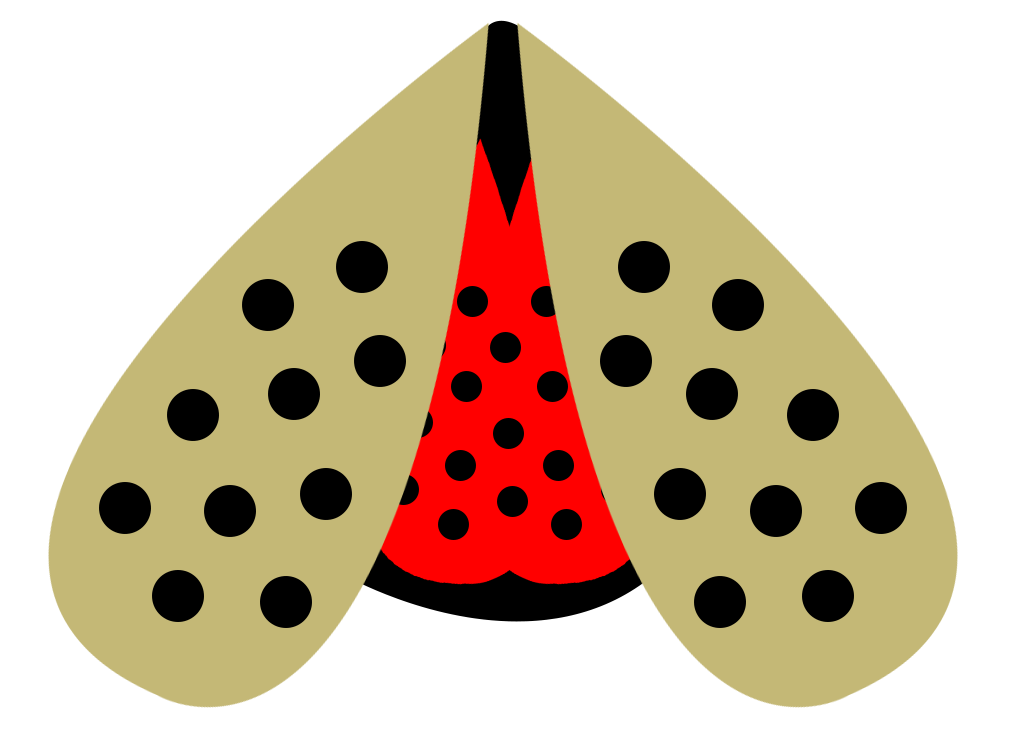
It’s not just jumping worms you should worry about
Jumping worms may be a big and growing problem in Westchester and the Northeast U.S., but they aren’t the only pests wreaking havoc on local habitats. “Everyone knows about the spotted lanternfly, of course,” says Taro Ietaka, assistant director of conservation for the Westchester County Department of Parks, Recreation and Conservation. Ietaka, who’s responsible for day-to-day management of Ward Pound Ridge Reservation and conservation efforts at many other parks in Westchester County, has been in the field for more than 20 years. “Just within that time, I’ve seen a few species that were scattered now become widespread, and basically we’re past the point where we can eradicate them,” he says.
These aren’t just winged and wiggly invasives; much of Ietaka’s work is focused on tree and plant species, often because birds carry and deposit their seeds. He says that the same invasives you’ll see at Ward Pound Ridge and other local parks are the ones you’re likely to see in your own backyard, too. The three main well-established culprits are Japanese barberry, Oriental bittersweet and tree of heaven, but they are beyond large-scale eradication. So Ietaka says he puts more effort into tackling the Toringo crabapple and autumn olive in meadow habitats, as well as new discoveries of the Japanese angelica tree.
Taking matters into your own hands
Like Ridge, Ietaka is remarkably cheerful and hopeful for someone who expends a lot of energy dealing with invasive species and their harmful impacts. He agrees with Ridge that Westchester residents can play an important role in managing invasives. When the spotted lanternfly gained significant news coverage, he says it wasn’t uncommon to see people out and about in the park, stomping on the winged pest. Their interventions didn’t stop the spread of the spotted lanternfly, but people felt good about taking action.
Educating people about plant invasives, such as Oriental bittersweet and Japanese barberry, is more challenging. Ietaka says many people are subject to “plant blindness,” a phenomenon validated by scientific research. This means that most people “just see a green wall,” not the individual species that comprise the landscape. And even well-meaning people who want to help control invasive plant species can accidentally cut or pull native species, believing they are being helpful.
While he doesn’t want park-goers to walk around wielding clippers and shears without guidance, he says the Westchester County park system welcomes volunteers, including families, scout groups and corporate groups that want to organize larger-scale service experiences. “We love public help,” Ietaka says. “You just need to register with us and receive a brief training.” Public support is vital, as the resources required by parks and other public entities, including the Department of Transportation, to combat invasives are immense, and funding not used for invasive management could be earmarked for other services and infrastructure.
The problem isn’t going away
Ridge and Ietaka are optimists at heart, but they also acknowledge that invasives aren’t going away. Climate change and warming conditions are likely to cause a growing number of invasive species from other regions to creep up the Eastern seaboard and establish themselves more quickly and aggressively. Ietaka is especially concerned about insects, particularly the Southern pine beetle and laurel wilt, which he and his team are “on the watch for.” He’s also worried about kudzu, which has long been a problem in the Southern states but is establishing itself in our area. “So far NY has been able to identify and control discovered populations, but we have to stay vigilant,” he says. “It seems like every year there’s another dozen or two dozen species added to our watch list to look out for.”
Managing the pests is expensive, especially if pesticides or other chemical interventions are required, as these involve licenses and permits or exemptions, as well as trained technicians. And the human cost is taxing, too. “Our staff wear multiple hats,” Ietaka notes. “If they’re out addressing invasives, that means they are less available for their other responsibilities.”
“Invasives are entering this country due to a lack of federal funding and oversight at points of importation,” Ridge explains. “A fraction of the goods are currently being inspected, and there are too few inspectors to adequately protect the country from invasives.”
You’re not alone
If all this talk of jumping worms, spotted lanternflies and invasive plants leaves you feeling worried or weary, Ridge wants to remind you: You’re not in this alone. Numerous resources and professionals are waiting to help you be one of the “fingers in the dam.”
“Don’t go to the gossip mill,” she pleads. “Don’t feed on or share misinformation, and don’t panic.” Instead, follow instructions from trusted sources for helpful and factual information you can act on.
This article was edited by Isabella Aranda Garcia and fact-checked by Virna Sandler. The artist used Adobe Creative Suite.
This article was published in the July/August 2026 edition of Connect to Northern Westchester.

Julie Schwietert Collazo
Julie Schwietert Collazo is a writer, editor, fact-checker, and translator. She is also author of the travel guidebooks MOON New York State and the forthcoming MOON Hudson Valley and the Catskills.

Justin is an award-winning designer and photographer. He was the owner and creative director at Future Boy Design, producing work for clients such as National Parks Service, Vintage Cinemas, The Tarrytown Music Hall, and others. His work has appeared in Bloomberg TV, South by Southwest (SXSW), Edible Magazine, Westchester Magazine, Refinery 29, the Art Directors Club, AIGA and more.
Justin is a two-time winner of the International Design Awards, American Photography and Latin America Fotografia. Vice News has called Justin Negard as “one of the best artists working today.”
He is the author of two books, On Design, which discusses principles and the business of design, and Bogotà which is a photographic journey through the Colombian capital.
Additionally, Justin has served as Creative Director at CityMouse Inc., an NYC-based design firm which provides accessible design for people with disabilities, and has been awarded by the City of New York, MIT Media Lab and South By Southwest.
He lives in Katonah with his wonderfully patient wife, son and daughter.