
By Gia Miller
Photography by Justin Negard
In the autumn of 2022, an old sailboat slipped through the dark, icy waters of the Arctic Circle off the coast of Norway. On board were 33 scientists, artists, poets and painters, along with a captain and a chef, navigating a twilight world where the sun had not risen for days. One day, the captain asked his passengers to share the singular wish that had drawn them to the edge of the world. “I wished for total silence,” Eleanor Goldstein, a Hastings-on-Hudson-based artist, remembers. She was nearly 90 years old at the time and the oldest traveler on the trip. “The captain said we could almost achieve that silence, since we were the only ship as far as the eye could see.”
They entered a secluded cove, took Zodiacs to reach the snowy shore, then carefully stepped out in their thigh-high water boots. “Everyone separated, and once we were alone, we could lie down and hear the sound of silence,” Goldstein remembers. Throughout her time on that sailboat, which was equipped with an ancillary motor just in case, Goldstein observed, experienced and photographed everything around her, savoring the quiet spaces whenever she could.
When she returned home, Goldstein began to paint the vast, luminous landscapes, aiming to draw the eye to what lies in between. “What comes out of these paintings is the silence, the purity of it,” she describes. “It’s the purity of a place that we are unfortunately desecrating.”
For Goldstein, that silence, the “moment before we enter,” is most directly tied to the Arctic. Still, the concept echoes through many of her works, from scaffolding and skyscrapers to landscapes and sculpture.
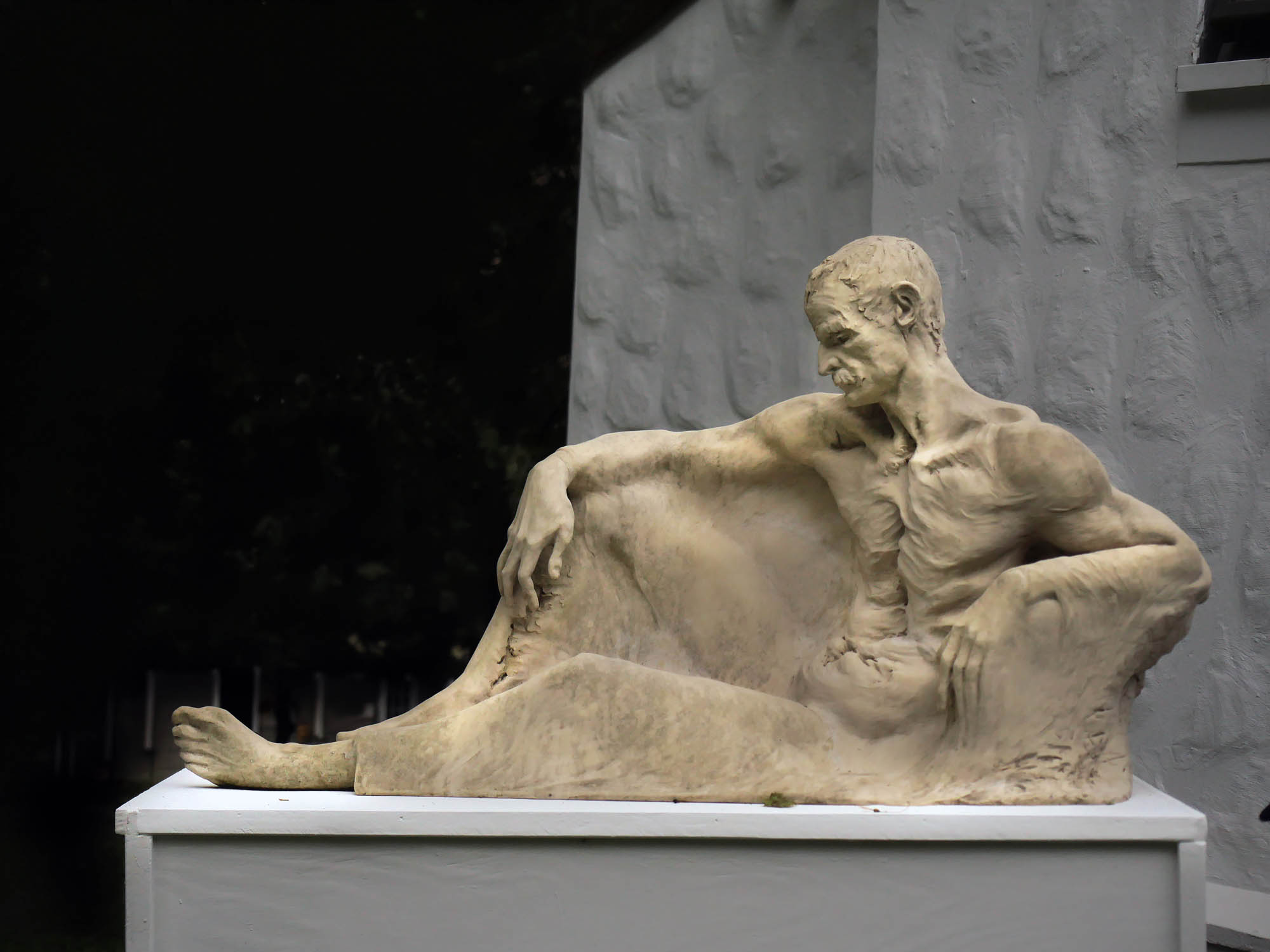
A clay, resin and marble dust sculpture Goldstein created at the Art Students League of New York. Goldstein says she “fell in love with his arthritic hand,” so she sculpted that first.
The voice of the silence
Goldstein is also captivated by human hands, describing them as a “quiet voice” that communicates emotions, consciously or not. “Hands are a vocabulary of feelings,” she explains. “They’re happy, they’re scared, they’re angry, they’re fighting and they’re even helping, like a little girl with her mommy. But since they don’t make sound, they’re a little more private.”
She came to this realization as a young child training at the School of American Ballet. Goldstein would watch the legendary George Balanchine teach his students, and while most people focused on the dancers’ feet, Goldstein’s eyes were locked on their hands. She was mesmerized by how even a slight turn or bend of the fingers could communicate different emotions, from pride to heartbreak, far more effectively than words. If you are dancing, she realized, the hands are what touch the audience; they carry the emotion.
Over the years, Goldstein became a quiet observer of hands in the wild. Even as she walks through Manhattan today (which she does at least once a week to view art), she studies the hands of people she passes: gyrating in anger, lovingly intertwined, exhibiting unease. This fascination has inevitably found its way into her art. When she was 40, while working at the Art Students League of New York, Goldstein found herself drawn to the hand of an elderly model. “I fell in love with his arthritic hand,” she recalls, “and then I did the body.” She sculpted the figure, which now sits just outside her home, translating those fingers into wet clay before casting the figure in marble dust and resin.
“You don’t have to ask me why I like hands,” says Goldstein. “They are the voice of the silence.”
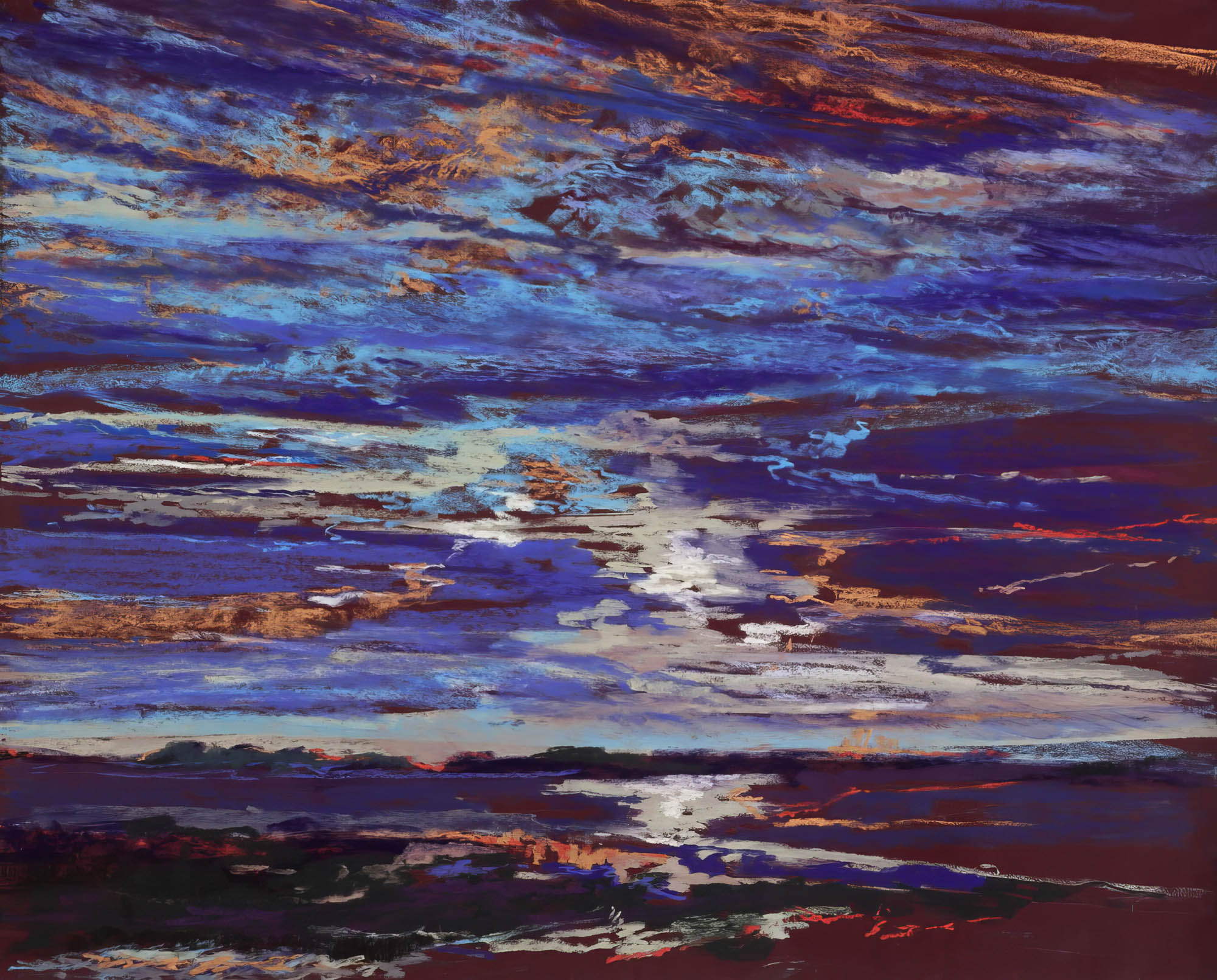
“December Sunset,” painting with pastels.
You’re bigger than you think you are
Goldstein describes herself as a “Bronx brat.” Born in 1935, she and her older sister were raised in an apartment building at the end of the subway line in Woodlawn, with the historic Woodlawn Cemetery, which Goldstein refers to as her playground, directly behind her childhood home. Goldstein’s father, an American history teacher, taught day school, night school and summer school to keep the family afloat. Her mother, born in what is now Poland, began working in a Newark rug factory at the age of 12 to send her brothers to college, gradually moving up the company’s ladder. “She possessed an astonishing gift for mathematics,” Goldstein explains. “She only completed elementary school, but no one could do math like my mother could. She eventually became the chief bookkeeper of a Wall Street firm.”
Goldstein’s mother was a pivotal figure in her young life. She took her daughter to The Met often to share her affinity towards a certain sculpture. “It was a carved Greek esophagus with sculpted figures in bar relief around it. It was her chief piece, and you’d have to visit it.” She also enrolled Goldstein in dance lessons and always supported her interest in the arts. In addition to ballet, Goldstein requested piano lessons when she was six or seven years old, and by the time she was nine, she added art classes to that list, taking the subway by herself to all of her activities in the city. She enrolled in Mrs. Katz’s class for children at the Art Students League. “It was wonderful,” Goldstein remembers. “Mrs. Katz let me paint the nude models with my mother’s note.”
Goldstein was accepted into a performing arts high school; she chose to focus on dance until she “fell into a body cast” for six months. Accepting that she would never catch up once she healed, Goldstein switched to art. She went on to study art at Bennington College in Vermont, then returned to New York to earn a master’s degree in teaching.
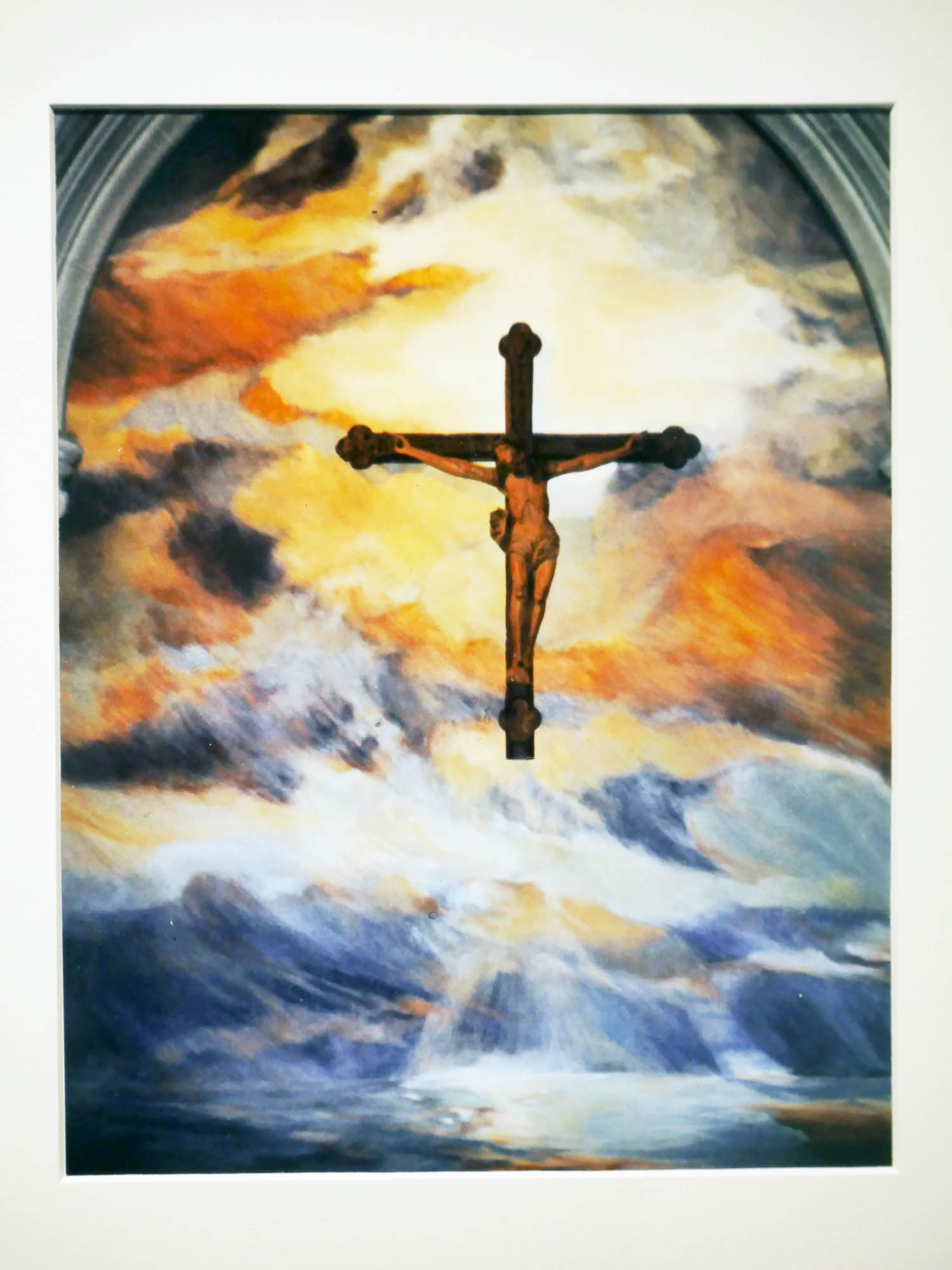
Goldstein’s 19-foot-tall mural in the columbarium of Manhattan’s Cathedral of St. John the Divine.
It’s not psychology; it’s the system
Goldstein began teaching during a time “when the city was burning,” she says. “They wanted to put me in a nice, clean school, and I said, ‘No.’ Instead, I taught in Harlem. The first thing I had my students do was pick a partner and go outside. I had laid out this huge roll of brown butcher paper, and I had them outline each other. Then I hung it up and said, ‘See, you’re really much bigger than you think you are.’ That’s what I built my art classes on—something that was meaningful and helpful. I wanted to give hope to inner-city kids.”
Goldstein learned about her students’ difficult home lives, and she wanted to help. She thought she could do more good as a psychologist, but just one class changed her mind. “I said, ‘Hell no! Their problem is not in them; it’s in their environment.’ So I went back and got a second master’s degree in social work, and I ran a small nonprofit that provided proper educational programs for students who had trouble learning and were at risk of incarceration or coming out of incarceration. I think it was one of the first student advocacy nonprofit programs.”
Goldstein struggled with dyslexia as a child and was raising three children with learning disabilities. She saw children who were labeled as “troubled” or “low IQ” differently than others: she saw the learning disability separate from the IQ. But running a nonprofit involves a lot of grant writing, and having dyslexia made it an uphill battle. Yet, she was the only director she knew of who hired a part-time lawyer to represent the children before the Committee on the Handicapped. Her organization focused on training school personnel and advocates across several New York cities—including Yonkers and other high-poverty areas. After approximately four years, she stepped aside to allow someone else to run the organization.
Goldstein’s advocacy was also a daily, domestic practice. As she raised her children, Goldstein would take in high school students kicked out of their homes. “There are all kinds of parents in this world,” Goldstein explains. “I would tell them that if they could get written permission from someone, they could stay with us. They would stay for four weeks or four months, and some of them came back years later to introduce me to their children.”
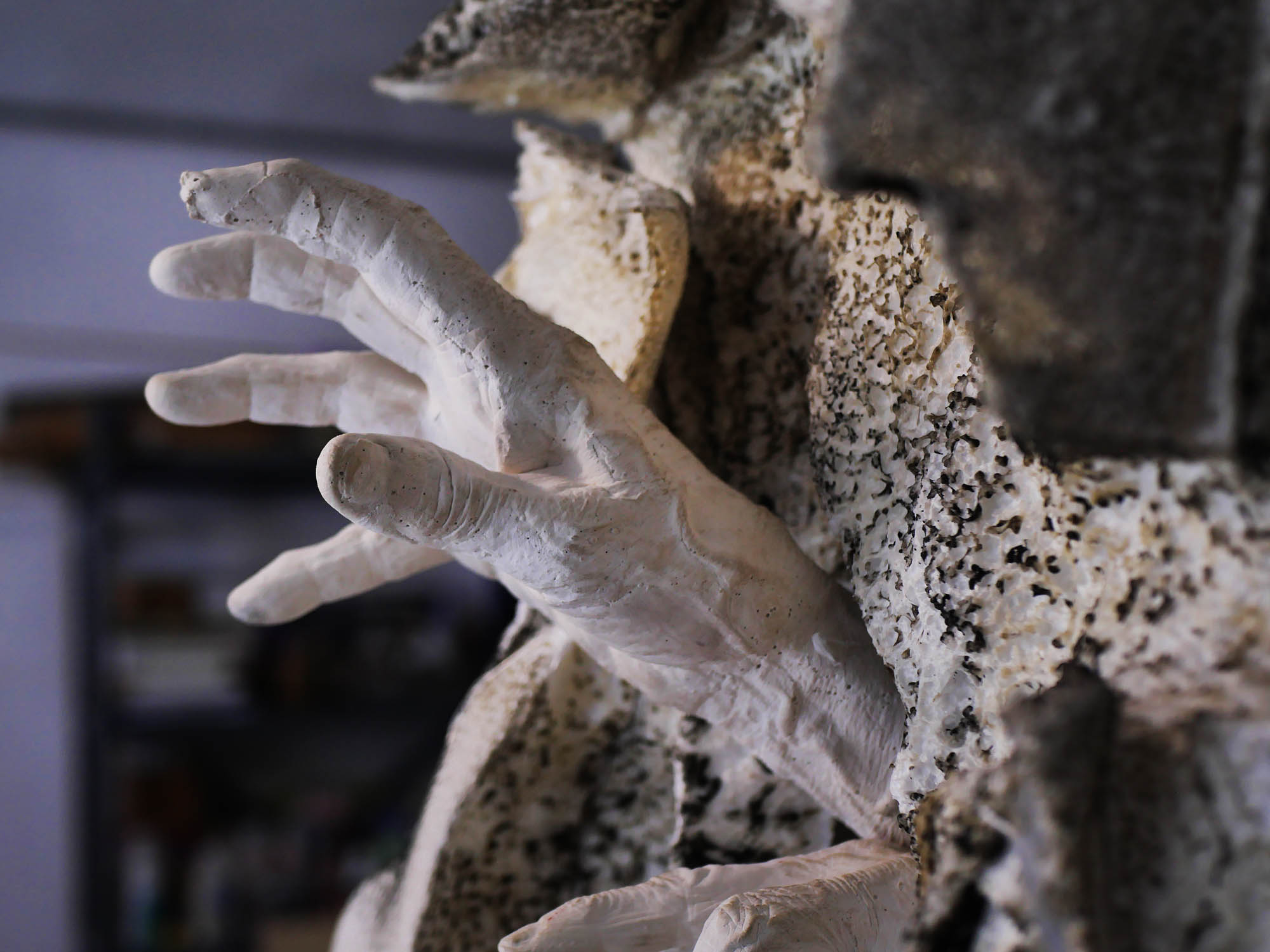
One of Goldstein’s protest pieces, “Cry,” featuring two hands desperately reaching out through a small hole in a cement-looking wall.
Think, feel and learn
For many years, Goldstein’s art had to wait. She remembers trying to set up her easel when her children were young, only for her middle son, Michael, to crawl underneath it, sucking his thumb and clutching his blanket. Looking down at him, Goldstein realized she could not divide her attention, so she put the easel away.
Returning to art when her children were older, Goldstein joined The Art Students League of New York, where she learned about New York Studio School’s legendary Marathons. “It’s two weeks of classes, Monday through Saturday, from nine in the morning until five at night,” Goldstein explains. “But those who want to stay later can take a half-hour break and return for the critique, which lasts until nine.” Goldstein participated in three Marathons and credits her teacher Graham Nickson as the person who taught her “more about painting than I could have ever learned in a lifetime.”
“He gave us exercises,” says Goldstein. “Every time you look at a painting, what is your entrance into it? Is it in the middle? There’s a positive purpose to where you want the person to enter, the pathway up, the exit, and where you stop. Those are not mistakes for the geniuses in art. They either knew it intrinsically, or they knew it intellectually, or both. No mistake about it. The second thing is, what is your lightest light and your darkest dark? How do you put them close together? Far away? What is the language between them? The aim was never to complete a painting. The aim was to think, feel and learn. And actually, if you ever came out with something finished, you didn’t spend enough time learning.”
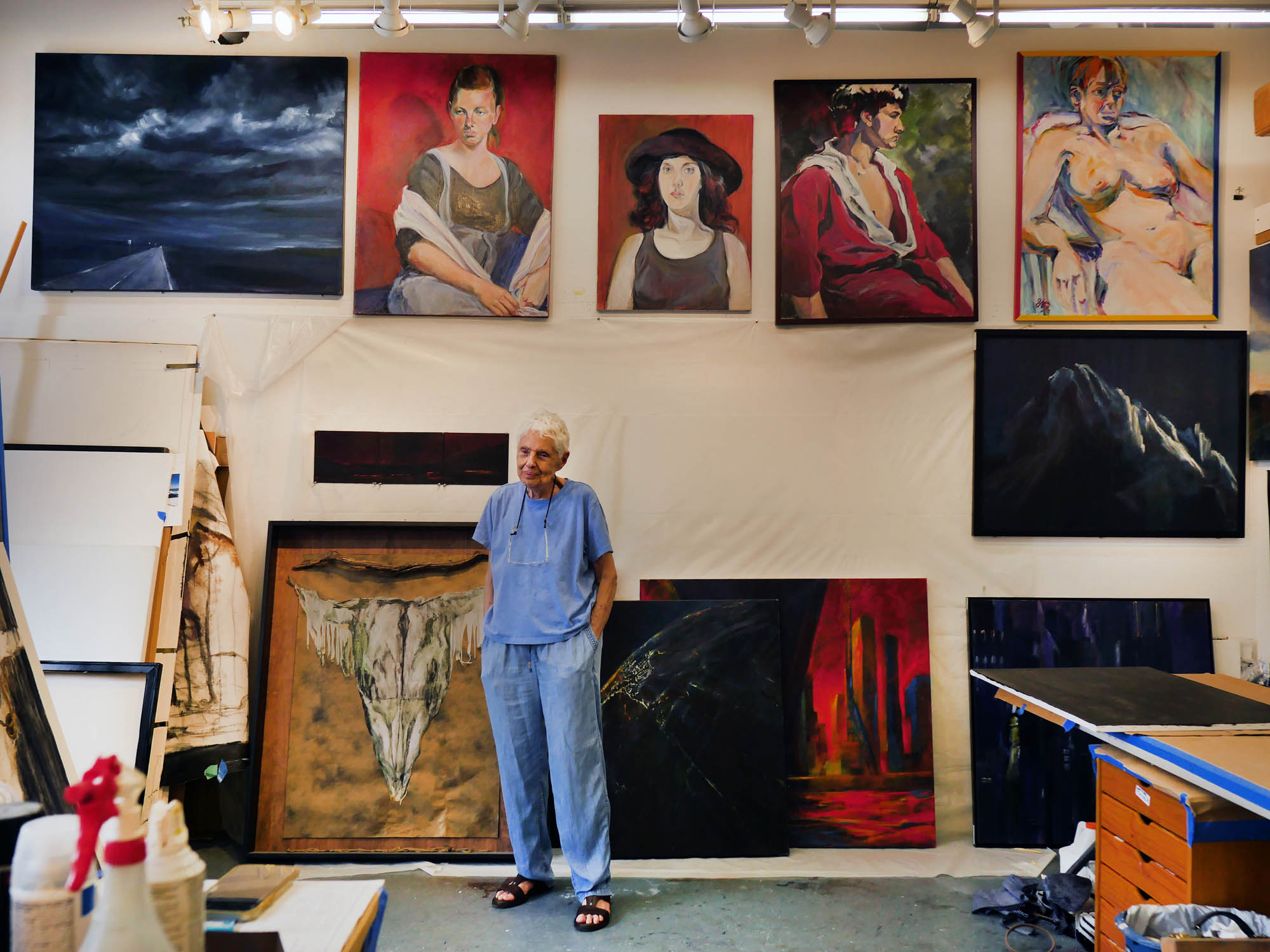
Goldstein’s artwork has been featured in close to 50 gallery shows—a combination of solo, duo and group showings; her work has also been displayed at IBM, PepsiCo and Pfizer, among others. But perhaps Goldstein’s most significant piece of work is a large mural she casually mentions in passing. According to Goldstein, it came about by chance while visiting her mother at Cabrini of Westchester. Goldstein met a woman who was “very active in the Presbyterian church in upper New York” and who requested she submit some sketches for a mural she hoped to commission on a church wall. That church was Manhattan’s Cathedral of St. John the Divine, which is over a century old and claims to be the largest Gothic cathedral in the world. Goldstein painted a 19-foot-tall mural in the building’s columbarium, and it is, to this day, the only permanently commissioned mural in the church’s history. Goldstein spent about one year completing the mural while also battling breast cancer. “I said, ‘I don’t have time to die; I’ve got to finish this mural,’” she jokes. About six years after completion, the monumental mural was destroyed in a fire.
Mural aside, Goldstein has always considered herself a painter and a sculptor, but when she was around 50 years old, she gave up sculpting to focus on sketching and painting icescapes, cityscapes, landscapes and what she calls “birds, figures and allegory.” Goldstein is drawn to the serene environments surrounding icebergs, as well as the structure of bridges, the interwoven lines of construction scaffolding and skylines at dusk or nightfall. She also finds the occasional bird, human figure and symbol captivating. Throughout most of her work, one thing remains consistent: Goldstein looks to capture the quiet beauty others may not notice.
Goldstein often travels for inspiration, frequently with a painting partner, and seeks residencies to make her trips possible. “When I travel, I always ask if I can see an elementary school and the town dump,” she says. “Sometimes I can, sometimes I can’t, but that’s how I really begin learning about the town’s residents. At the dump, I observe what they discard—what is no longer important to them. And I always enjoy watching the kids, especially their joy.” When at home, prior to his passing, Goldstein’s husband would often drive her down the highways at night for inspiration. “My way is a process of movement,” she says.
Of particular interest is the Arctic Circle, which Goldstein has visited three times. She works to convey what she calls the poetry of the “massive yet delicate” icebergs by using light to “inform and obscure.”
Goldstein paints with oils, pastels and watercolors, depending on what she’s painting and what, if she’s traveling, is available. “I don’t like acrylic paints because they don’t flow the way I want them to,” she explains. At one point, Goldstein even attempted spray painting, completing two pieces, one of which is in the permanent collection at the Williamsburg Art & Historical Center. “I loved the idea of it,” she says, “but I didn’t know where to go with it. Could I do more? Sure, but I didn’t know where or how or when.” And she often doesn’t envision the final result when she begins, causing her to toss a lot of her work. “I painted this one pastel so often, and the last time I went to it, it said, ‘Don’t touch me anymore.’ It was a mess, and I’m going to throw it away. But I was working on it for months. It’s such a little painting, too.”
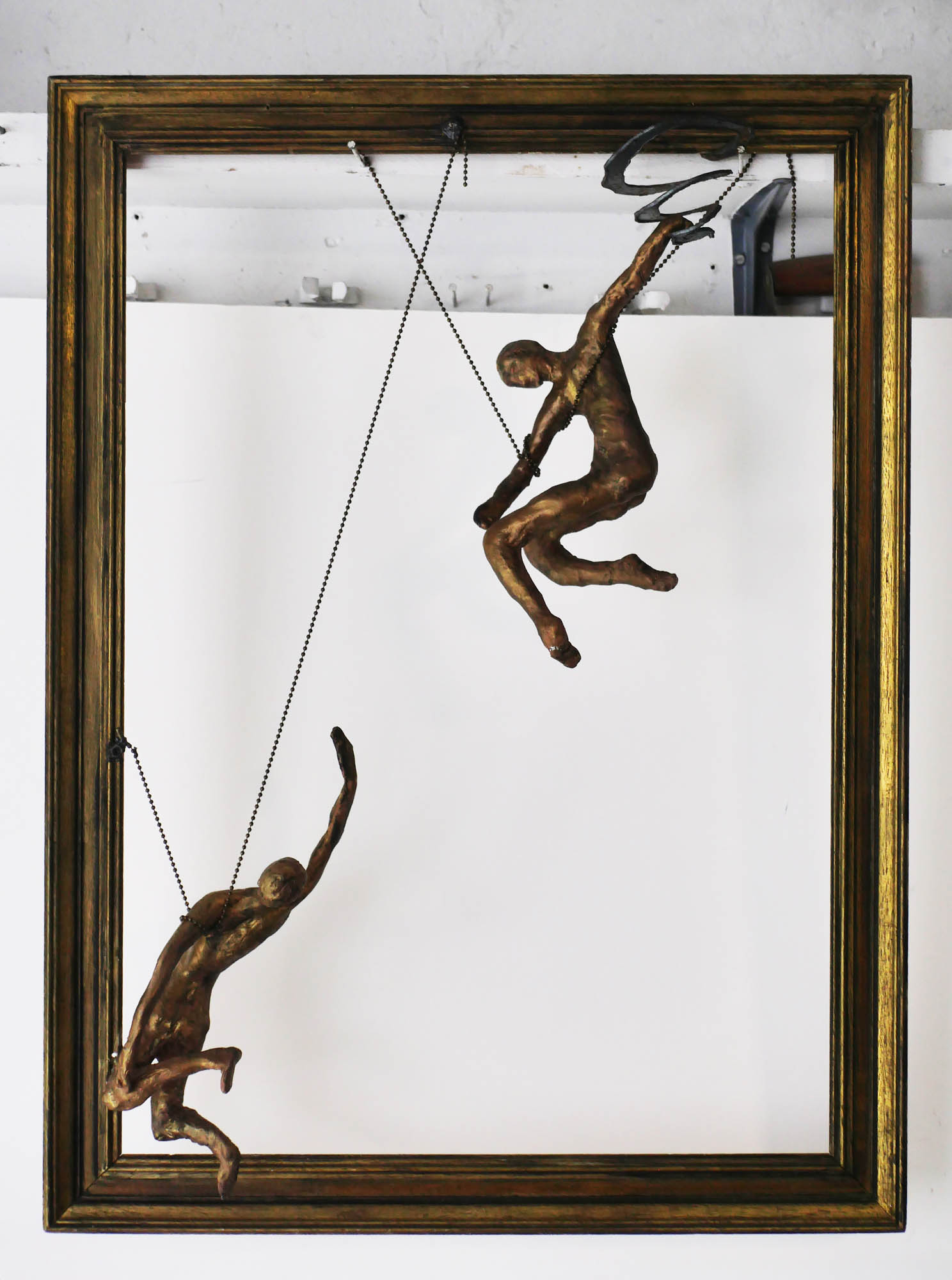
Another one of Goldstein’s protest pieces, featuring two gold figures representing distressed people falling through space, inspired by global warfare.
Pulling people to cry, to do, to think, to feel
In 2016, when Goldstein was in her early 80s, she felt compelled to sculpt again. “I believe art is one of the strongest ways of pulling people to cry, to do, to think, to feel,” she explains. The social fractures of the world drew her back in, triggering her to create a series of what she calls “protest pieces.”
Her first was a child-sized human curled in a ball, hugging its knees inside a suitcase with a luggage tag that reads “Unknown.” Created simply out of newspaper, wire and cloth, and held together with masking tape, Goldstein sealed the small body with Elmer’s glue. “I still get goose pimples when I think about it,” she says, describing the catalyst for the piece. “They were stopping people at the Mexican border. They were pulling parents away from their children. I just had to go back to sculpture.”
What followed is a series of sculptures in various sizes and mediums. Many of these pieces highlight Goldstein’s theory that “hands are the voice of the silence.” There’s “Cry,” a sculpture of two hands (her own), made of plaster of Paris, desperately reaching out through a small hole in a cement-looking wall constructed out of old Styrofoam. “I tore it, I burned it, I ripped it, I pasted it,” she says of the wall. She also sculpted a human, draped loosely in cloth with a handcuff dangling from one wrist. The person has fallen to their knees, and their outstretched arms and hands are curved upwards ever so slightly—pleading for mercy.
On a smaller scale, Goldstein constructed two miniature gold-painted figures, which, at first glance, appear to dance at opposite ends of an empty gold frame. However, Goldstein explains, they’re desperately reaching for one another, representing distressed figures falling through space, hoping someone will catch them. That piece, she says, was inspired by global warfare. But two sculptures, each of a singular hand emerging from a picture frame, titled “Out of Wreckage, We Rise I” and “Out of Wreckage, We Rise II,” best illustrate Goldstein’s message. The first hand is clawing its way out of the rubble of a bomb, while the second is powerfully breaking through the glass while grasping a kitchen knife, representing “the power to stand, speak, be heard.”
That same passion continues to fuel Goldstein’s work, especially her icescapes. In her booklet “Requiem,” which features the landscapes Goldstein witnessed on all three trips to the Arctic, she begins her introduction with, “Requiem is a statement of sorrow chosen to honor the beauty of the imperiled environment.” And it ends with, “The viewer is invited to journey to places that are almost familiar and yet are soon to exist only in our memory.”
When asked her thoughts on the issue’s theme, “What Could Be,” Goldstein responds with encouragement. “We are guardians of the beauty of this world, and we have to recognize it, love it, respect it and advertise it,” she says. “We have to care and use our voice.”
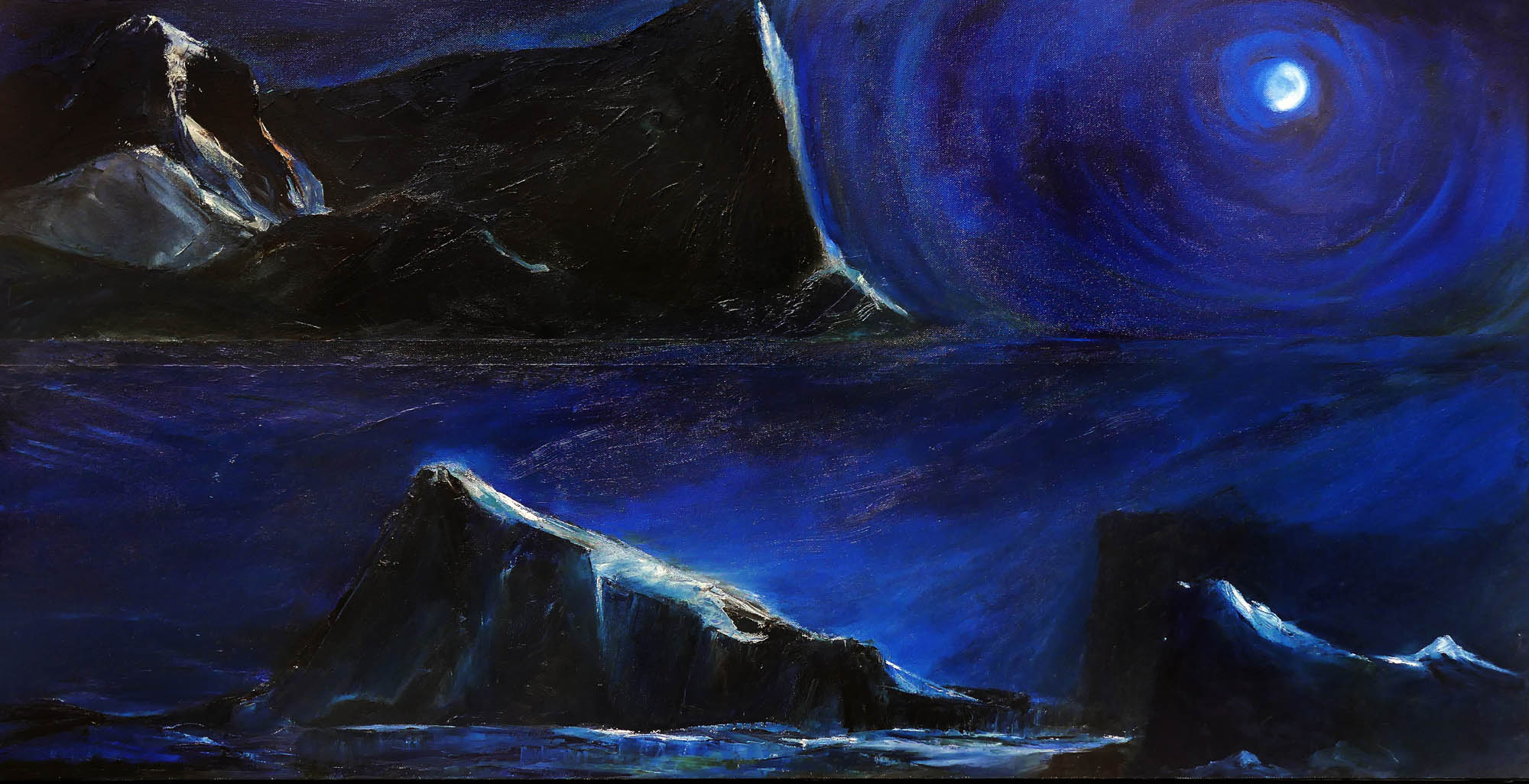
An oil icescape painting of the Arctic in the evening.
Eleanor Goldstein’s work will be on display at Chroma Fine Art Gallery in Katonah from November 10 through December 6, with an opening reception on November 14 from 3 to 7 p.m.
This article was edited by Meryl Kaye and fact-checked by Julie Schwietert Collazo. Photography was captured with Panasonic Lumix optics and edited in Adobe Creative Suite. The article was published in the November/December 2026 edition of Connect to Northern Westchester.

Gia Miller is an award-winning journalist and the editor-in-chief/co-publisher of Connect to Northern Westchester. She has a magazine journalism degree (yes, that's a real thing) from the University of Georgia and has written for countless national publications, ranging from SELF to The Washington Post. Gia desperately wishes schools still taught grammar. Also, she wants everyone to know they can delete the word "that" from about 90% of their sentences, and there's no such thing as "first annual." When she's not running her media empire, Gia enjoys spending quality time with friends and family, laughing at her crazy dog and listening to a good podcast. She thanks multiple alarms, fermented grapes and her amazing husband for helping her get through each day. Her love languages are food and humor.

Justin is an award-winning designer and photographer. He was the owner and creative director at Future Boy Design, producing work for clients such as National Parks Service, Vintage Cinemas, The Tarrytown Music Hall, and others. His work has appeared in Bloomberg TV, South by Southwest (SXSW), Edible Magazine, Westchester Magazine, Refinery 29, the Art Directors Club, AIGA and more.
Justin is a two-time winner of the International Design Awards, American Photography and Latin America Fotografia. Vice News has called Justin Negard as “one of the best artists working today.”
He is the author of two books, On Design, which discusses principles and the business of design, and Bogotà which is a photographic journey through the Colombian capital.
Additionally, Justin has served as Creative Director at CityMouse Inc., an NYC-based design firm which provides accessible design for people with disabilities, and has been awarded by the City of New York, MIT Media Lab and South By Southwest.
He lives in Katonah with his wonderfully patient wife, son and daughter.