
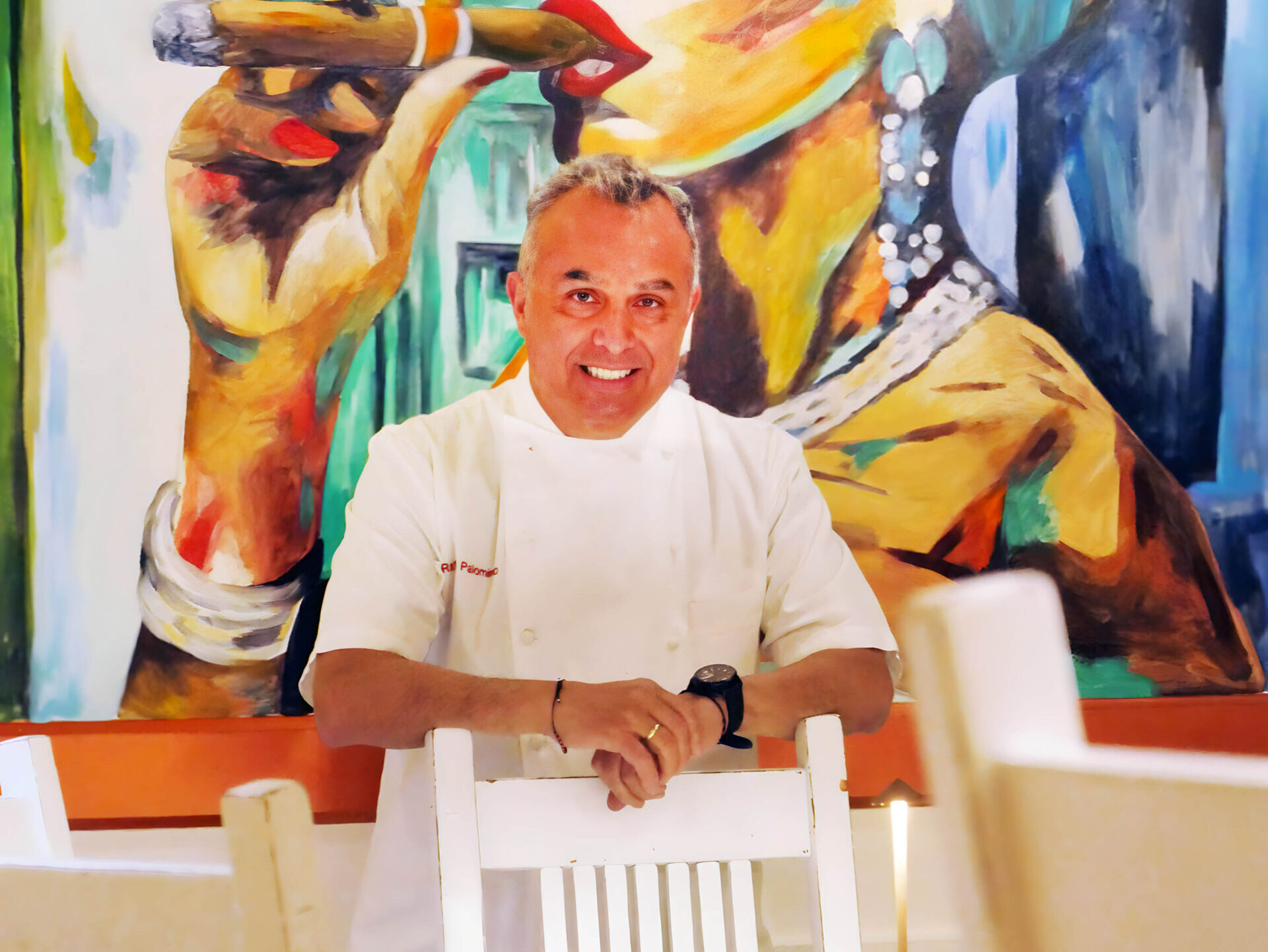
For Nuevo Latino pioneer Rafael Palomino, commitment has always meant showing up fully—for the food, the concept and the people.
By Gia Miller
Photography by Justin Negard
The year was 1986, and the location was Union Square. The 10-year-old Union Square Greenmarket was steadily growing in size and frequency, Union Square Park was halfway through a three-year redesign by renowned landscape architect Paul Friedberg, and a then 27-year-old Danny Meyer had opened his first restaurant, Union Square Cafe, one year before. The neighborhood was undergoing a major transformation, shedding its reputation as a seedy, drug-heavy part of Manhattan and becoming a trendy “go-to” destination. And during that same year, 1986, another significant step was taken toward that transformation: The Metropolis Café, located in the 16-story, Neo-Renaissance building that formerly housed the Bank of the Metropolis, hired Rafael Palomino as the new executive chef. At 23 years old, Palomino was one of the youngest head chefs in Manhattan. As he settled in, Palomino, now a 30-year Bedford resident, took the bold step of infusing Latin flavors into the restaurant’s signature “New York bistro” cuisine at a time when Latin cuisine was relegated to small hole-in-the-wall restaurants and bodegas. During Palomino’s eight-year tenure, The Metropolis Café became known as a “power spot” for creatives and businesspeople alike.
But what makes Palomino’s rise and cultural impact even more impressive is his history. Palomino wasn’t raised at the heels of a famous chef, nor did he grow up shadowing his mother or father in the kitchen. Palomino doesn’t tell stories about his childhood passion for cooking, and he never dreamed of or attended the famed Culinary Institute of America (CIA), nor any other culinary school, for that matter. In fact, he landed in the culinary world in large part by chance.
“When I was in high school, a friend got me a job at a place called The River Café in Brooklyn Heights, which was considered the Harvard for culinary talent in the 1980s and 90s,” Palomino says. “I was 17, and I worked the garde manger for the salad station. For me, it was just a job. But after about a year or so, I started connecting with what I was doing. Little by little, I started putting it all together, and I realized that I liked it.”
That high school gig gave Palomino a career he never expected, working under several well-respected culinary talents in New York City and France before making a name for himself at an age when most chefs were still fumbling through their first jobs following culinary school. Today, Palomino is widely recognized as a pioneer of Nuevo Latino cuisine, and to understand how he got here, we have to go back to the beginning.
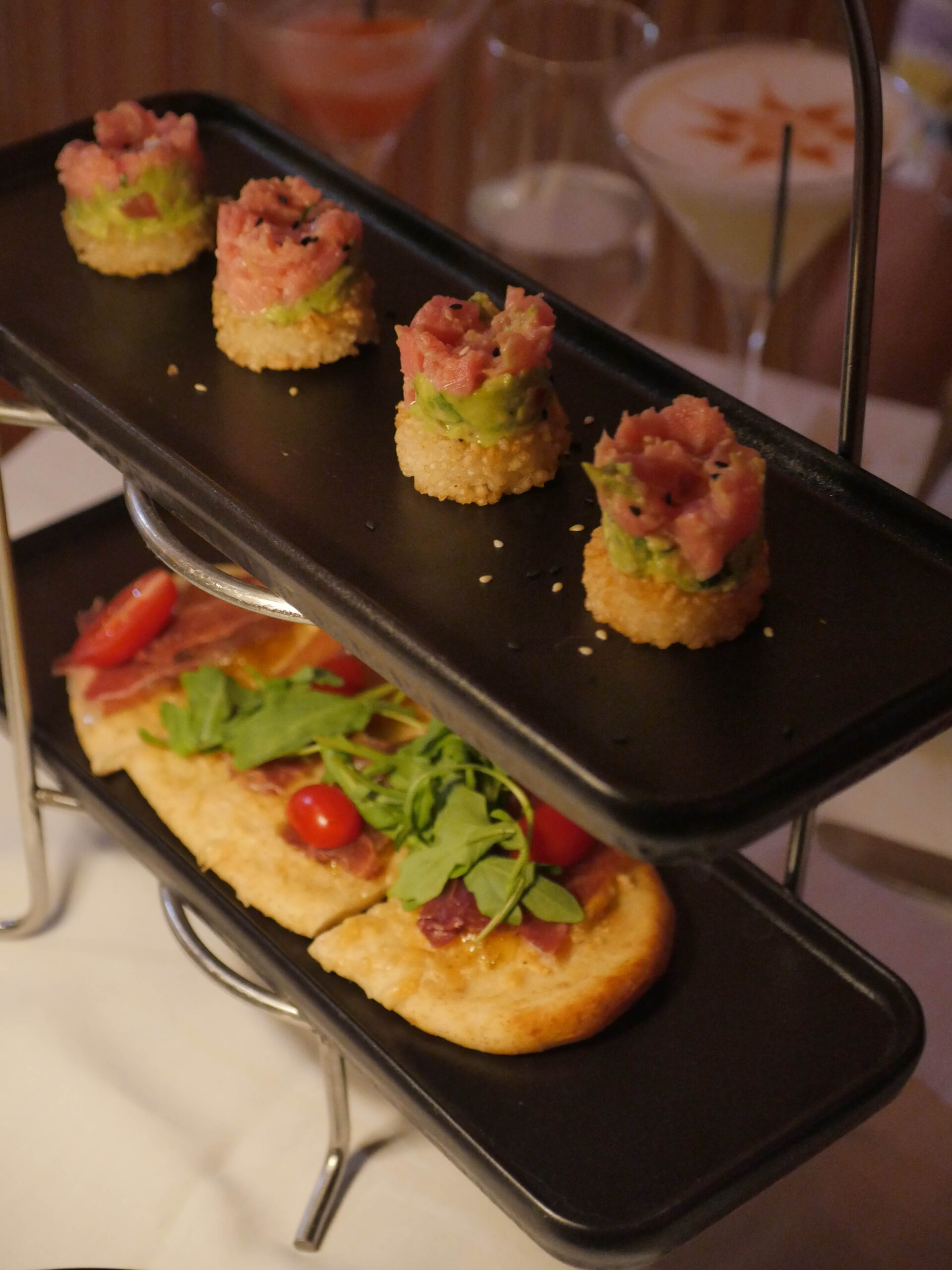
Tuna tartar and flatbread.
Latin roots
Palomino was born in Bogotá, Colombia, and when he was 11 years old, his parents moved the whole family—including Palomino’s older sister and younger brother—to the U.S. As they settled in Fresh Meadows, Queens and began adjusting to a new country, language, culture and people, his father kept one of Palomino’s favorite traditions alive—Sunday brunch.
“It was a feast,” Palomino remembers. “Every Sunday, he created a nice brunch with Changua, which is like an onion soup but creamy and made with cheese, eggs and bread. He also made calentado, which is rice with vegetables and beans—similar to fried rice. There were also scrambled eggs with onions and tomatoes as well as a basket of assorted cheese puffs and corn muffins.”
Sometimes, brunch was more of a “heavy breakfast” at 9:30 a.m. before church, and sometimes it was after. But either way, Palomino’s father typically cooked the feast alone, which Palomino says his father preferred. “It was a way for him to relax,” he remembers. “It was fun, and it came very easy to him.” And while Palomino can still describe the food his father served, he also speaks fondly of the quality time with his parents and siblings. “It was special because of the family connection,” he says. “We sat at the table for about an hour and change, and we talked about school, soccer, movies, our favorite baseball player—everything.”
Each summer, Palomino and his family returned to Colombia for a few weeks, spending time with family and friends while enjoying the country’s bold flavors and unique cuisines. “Colombia is very rich in fruits,” he explains. “They have over 3,000 fruits, which they use for cooking and for medicine.” Those distinct flavors shaped Palomino’s palate, and although his culinary training focused on classic French cuisine, those childhood experiences stayed with him as he began his career.
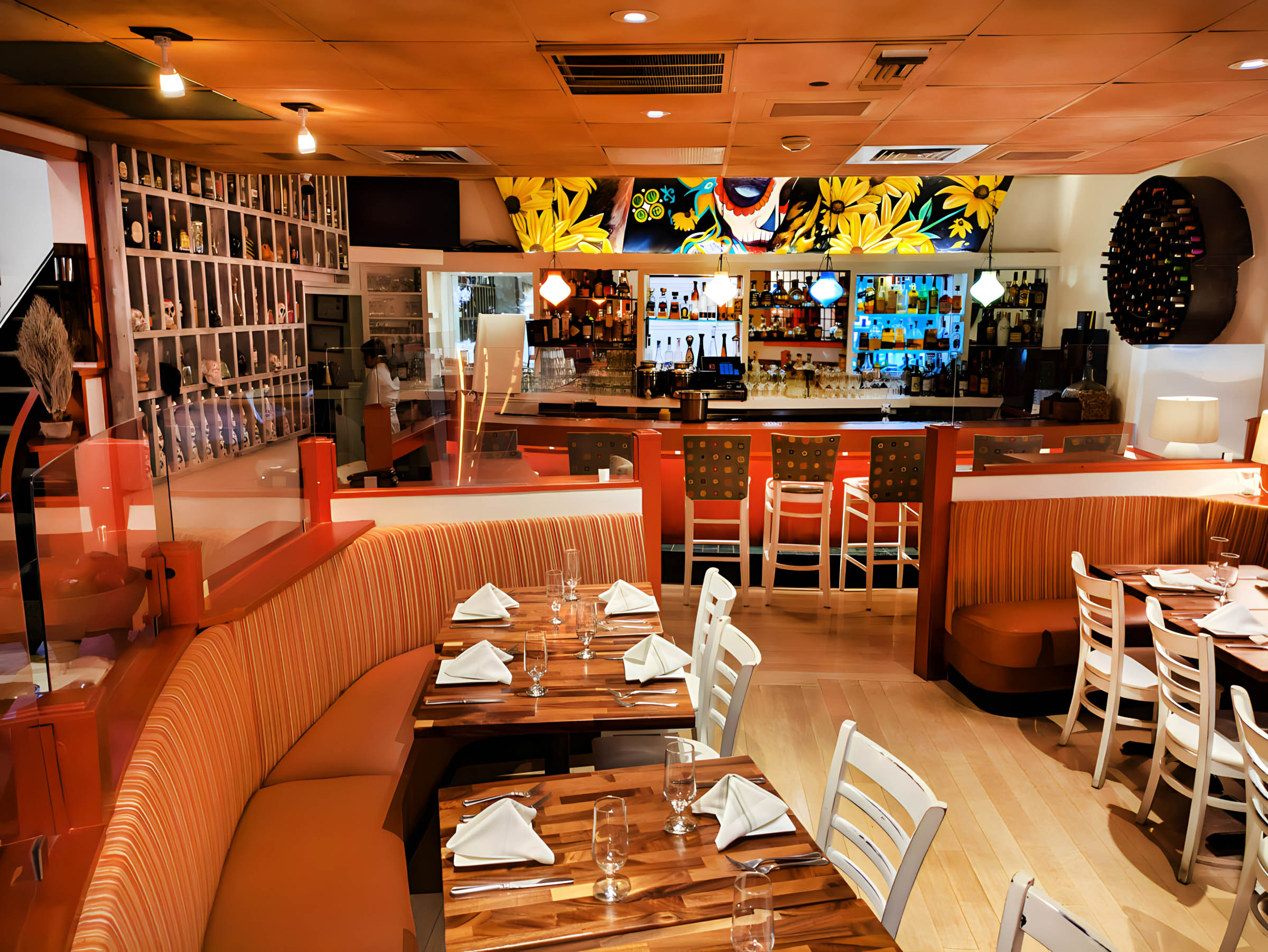
Sonora Restaurant in Port Chester.
Stepping into the kitchen
Palomino was a senior in high school when he began working at The River Café under Chef Larry Forgione, considered the Godfather of American cuisine. Palomino only worked on the weekends, prepping food alongside CIA graduates with several years of training, learning as he went along.
After graduation, Palomino wanted to learn more, so he asked Forgione if he could volunteer on weekdays. Forgione agreed, and Palomino spent the summer shadowing the chefs, rotating to a new station (appetizer, grill, fish, pastry, etc.) every few weeks, while continuing to work for pay on the weekends. Then, in September, at the age of 18, Palomino received the offer of a lifetime: Forgione asked Palomino if he would like to train in Europe for several months at either a two-starred Michelin restaurant in London or a three-starred Michelin restaurant in France; Palomino chose the latter. Palomino traveled to the south of France and spent six months working at Les Prés d’Eugénie—there were 27 chefs in the kitchen, and, by design, the restaurant only fed about 15 people a night.
It was one of the earliest farm-to-table restaurants, and Palomino began his training by picking fresh produce on the property. “It was a huge compound, and people went there to heal their bodies,” Palomino explains. “The chef, Michel Guérard, created a concept called cuisine minceur, which is a very clean diet; we prepared lighter versions of classic French dishes. The kitchen was filled with young chefs from France, Germany, Belgium, the U.S.—everywhere. They were considered the talent of the culinary movement back then.”
Over time, Palomino demonstrated his culinary skills. “A plate is like a canvas for food,” he explains. “And once they saw how I put something on a plate, they gave me a greater task.” Eventually, that led Palomino to the grill—one of the restaurant’s main stations. The menu at Les Prés d’Eugénie featured a lot of game, and almost everything was cooked over wood, creating simple yet delicious meals. It was an art form, and Palomino took it all in.
When Palomino returned to the U.S., he went back to work at The River Café for several months until Forgione, the head chef, left to open a restaurant called An American Place. Palomino followed him there, becoming the junior sous chef.
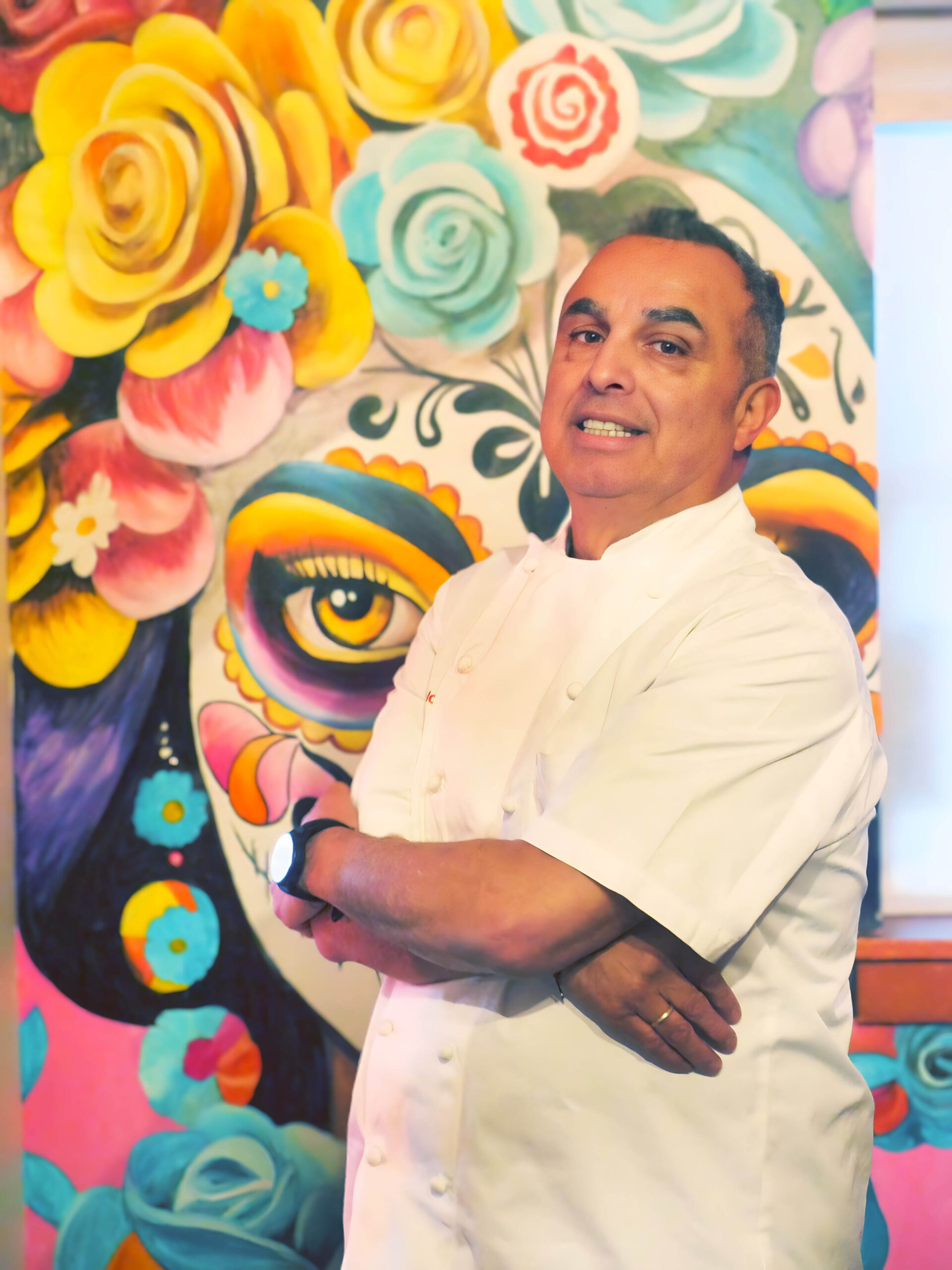
Raphael Palomino.
Making a name for himself
“At An American Place,” says Palomino, “the blueberries were from Michigan, the lobster mushrooms were from Oregon, the foie gras was from Wisconsin, the buffalo was from Montana, the squab was from Pennsylvania, the wild rice was from Minnesota—it was 1983, and everything was unique and special.”
Palomino worked there for about three years, sometimes cooking at the renowned James Beard House when Beard, Forgione’s mentor, asked Forgione to help with an event. Then, Palomino took a job at Jonathan Waxman’s California-style bistro Jams, where he served as Waxman’s sous chef, managing the kitchen during lunch and cooking for celebrities, including the likes of David Letterman and Jacqueline Kennedy Onassis. He was just 21 years old.
By the time he was 23, Palomino became the executive chef at The Metropolis Café, overseeing a kitchen of 25 chefs. “I was learning as I was going; it was a process,” Palomino remembers. “I brought in a couple of people that I knew right away, and within three or four months, I had pretty much fired everybody. I cleaned house, got a new staff and the rest was history.”
Palomino describes the environment as demanding, and even though the majority of his staff were older than him, he says he was respected because he had worked with some of the most well-regarded chefs in the country and France. During his six years at The Metropolis Café, Palomino began to merge his classic French training with the bold Latin flavors of his heritage. He became known for his wood-grilled fish served with vibrant salsas, ceviches infused with citrus blends and plated in a classic French style, and for swapping standard starches for elevated black bean purées or terrines. Palomino also incorporated ingredients like yuca, plantains and cilantro into his meals, serving them with dishes such as grilled duck or chicken instead of potatoes.
When the original owners sold The Metropolis Café to Steve Hanson, owner of the BR Guest restaurant group, Palomino quit after two weeks because he disagreed with Hanson’s budget-cutting philosophy. “When I quit, I said, ‘I can’t work for you, but thank you very much,’” Palomino remembers. “He asked me what I was going to do, and I told him I didn’t know. Then he said, ‘Well, you will never make the money that I pay you.’ And I said, ‘So be it.’”
During his time at The Metropolis Café, Palomino had also opened two bars in Manhattan—Manchester in Midtown East and Becky’s on the Upper East Side. “I needed extra income, so I took all my credit cards, withdrew the little savings I had, and opened Manchester and then Becky’s with a partner,” he explains. “The bars were my idea, and I created the menus. Manchester served British comfort food, like fish and chips, bangers and mash, and shepherd’s pie. Becky’s served American comfort food like stews, wings, burgers and pastas.”
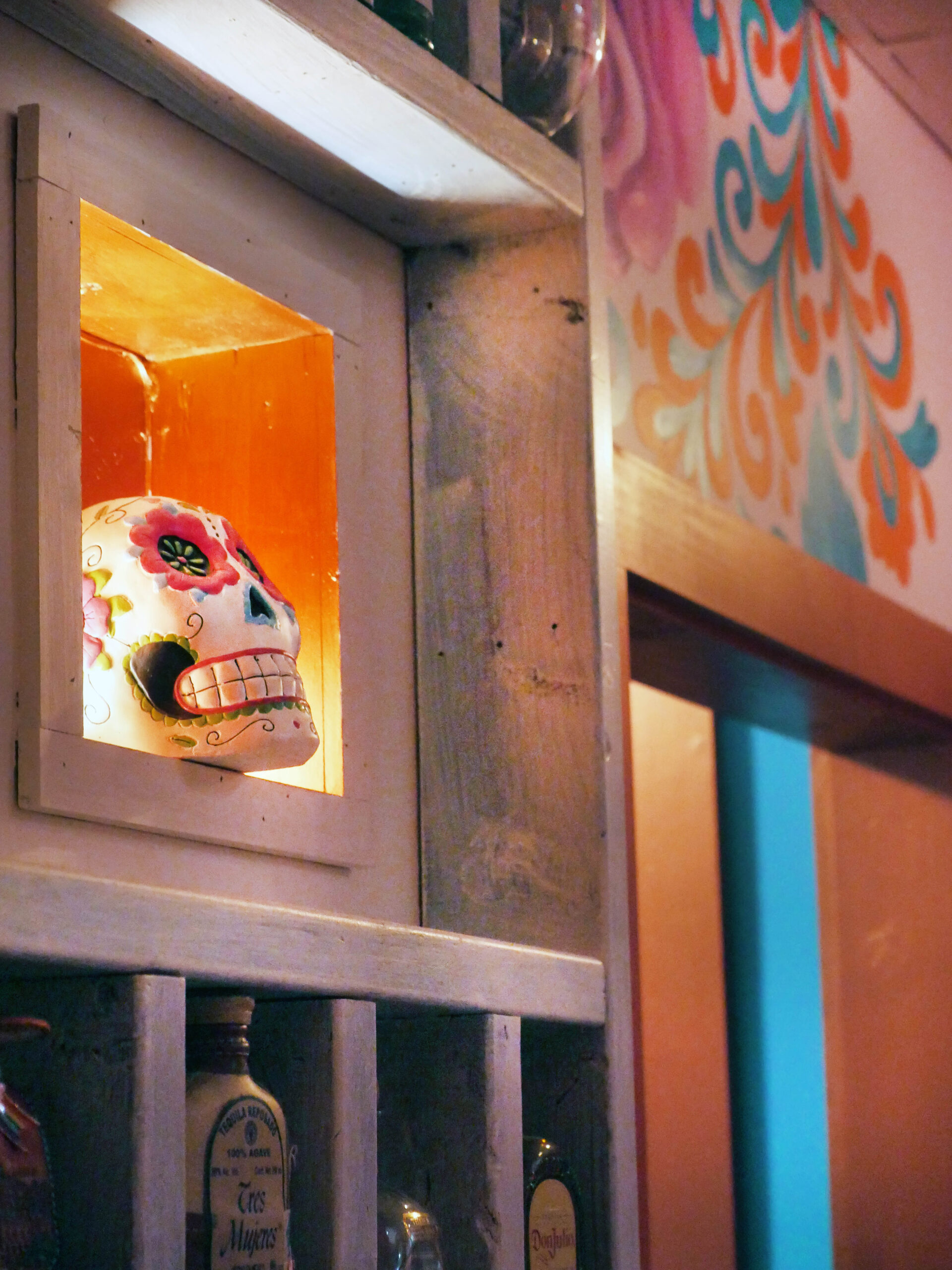
Sugar skull decor at Sonora Restaurant.
Branching out on his own
About 10 years after opening Manchester, Palomino sold both bars and opened a restaurant with another partner, which didn’t go well. Then, in 1998, Palomino opened his first solo venture—a restaurant called Sonora in Murray Hill, less than a mile north of where he lived with his wife, Martha, whom he married during his first year at The Metropolis Café.
Sonora was Palomino’s first fully Latin/Nuevo Latino restaurant, and it was innovative. Instead of a traditional menu, he listed dishes by Latino regions or republics. He offered dishes like quesadillas with lobster and avocado; a trio of ceviches with shrimp, octopus and salmon; glazed red snapper over a bed of smoky leeks topped with a shrimp chimichurri sauce; and, of course, paella. In 1999, Gael Greene, New York Magazine’s famous restaurant critic, included Sonora in her “Where to Eat in 1999” list.
When Palomino and Martha decided to move out of the city, they purchased a small home in Bedford. “Several months later, somebody offered me a restaurant spot in Port Chester,” Palomino remembers. “I went to see it, bought it and opened another Sonora in 1999, which went incredibly well from the beginning. There were not that many good restaurants in Westchester, so people would drive anywhere to find good food because they didn’t want to go to the city.”
A stellar 2004 review from The New York Times rated the Port Chester Sonora as “excellent,” saying, “It would be a pleasure to come back to Sonora as often as possible to discover what wonderful new ideas the energetic chef and owner Rafael Palomino has dreamed up to dazzle us with.” And when The Times returned in 2009, granting another “excellent” rating, they wrote, “…it is pleasantly surprising that Sonora, his first suburban foray in Westchester, is still in place and offering inspired Nuevo Latino cooking.”
Palomino sold the Manhattan Sonora three years after opening the one in Port Chester, and he began to open more restaurants in the suburbs, sometimes with partners and sometimes on his own. Palomino’s next venture was Pacífico, also in Port Chester (he later sold this establishment and opened another Pacífico in New Haven, CT), and then he opened Palomino in Old Greenwich. Over the years, Palomino’s opened close to 20 restaurants, including seven in Pennsylvania—the majority featuring Latin cuisine, as well as a burger place in Fort Lauderdale, FL, and an Italian restaurant, Villa Lulu, in New Haven—his last restaurant, which opened in 2021. And when a restaurant no longer serves Palomino, he sells it. “Restaurants are like stocks,” he says. “If they don’t give you the value you want, you sell them.”
“I’ve never closed any of my restaurants; I’ve sold them and moved on,” he continues. “For example, at my restaurant in Florida, we were doing $5 million in sales a year, and we were just making burgers. But I sold it three years ago because I saw the area changing; a lot of new places were opening up, and I knew they would impact our sales. Within six months, 12 restaurants on the avenue closed down. We all dream to be dreamers, but at the end of the day, you have to be able to see the numbers.”
Today, Palomino owns six restaurants (three in PA, two in New Haven and Sonora in Port Chester). He’s also written five Latin-themed cookbooks, runs a catering company and a corporate delivery service, offers cooking classes and more. And yes, he does sleep.
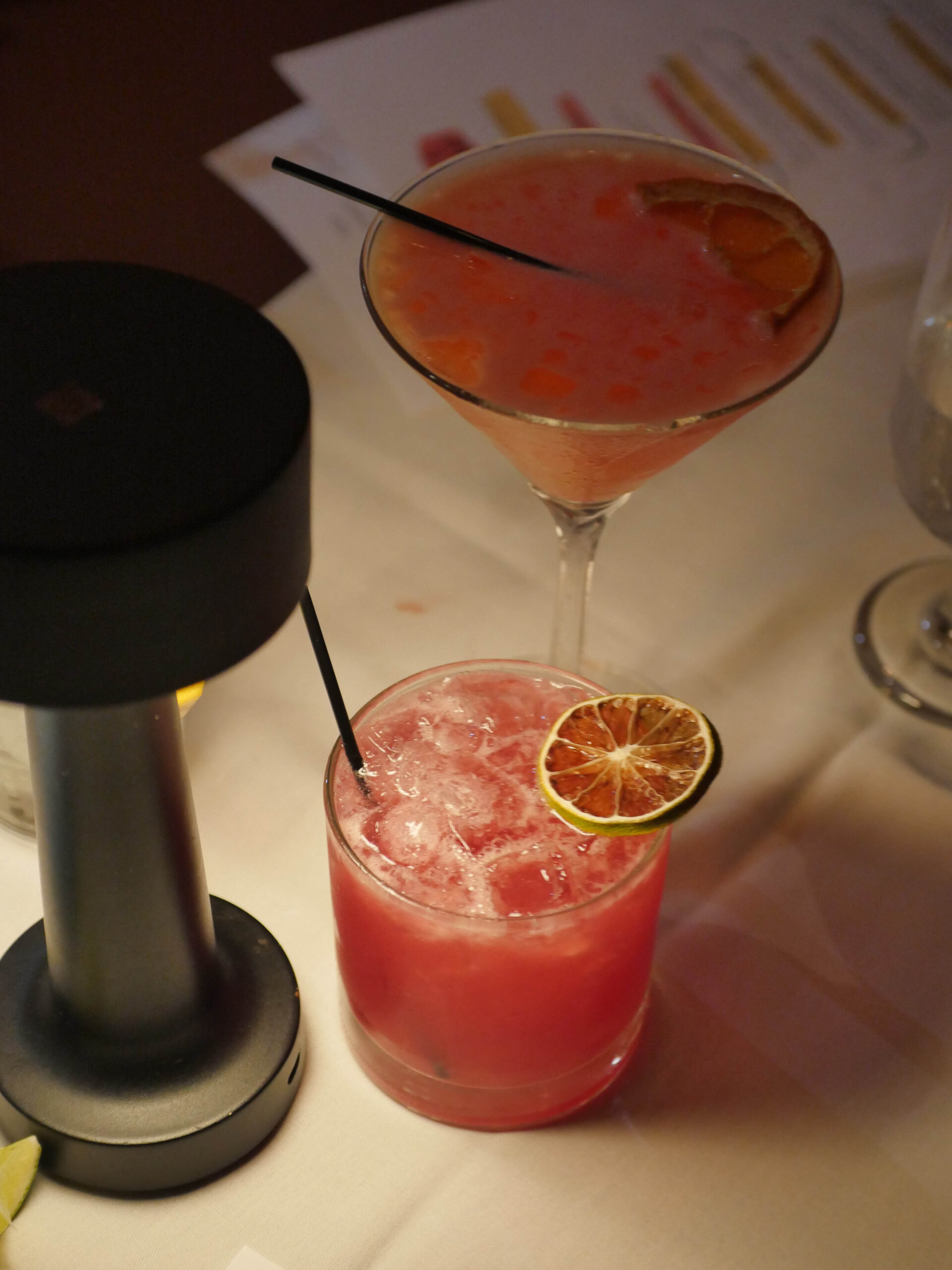
Cocktails served at Sonora Restaurant.
It’s about the people
Throughout the changes in his career, one thing has remained constant: Palomino prioritizes his staff. That means kindness, understanding and generous compensation, which sometimes includes housing. “One thing I learned from my wife when she was in graduate school is how to treat your staff,” Palomino explains. “There are two components that everybody needs: one is time, and the other is money. If you give them both, it works very well.”
For example, during the holiday season, Palomino rents an estate for a company-wide Christmas celebration, using the opportunity to connect with his employees. “Everybody has issues; everybody has something to say, and if you give them the time to say it, they appreciate that,” he explains. “They’re not machines; they’re just people like anyone else.” This philosophy has served Palomino well—some of his staff have been with him over 20 years.
And Palomino also gives back. He currently serves on the board of Latino U College Access (LUCA) in White Plains, which helps high-achieving, low-income, first-generation Latino students attend college. And several months ago, he began working with Meals on Main St. in Port Chester, which fights food insecurity. “Right now, we’re feeding about 3,000 people in Westchester,” he says. “My goal is to feed 6,000 people a week in the next several months.”
Palomino’s focus on food costs carries over to his restaurants. As restaurants’ margins become even slimmer, Palomino says the industry is struggling to survive. “Last year was a very tough year for the restaurant business,” he says. “The industry is changing, and restaurants have got to get creative. I have become a numbers person because I have to maximize every single aspect of my business. The rents keep going up, costs keep going up, and real estate taxes keep going up.” At some restaurants, Palomino has developed new dishes that highlight different cuts of meat; at others, he’s reconfigured the dining room to serve fewer people a high-quality meal, similar to his experience at Les Prés d’Eugénie.
Three years ago, Palomino began working on a new project to fill a hole he sees in the market. “I’m coming out with a spirit you’re able to drink on its own because it feels really good on the palate,” he explains. “We wanted something different, something that won’t burn the palate. It’s a premium product in a beautiful bottle at a good price point.” Palomino has a team of 10 working on this project, and it’s slated to launch later this year. It’s a new chapter for Palomino, and his enthusiasm is impossible to miss. Yet even though launching a brand is an intense time commitment, Palomino says he’s found a balance.
“My wife asks me when I’m going to slow down, but I have slowed down,” he says. “I’ve found my sweet spot. I still have to worry about my restaurants and some people here and there, but I’m able to go out to dinner with my wife and our adult children—whether it’s a nice meal or a slice of pizza—and enjoy that moment. And because my parents moved to Goldens Bridge five years ago, I now spend more time with them. That’s huge for me—I’m a very family-oriented person.”
“I’m very blessed,” he continues. “Every day is a dream. For me, it’s not about making more money or buying more stocks; it’s about enjoying the journey, wherever the journey might take me.”
This article was edited by Meryl Kaye and fact-checked by Julie Schwietert Collazo. The photos were taken with Panasonic Lumix optics at Sonora Restaurant. The food is delicious; you should go.
This article was published in the March/April 2026 edition of Connect to Northern Westchester.

Justin is an award-winning designer and photographer. He was the owner and creative director at Future Boy Design, producing work for clients such as National Parks Service, Vintage Cinemas, The Tarrytown Music Hall, and others. His work has appeared in Bloomberg TV, South by Southwest (SXSW), Edible Magazine, Westchester Magazine, Refinery 29, the Art Directors Club, AIGA and more.
Justin is a two-time winner of the International Design Awards, American Photography and Latin America Fotografia. Vice News has called Justin Negard as “one of the best artists working today.”
He is the author of two books, On Design, which discusses principles and the business of design, and Bogotà which is a photographic journey through the Colombian capital.
Additionally, Justin has served as Creative Director at CityMouse Inc., an NYC-based design firm which provides accessible design for people with disabilities, and has been awarded by the City of New York, MIT Media Lab and South By Southwest.
He lives in Katonah with his wonderfully patient wife, son and daughter.

Gia Miller is an award-winning journalist and the editor-in-chief/co-publisher of Connect to Northern Westchester. She has a magazine journalism degree (yes, that's a real thing) from the University of Georgia and has written for countless national publications, ranging from SELF to The Washington Post. Gia desperately wishes schools still taught grammar. Also, she wants everyone to know they can delete the word "that" from about 90% of their sentences, and there's no such thing as "first annual." When she's not running her media empire, Gia enjoys spending quality time with friends and family, laughing at her crazy dog and listening to a good podcast. She thanks multiple alarms, fermented grapes and her amazing husband for helping her get through each day. Her love languages are food and humor.