
Writing and photography by Justin Negard
“All you need is a pair of eyes and a mouth,” says Jim Henson’s Creature Shop puppet designer/builder James Wojtal. “With that, you have created the illusion of life where there is none. What we puppet builders and designers do is create the physical representation, and a talented performer breathes life into it.”
This simple idea is the foundation of Jim Henson’s Creature Shop in Long Island City. Combine some foam with a little fabric and a couple of eyeballs, and you might wind up with Sesame Street’s next star puppet. A funny mustache doesn’t hurt either.
There’s much more to it, of course. A lot more.
The artists and designers at the Creature Shop are using techniques and materials that Henson and his original team of creatives developed decades ago. There are rooms for building, painting and fabric dying. There are racks upon racks of apple green fur and cerulean blue cloth. There are plastic storage boxes labeled with words like “wools, knits, plaids,” “L200 foam” and one simply called “slippery sleezy” (we still don’t know what that one means). And, of course, there’s one cardboard box simply labeled “Big Bird head.”
This fully functioning studio has created countless characters for shows including “Fraggle Rock,” “Sesame Street,” “Labyrinth” and more. Many of these characters still adorn the walls and shelves of the studio, including Elmo, Cookie Monster and Grover (Super Grover to be precise). For decades, the Creature Shop was closed to the public, but this year, they began welcoming visitors. Weekend tours can be booked online, allowing the muppet lovers and the muppet curious to see the fuzzy and colorful work in person, although it’s not cheap ($150 per person).
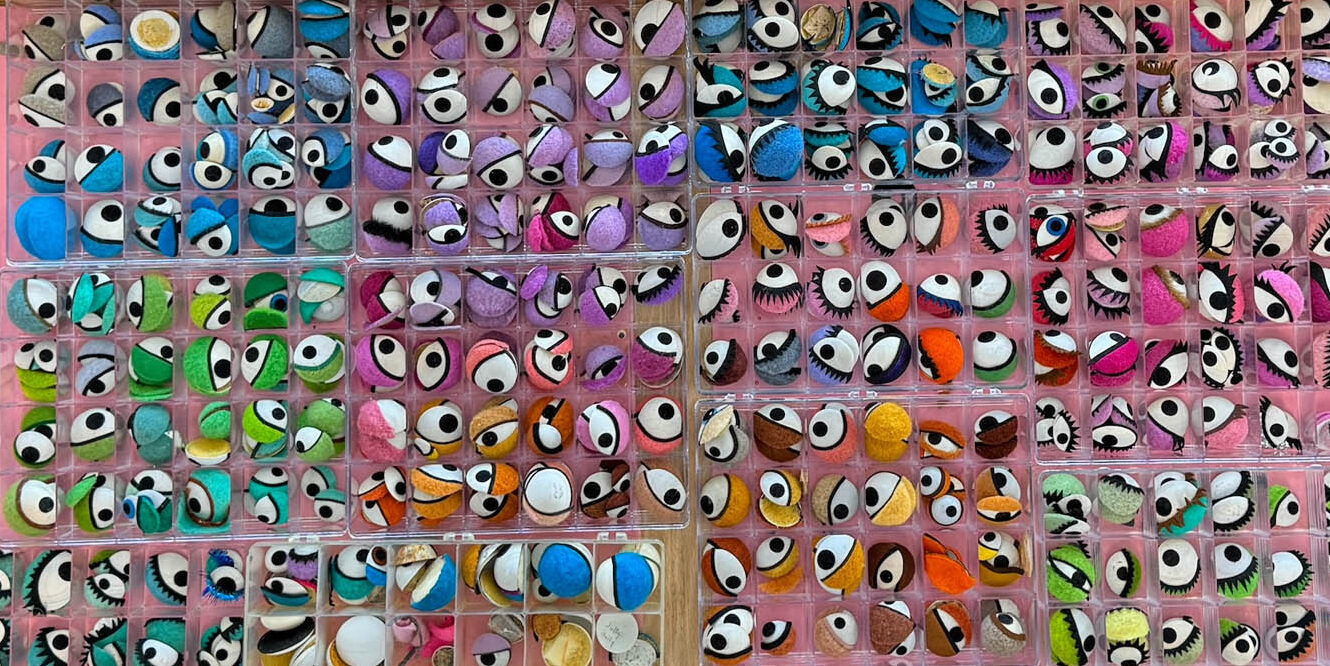
An example of the materials on display at the Creature Shop.
Puppet practice
The Creature Shop is located in the Queens industrial neighborhood of Long Island City. This is a working studio, not a theme park, and first-time visitors could be forgiven for wondering if they’re in the right place when they arrive at the unassuming building. But a greeter will meet you at the door and make sure you find your way.
Fortunately, the lobby elevator clears the mystery up rather quickly, thanks to the button on the control panel adorned in shaggy green fur. And when the elevator doors open again, simply follow a shaggy green arrow down the hall to the studio tour entrance.
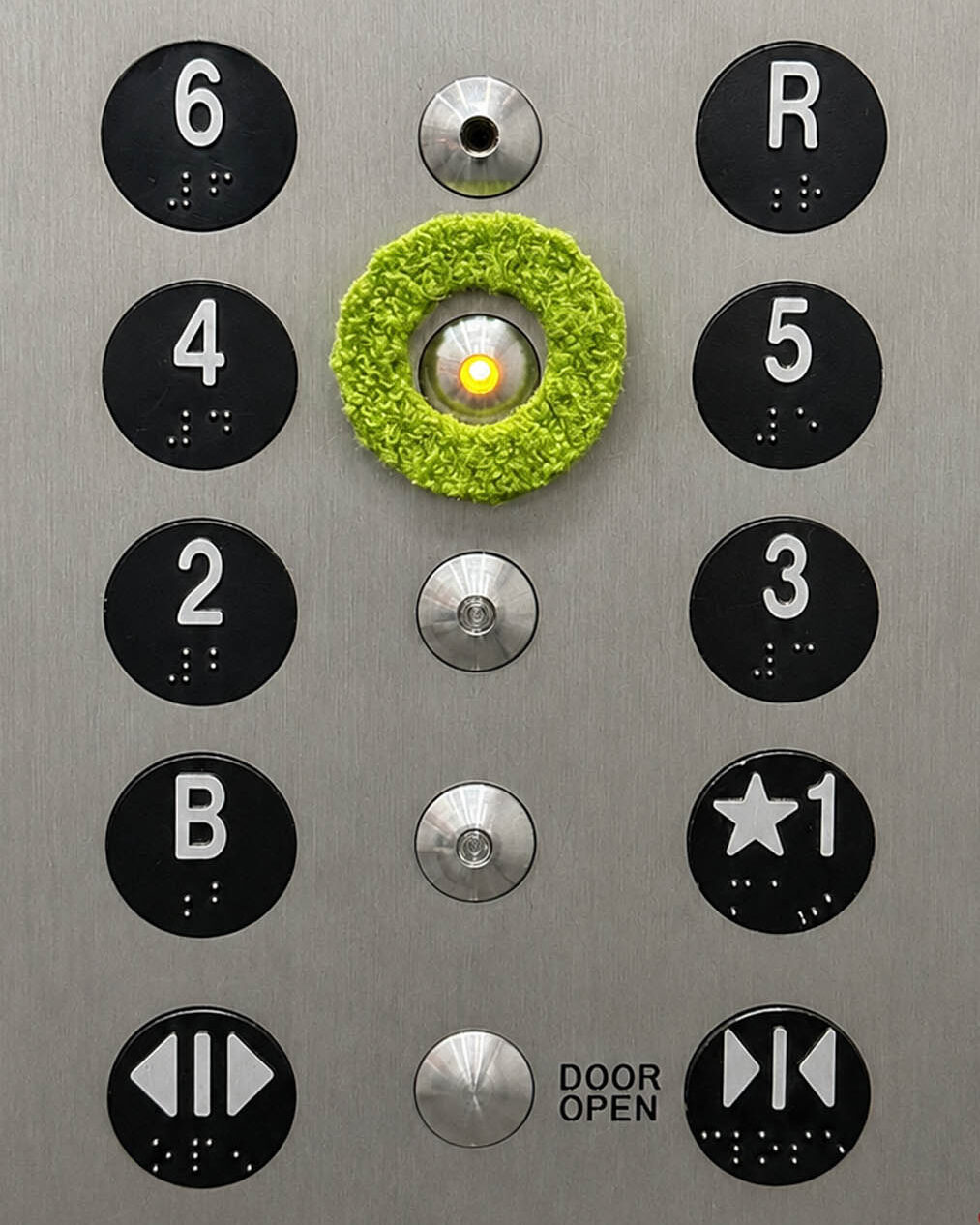
The shaggy green fur on the elevator control panel.
The start of the tour serves as a history lesson, featuring an expansive wall detailing many of the films and shows Jim Henson and his team created over the years. You’ll see images and facts from “The Muppet Show,” “The Dark Crystal,” and more. It’s immediately clear how much work Henson produced over the years, and it’s only the beginning of this 80-minute tour.
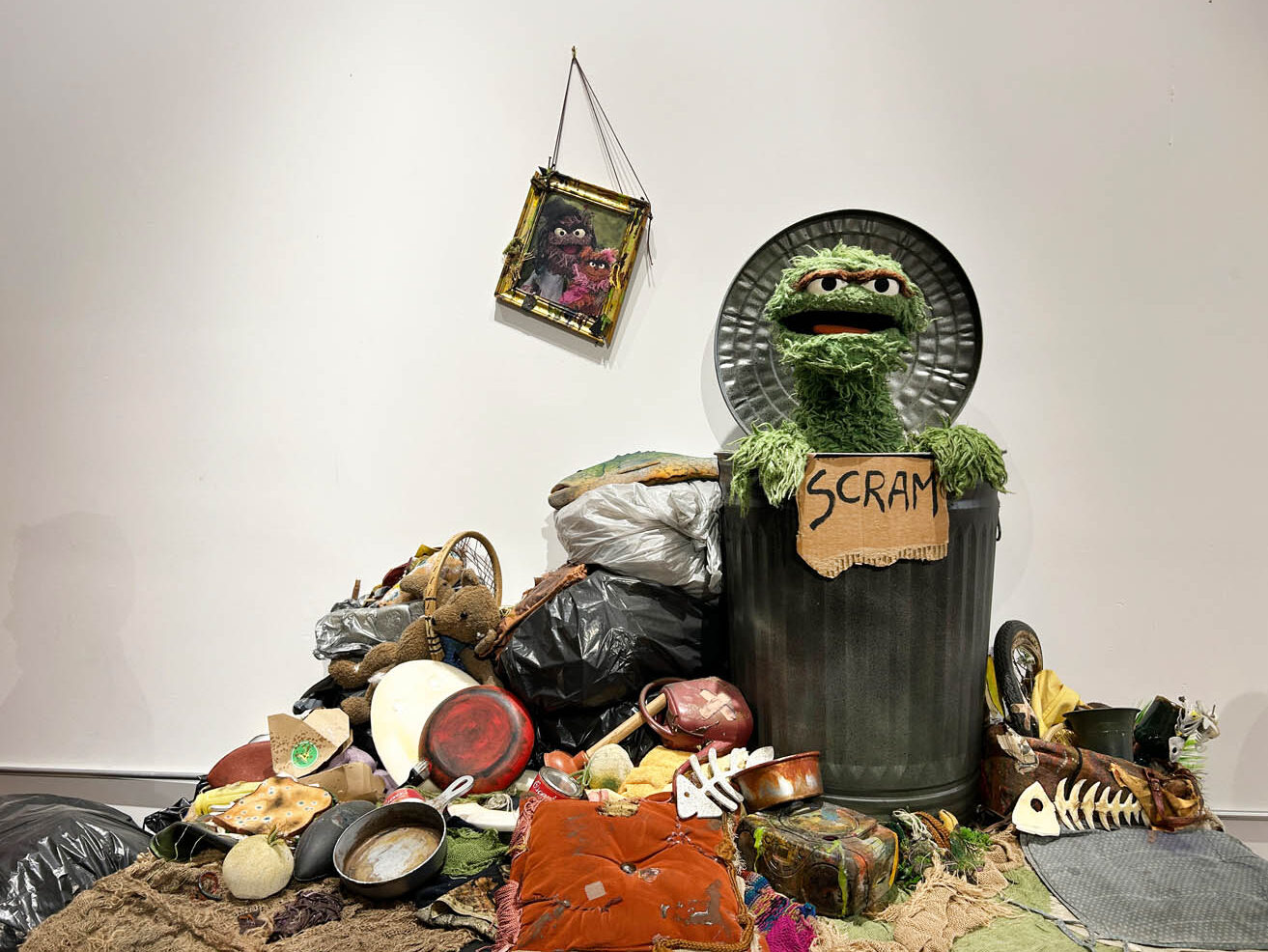
The first stop is a room filled with recognizable characters and objects. Have your phone or camera ready, as this is the only spot photography is permitted. Make sure to grab selfies with classic characters like Oscar the Grouch and Junior Gorg from “Fraggle Rock,” as well as more recent characters from “Julie’s Greenroom” on Netflix.
After a few minutes of pictures and perusing, you will then take a seat for a hands-on demonstration from an actual Jim Henson puppeteer. On our tour, we met Jennifer Barnhart, an Emmy-nominated performer and puppeteer for The Jim Henson Company; she was an original Broadway cast member of “Avenue Q,” played Riley on “Julie’s Greenroom,” and she currently plays Zoe, Gladys the Cow, Granny Bird (Big Bird’s grandma), Maggie Cadabby (Abby’s mom) and many more characters for Disney’s “The Muppets” and Sesame Workshop. We were also given a set of eyes (called “peepers”) that slipped onto our fingers like a ring and instantly transformed our hands into full-fledged characters ready to follow along to Barnhart’s puppeteering instructions.
The puppeteer will teach you how to “pronounce” syllables with your hand, to angle your character’s eyes, relax your hand and even how to create emotion. Barnhart asked us to practice the alphabet (including the especially challenging letter ‘w’). She also demonstrated different types of puppets, such as rod puppets (which use only a stick), hand and rod puppets (which use your hand and a stick) and live hands puppets (the dominant hand controls the puppet’s head, and the other hand goes into the puppet’s hand). After becoming amateur puppeteers, it’s time to enter the actual workshop.
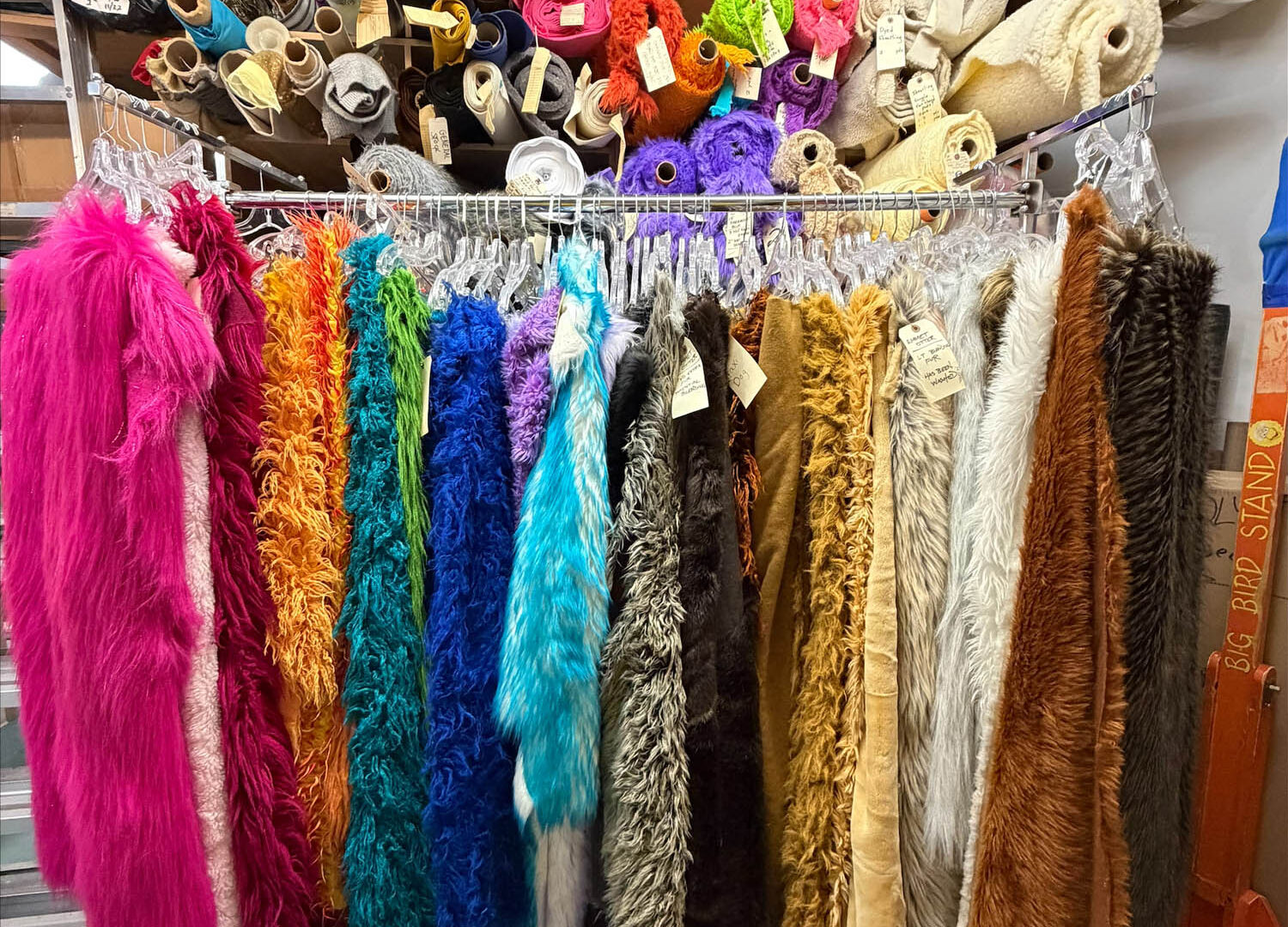
Faux fur costumes.
Bringing creatures to life
The current Creature Shop is not the original location; it’s far from it. In fact, it’s actually the sixth location. Jim Henson opened his first shop on Manhattan’s East 53rd Street in 1963. He produced commercials for soda, dog food and La Choy Chow Mein (Henson created the La Choy Dragon, his first full-body puppet and eventual inspiration for Big Bird). Over the next several decades, Henson moved the workshop, first to East 67th Street (to two different locations), then to East 69th Street and eventually to 627 Broadway. During those years, Henson and his team created some of their most memorable work, including the original version of “The Muppet Show,” “Sesame Street,” “The Great Muppet Caper,” and puppets for “Saturday Night Live.” The Creature Shop moved to Queens in 2009.
When you enter the workshop, you will immediately see several things at once: a fancy oil painting of Kermit the Frog, a floor-to-ceiling orange two-headed giraffe-like creature built for a project to teach foreign languages (which never launched), as well as several characters from “Jim Henson’s Inspired Silliness,” a show created for Princess Cruises. Plus, there is a stained-glass window from Henson’s original office depicting Bert and Ernie along with actor Frank Oz and Henson puppeteering them from below. Also of note is an ornate wooden reception desk, commissioned by Henson in the 1980s, featuring many of his characters carved into the wood. Our tour guide also showed us an original sketch of Sam Eagle, which Henson supposedly drew on a diner placemat, as well as a childhood letter by “Family Guy” creator Seth McFarlane to Henson.
The rest of the workshop is a vast array of materials and designs. There are racks of multicolored fabrics and furs draped around the room. There are foam heads placed on the desks, sometimes eyeless and only partially completed. There are arms, mouths and other parts strewn throughout the space, like a warm and cuddly version of a mad scientist’s lab.
Then there are the drawers. From one, our tour guide pulled out Guy Smiley, “Sesame Street’s” go-to gameshow host. From another, he revealed Mr. Johnson, Grover’s recurring restaurant patron and utterer of the line, “Waiter, there’s a fly in my soup!” There are also drawers full of eyes, noses and mustaches, which, as you might expect, reveal a vast array of options in color, size and furriness. Many of these facial elements are used for their “Anything Muppets”—generic characters created for background purposes to suit a scene.
The tour includes numerous props and celebrity sightings; on ours, we saw foam orange slices that can soak up water so a muppet can squeeze them to make “orange juice,” a giant foam skillet with an equally large pancake, as well as Bert, Ernie, The Count, Elmo and Cookie Monster.
As you leave the main workshop, you will walk through a striped multicolored hallway painted in colors one could likely describe as “Ernie orange,” “Oscar green” and “Bert yellow.” We recommend you walk slowly through this space so you can peek into the specialty rooms along the way. First, there’s the tool room, filled with jigsaws, drill presses and rods. Next is the spray room, where spray painting and adhesives are applied; there’s a sign discouraging people from dumping fur down the drain (begging the question, is this a common problem at the workshop?). Next is the dye room, filled with large plastic bins used for coloring furs and fabrics. And finally, there’s the document room—a brightly lit staging area used to inspect characters or designs closely for any flaws.
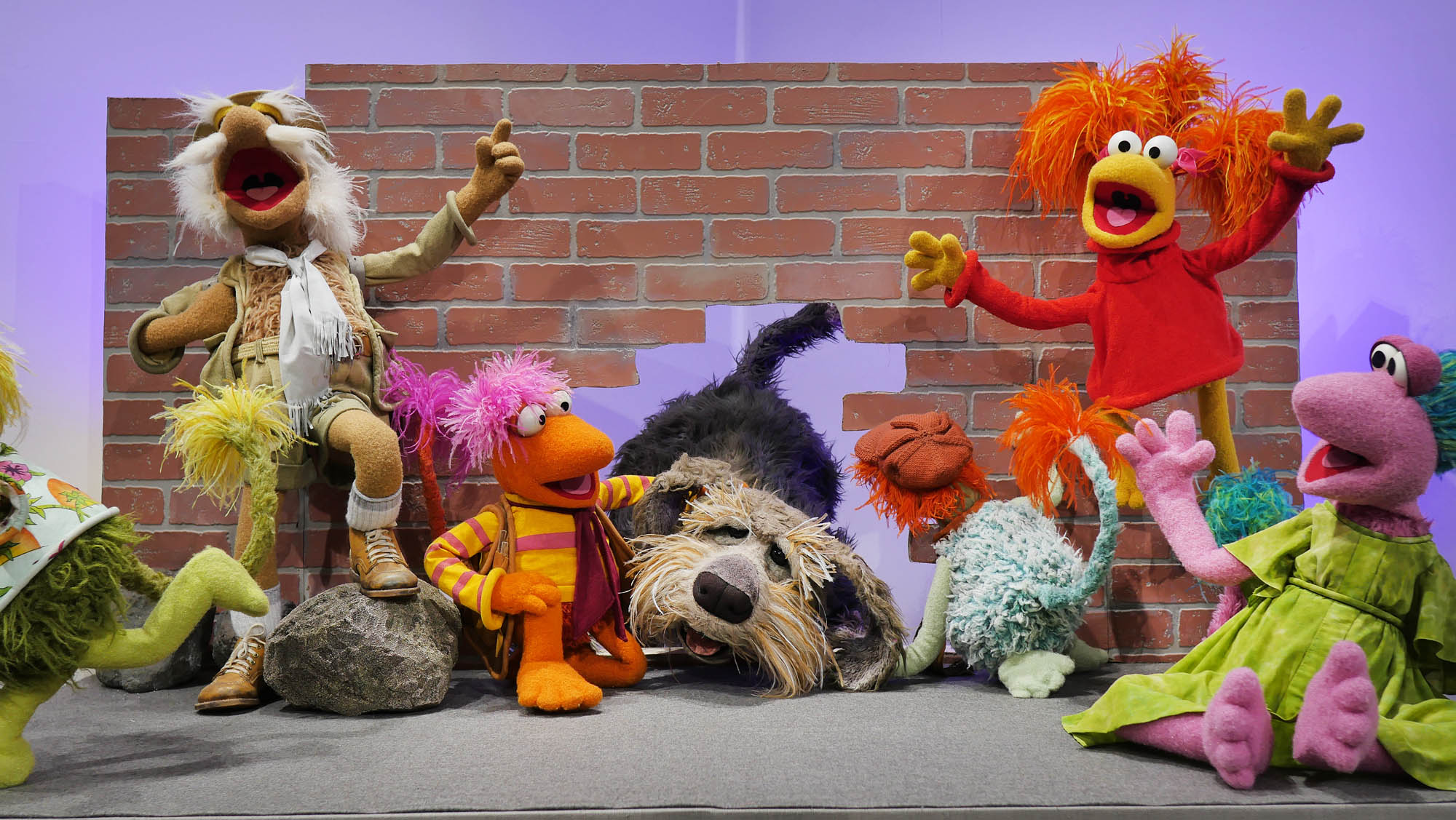
A photo opportunity with the cast of “Fraggle Rock.”
Puppetry is a team sport
Beyond the fun and nostalgia, the tour also educates visitors on the in-depth process that goes into creating a puppet.
“Puppetry is a team sport,” says Barnhart, the puppeteer we met at the beginning of the tour. “You’ve got the people who write the scripts and create the world the characters inhabit. Then the designers will read that script and think, ‘Ah, this character? I know exactly what he should look like.’ Then they draw a beautiful picture for the puppet builders whose amazing skill and artistry help bring the character to life.”
After a character gets a story and a visual look, the puppet builders get to work. They discuss the proper construction process with the designers, clients and artistic director. Then, they’ll create a first draft of the puppet; for example, with a process called flat patterning (used for characters like Kermit the Frog), they will use paper and rough cuts of foam. Once that gets approved, they’ll build the final shape using high-quality material.
The puppet builders use different materials (reticulated polyfoam, soft foam, upholstery foam) for different puppets, depending on what is best. “Reticulated foam, for example, is light and it breathes,” says Wojtal. “But it doesn’t last. After about 10 to 15 years, it starts to fall apart.” When that happens, a new version is made. But, at any given time, “a main character will have several duplicates, which are used during production, and they all have to look the same,” Wojtal explains.
“There are two Ernies,” says actor and puppeteer Peter Linz, a Katonah resident who plays Ernie, among many other recognizable characters for Sesame Workshop and Disney’s “The Muppets.” “I think there are at least three Cookie Monsters, but there are even more because there are international Cookie Monsters too.”
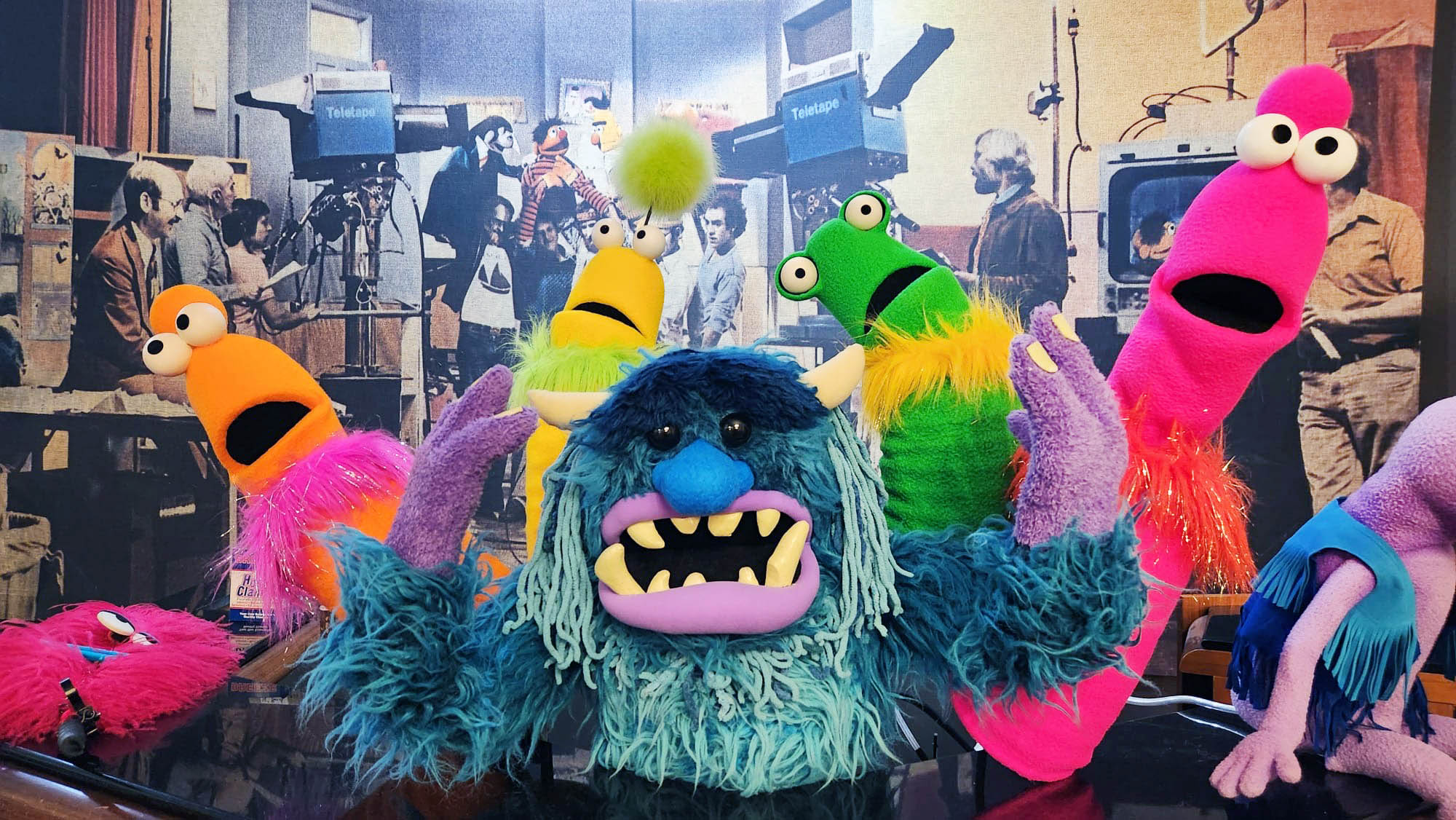
Puppets that meet you at the entrance of the Creature Shop.
Builders also face the challenge of making their puppets believable, which often means hiding their work in plain sight. One solution involves a process called “picking out their seams,” in which they carefully lift the fibers from their sewing seams to hide their work from view. “That’s very important in television, particularly nowadays with high-resolution TVs,” says Wojtal. “Puppets are an illusion, and the cameras are fighting us every step of the way.” Some modern techniques have found their way into the shop as well, such as 3D printing for larger live stage characters. Animatronics are mostly created at the Los Angeles facility, but they will hire specialists in the New York City area when needed for a project, according to Wojtal.
Many old tricks have stood the test of time. A simple line of elastic fabric can be used to make a mouth move, for example. And many of the older Henson characters haven’t changed much at all. “Cookie Monster’s head is made from a basketball,” says Linz. “There’s actually still a coffee can inside Ernie’s neck. It’s built in there for the rigidity and structure.” Outfits are also an important step in the process. “You cannot go to the store to buy an Admiral’s costume,” says Wojtal. “This is all custom-made. These puppets dress better than I ever will.”
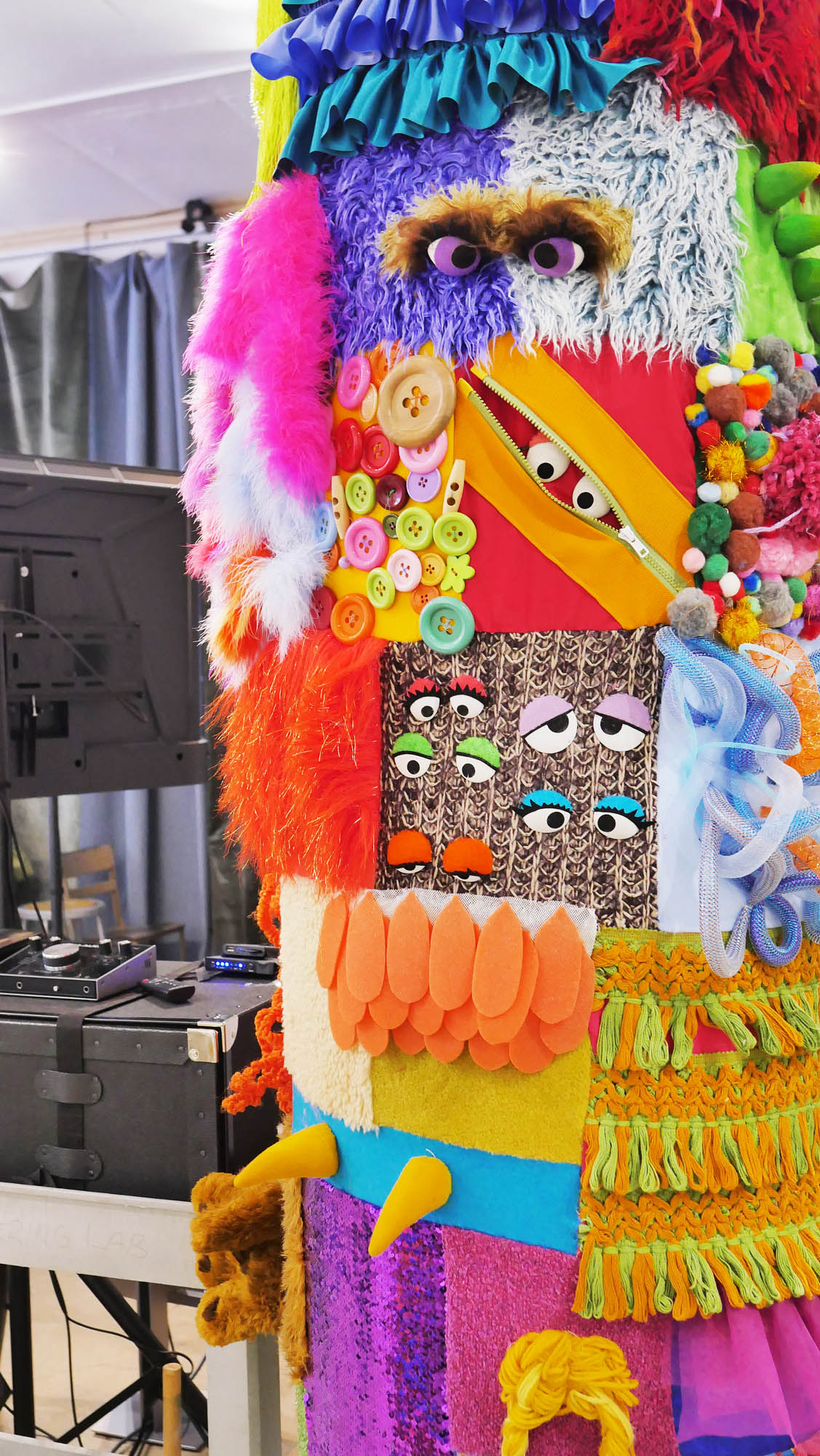
Some of the eyes and fabric decorating the workshop.
For the Creature Shop, costume work is no mere afterthought. In some cases, designers conduct extensive research to create a look that is authentic and historically accurate. Wojtal says “The Muppet Christmas Carol” was a great example of this. “Polly Smith, the costume designer for that film, did intensive research. It was so accurate that historians created YouTube stories about how authentic pretty much every bit of wardrobe was in that movie. I think she should have gotten an Oscar.” According to Linz, costumes are another reason that builders must make duplicates of a character. “If you’re shooting something where there’s a costume change, it’s just a lot more efficient to have another puppet already dressed in the costume and ready to go so you don’t have to hold up production.”
On rare occasions, puppet actors are asked for input. “Sometimes, you can say, ‘I’d like to see a little bit more of a spunkier attitude in her clothing, for example,” says Barnhardt. “Things like that can be discovered together.” Linz has also had some minor input in building a character. “A handful of times I’ve been asked to try on a puppet to make sure it fits my hand and to give suggestions on how to customize it to my hand,” he says.
From conception to completion, designers give every step careful consideration so the character’s personality can come to life during the performance.
More than memories
If you’re going for the memories, Jim Henson’s Creature Shop won’t disappoint. There is something special about seeing the iconic characters of your childhood up close, and there is enough on this tour to please both children and adults in that regard. But what might be more satisfying to Henson fans is learning about the extensive work that goes into each and every talking pumpkin, singing cow or furry creature. After meeting the people behind the monsters, it’s clear that these designers, actors and builders might just love and respect the characters even more than their fans.
This article was edited by Julie Schwietert Collazo and fact-checked by Gia Miller. Photography was captured with Panasonic Lumix optics and edited in Adobe Creative Suite.
This article was published in the September/October 2026 edition of Connect to Northern Westchester.

Justin is an award-winning designer and photographer. He was the owner and creative director at Future Boy Design, producing work for clients such as National Parks Service, Vintage Cinemas, The Tarrytown Music Hall, and others. His work has appeared in Bloomberg TV, South by Southwest (SXSW), Edible Magazine, Westchester Magazine, Refinery 29, the Art Directors Club, AIGA and more.
Justin is a two-time winner of the International Design Awards, American Photography and Latin America Fotografia. Vice News has called Justin Negard as “one of the best artists working today.”
He is the author of two books, On Design, which discusses principles and the business of design, and Bogotà which is a photographic journey through the Colombian capital.
Additionally, Justin has served as Creative Director at CityMouse Inc., an NYC-based design firm which provides accessible design for people with disabilities, and has been awarded by the City of New York, MIT Media Lab and South By Southwest.
He lives in Katonah with his wonderfully patient wife, son and daughter.