
By Gia Miller & Justin Negard
Photography by Justin Negard
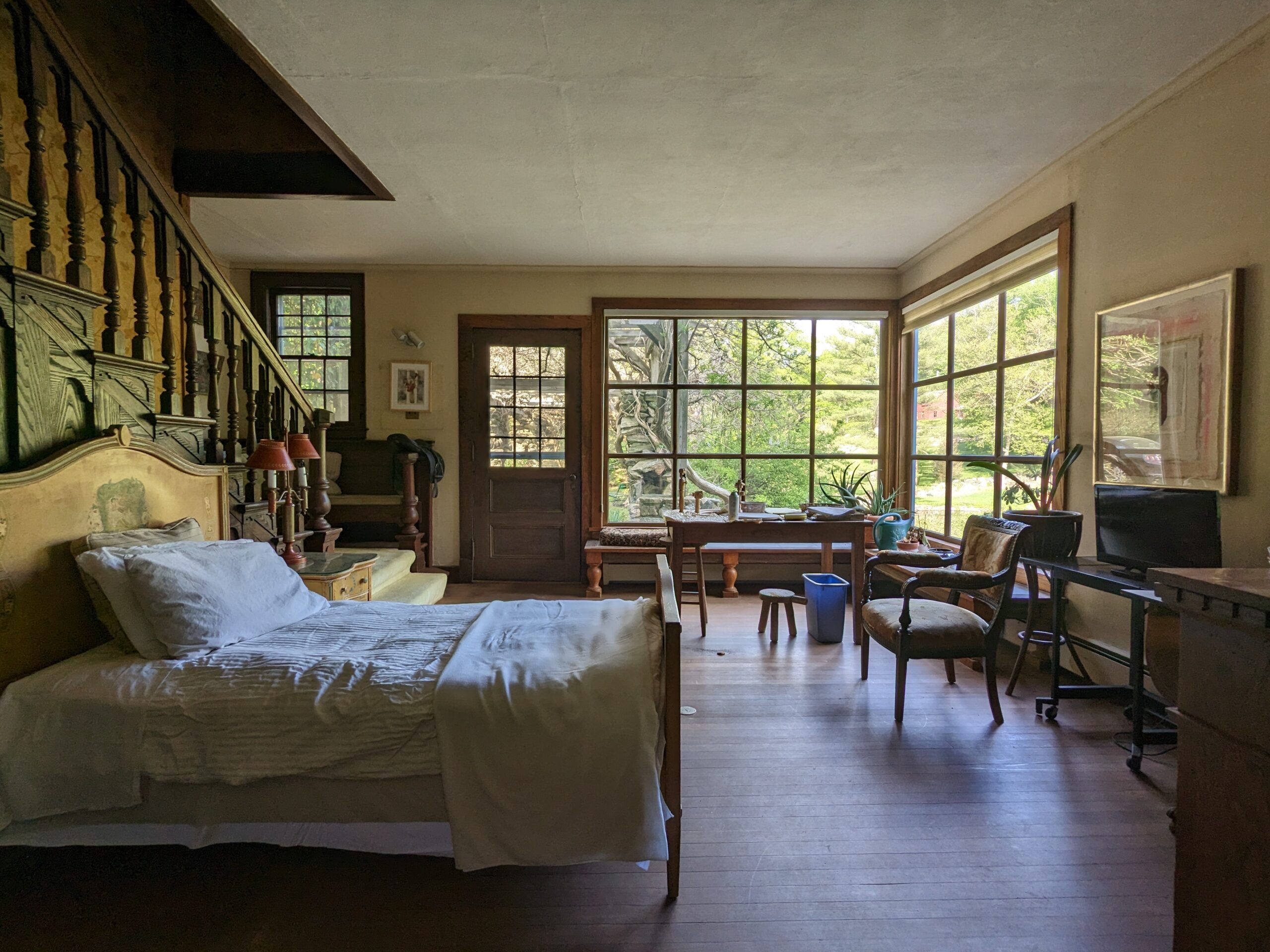
When commercial real estate and fashion executive Steve Giner moved into a “fixer-upper stone carriage house” in Katonah almost 20 years ago, someone mentioned his interesting neighbor, but he didn’t give it much thought. One summer day, during the middle of his home renovation, Giner was outside observing his foundation when his new neighbor Ed Giobbi appeared unannounced. “He was dressed in a ripped Hard Rock Cafe sweatshirt, a pair of faded Levi’s blue jeans, workboots and a navy baseball cap with ‘Giotto’ embroidered across the front in white,” Giner remembers. “I looked up and thought, ‘Oh crap, the ornery neighbor is here to bust my chops about the incessant buzz of demo saws and the machine gun-like pops of air nailers.’ We introduced ourselves, cordially shook hands and I tried some small talk to break the ice, but it went nowhere. He was guarded, observing me with his steely blue eyes. In the few words he did say, I detected a familiar accent—the same as my mom’s Italian relatives from Torrington. I asked if, by any chance, he was from Connecticut. His eyes lit up and he responded, ‘Yes, in fact, I was born and raised in Waterbury. Why do you ask?’ The ice was broken, and the most important friendship of my life was born that day.”
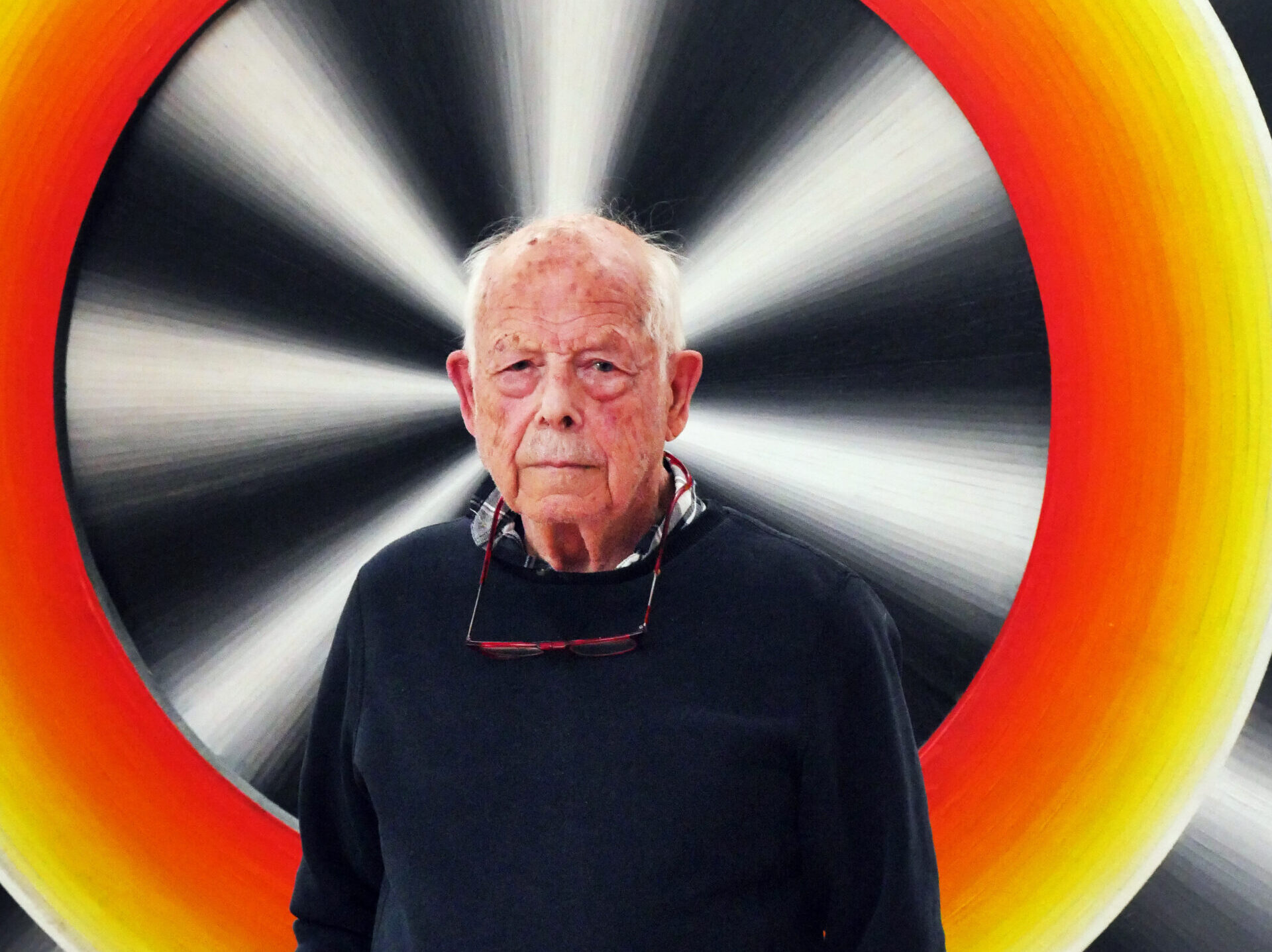
Giobbi, a world-renowned artist who moved to Katonah in 1961, passed away on May 9, two months shy of turning 100. Behind that gruff, guarded exterior was a true Renaissance man. He was a painter, a metalsmith, a sculptor, a chef, a gardener, a martial artist, an avid reader and a WWII veteran who was known for his honesty and passion for life.
The truth, unfiltered
Giobbi was well-known for his brutal yet endearing honesty. “For me, he was a real person,” says Jacques Pépin, the French chef, author and television personality who first met Giobbi in 1960. “There was no pretension and no lie in what he did. Everything was true the way it is—simple and straightforward. It was nice to be with someone like that who you can relate to and talk to.”
Giobbi’s fierce candor was his signature. “You always got exactly what he thought,” remembers artist Vincent Baldassano who met Giobbi in the early 1990s. “He told you what was on his mind. He was uncensored, and I liked that about him.”
Rita Baunok, owner of Chroma Fine Art Gallery in Katonah, remembers meeting Giobbi for the first time when he was 97 years old. Baldassano had a show at the gallery and brought Giobbi in to convince him to have a show there as well. “Ed liked the show,” Baunok remembers. “Vincent asked Ed, ‘Don’t you want to have a show here?’ Ed quickly said, ‘No.’ A few minutes later Ed told me, ‘I don’t like galleries and I hate gallery owners.’ But he loved Vincent’s show, and he came back several more times.”
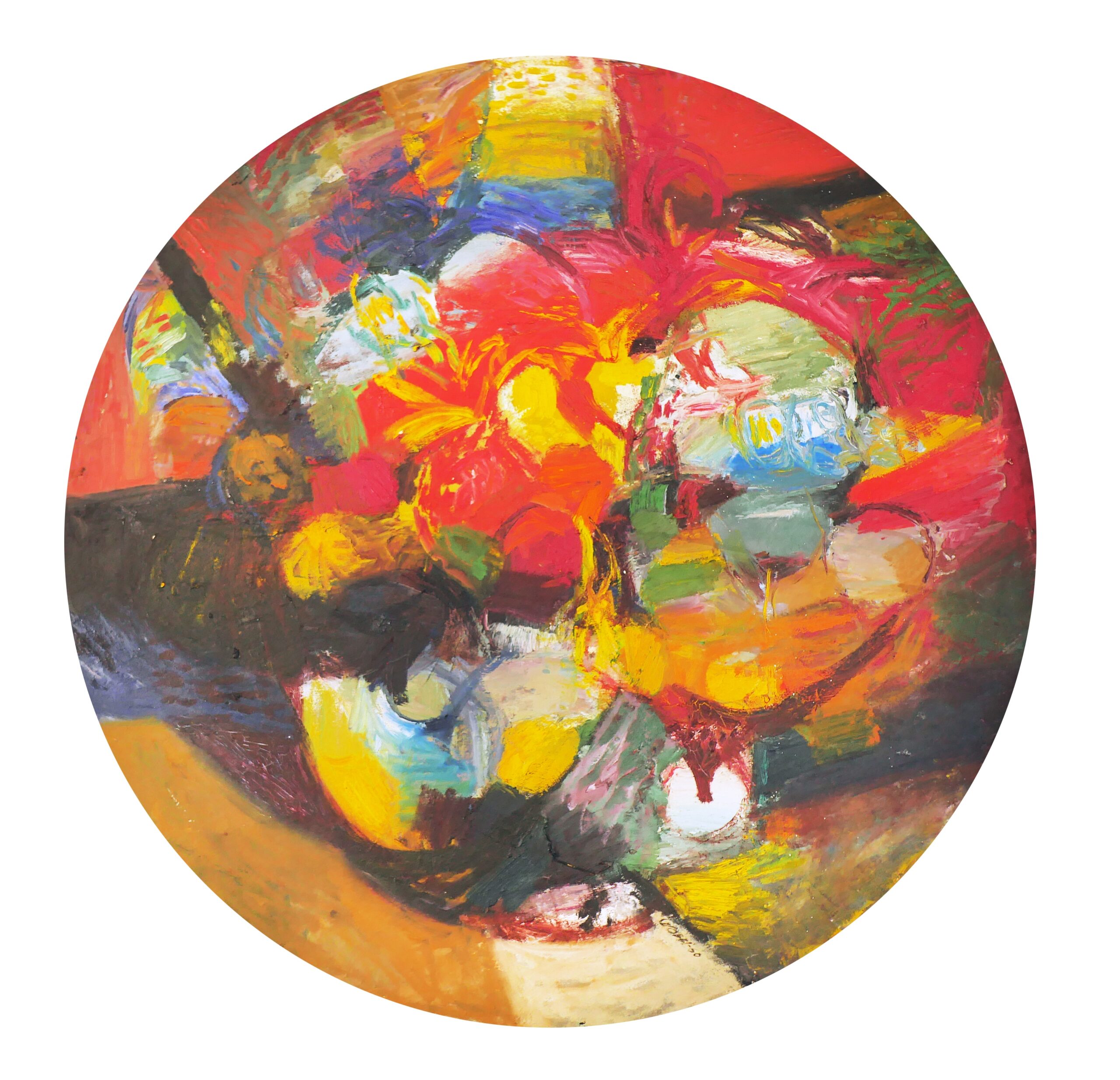
“Still Life,” oil on canvas.
Baunok, who grew up in Hungary, says she appreciated Giobbi’s straightforwardness because it mirrored her own culture. “He always told me what he really thought about things and people and shows,” she remembers. As they got to know each other, Giobbi would visit the gallery and chat with Baunok about everything from gardening and cooking to art and history. As soon as Giobbi walked through the door, his face would say it all; she knew immediately what he thought of a show. A few months later, Baunok was sitting at her desk in the gallery, and Giobbi marched in. “He didn’t say hi,” she remembers. “He just said, ‘I want to show here.’”
He was that way about everything and everyone, even his sensei, Masakazu Takahashi. Giobbi, a sixth-degree black belt in karate, respected and developed a close relationship with Takahashi, but Giobbi still spoke his mind. “One day we were talking about Picasso,” Takahashi remembers. “I told him I really didn’t understand abstract painting. Nothing hit me. I like Norman Rockwell. Ed never said no to me, but this time he told me, ‘No, Sensei. Picasso is painting smell, taste. That’s very different from Norman Rockwell.’ I still don’t fully understand that.”
A life filled with passions
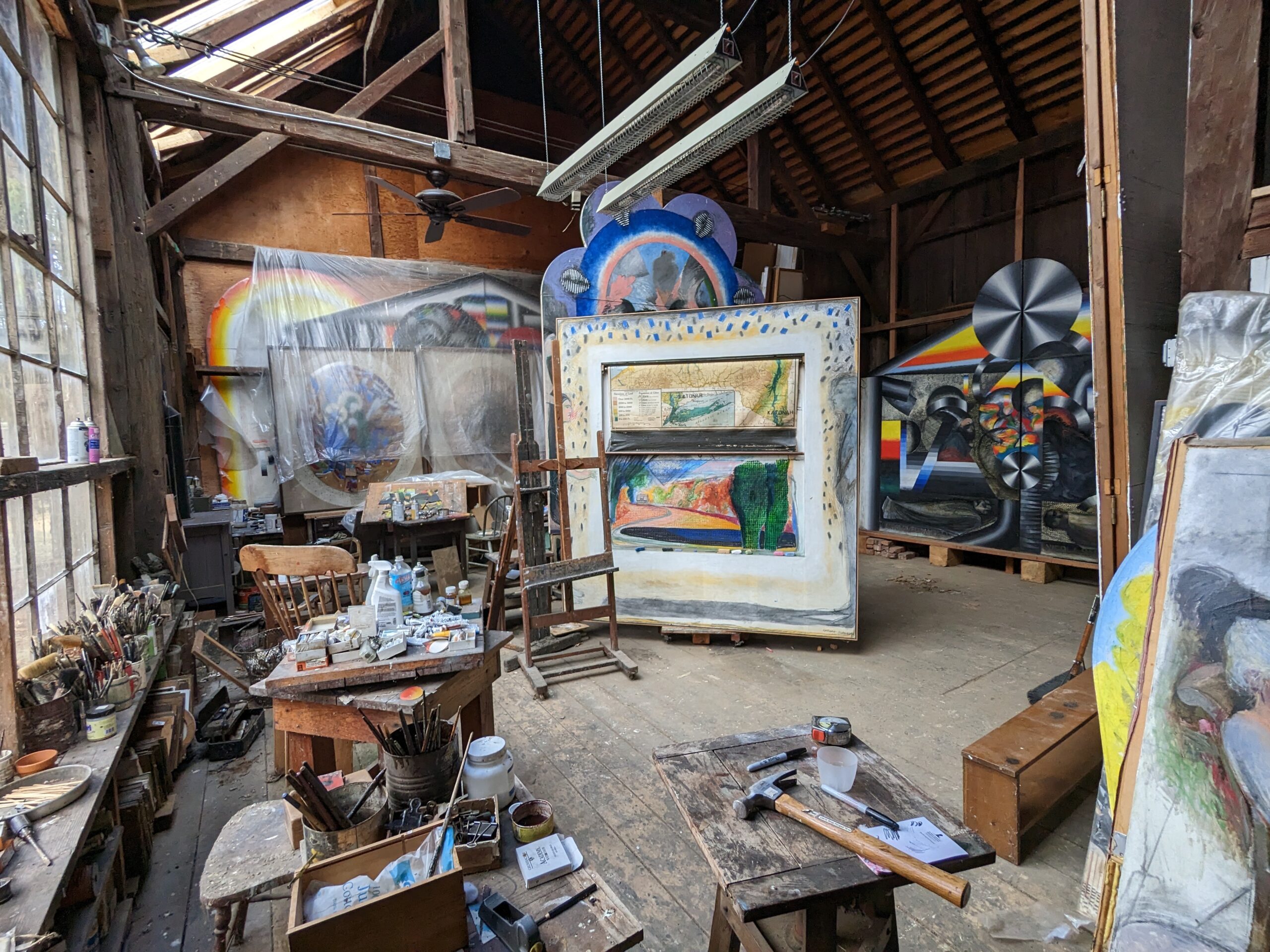
An accomplished painter and sculptor, Giobbi’s work appears in the permanent collections at The Museum of Modern Art, The Smithsonian, The Whitney, Tate, and others. Although he was often described as an abstract expressionist, Giobbi considered this a “nonsense phrase.” For him, art was less about labels and more about personal discovery. “I was always trying to understand art in a real way, not in the way critics and scholars do,” Giobbi told us during a 2023 interview. “The purpose of a serious painter is to find his personal truth and no one else’s. Because when he’s up in the studio, it’s only his truth that matters.”
Giobbi, who studied at the Art Students League of New York and the Accademia di Belle Arti in Florence, worked and socialized with contemporaries such as Robert Motherwell, Mark Rothko and Jackson Pollock (whom Giobbi somewhat jokingly told us “skipped out on the check” on more than one occasion). His work ranged in style and content, filled with historical stories, personal narratives and abstract forms using paints, pastels, watercolors, collages and metals. Giobbi admired the work of Pablo Picasso (he once remarked that “Guernica” was the greatest painting of the 20th century) as well as Henri Matisse, who Giobbi said, “didn’t need to show much to show everything.” Baldassano describes Giobbi as “a 100 percent committed artist. He wasn’t doing it for any other reason than because he had to. It was just part of his makeup and his expression, even when it ran counter to mainstream popular art.”
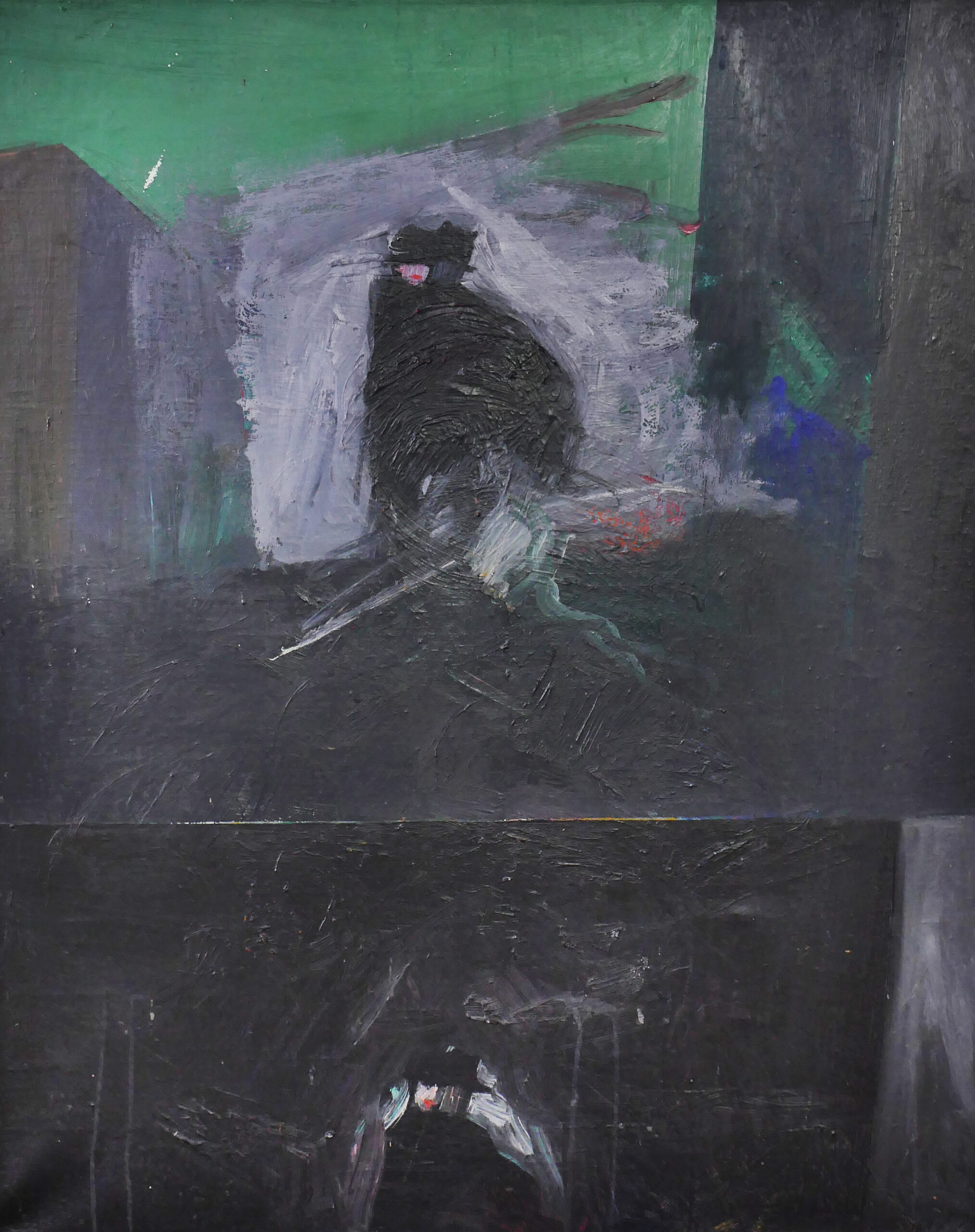
But for his son Cham Giobbi, also an artist, Giobbi taught his son about something Giobbi deeply valued: life. “He didn’t teach me how to be an artist; he taught me how to live as an artist,” Cham explains. “He taught me how to be frugal. He taught me how to prioritize and make the choices you need to make to be able to concentrate on your work. And he taught me how to cook.”
Cooking was one of Giobbi’s passions. He authored about half a dozen cookbooks (which he illustrated, of course), and in 1992, Giobbi’s book, “Pleasures of the Good Earth,” won a James Beard Foundation Book Award. In fact, Pépin credits Giobbi with, among other things, introducing pasta primavera to the United States. “Ed fit perfectly in our group of professional chefs, even though he wasn’t a formal chef himself,” he says. “He cooked by instinct, by reacting to the ingredients. He had talent and taste, and I learned from him. We painted together, and we cooked together.”
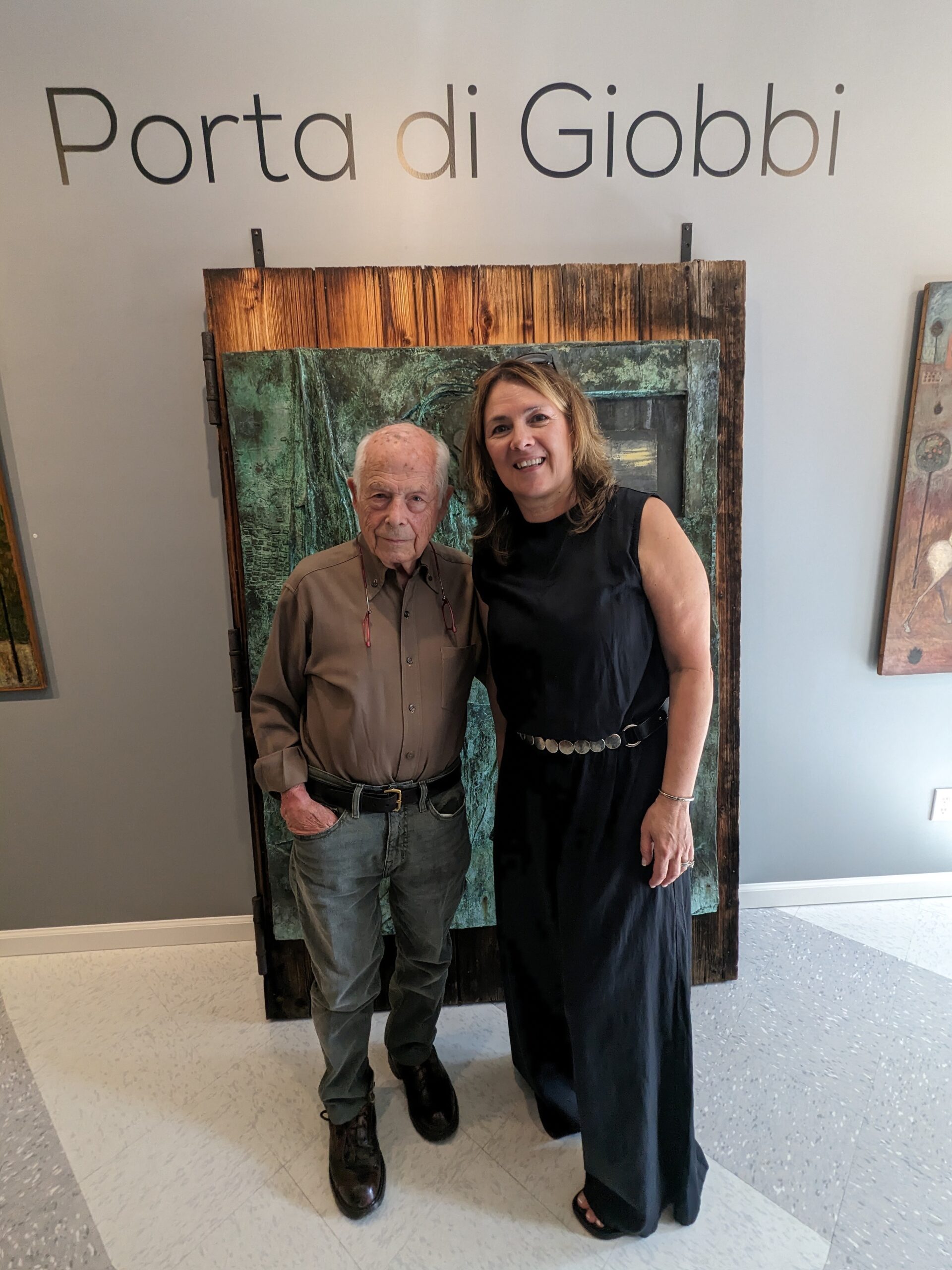
Ed Giobbi (left), Rita Baunok (right).
Baldassano describes Giobbi as a “multifaceted, modern-day Renaissance man” who helped Baldassano reconnect with some of the Italian traditions he didn’t absorb as a young child. “He had an incredible garden,” Baldassano remembers. “It was like an Italian villa; it was a full farm, and he worked it all himself. Ed’s entire way of life was like that; he grew vegetables, would trade a bottle of wine for food from his garden and make a meal for unexpected visitors.”
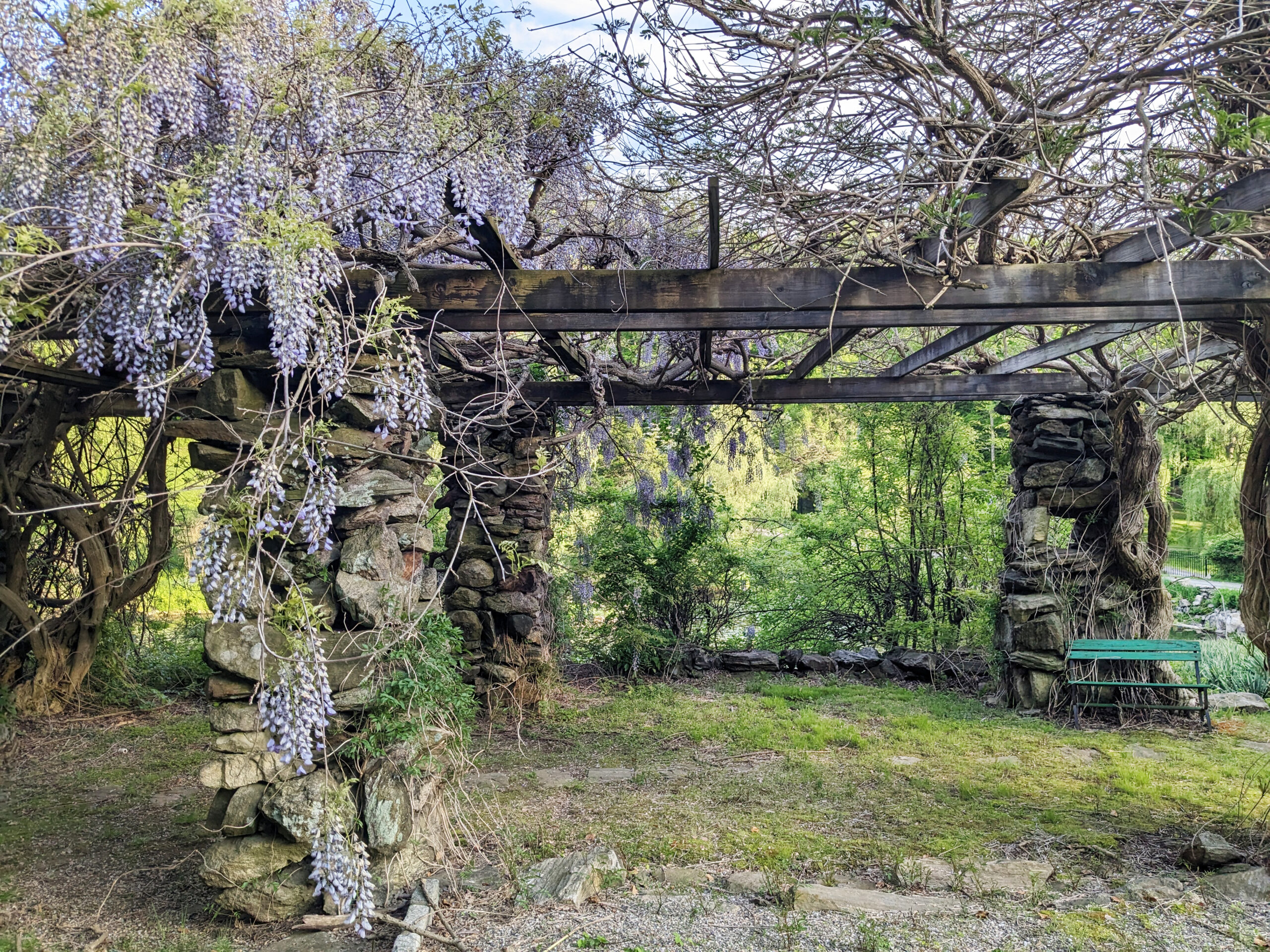
That hospitality and “old world” way of life was always present. Giner recalls cold winter months where Giobbi would stop by very early in the morning to have an espresso and conversation in front of Giner’s cast-iron wood stove. One morning, after Giner opened the stove to rake last night’s embers, Giobbi said, “those embers would be perfect to make fagioli al fiasco.” The next morning Giobbi arrived at sunrise with a gourd from Florence filled with cannellini beans, herbs, garlic, salt, pepper, olive oil and water, stuffed with a cheesecloth. “We chatted to pass the time until the temperature of the embers was just right; he knew exactly,” says Giner. “Then with his beautiful strong hands, he laid the bottle down, nestling it into the coals. We talked for nearly two hours as the beans simmered. I was late to work, but that fact never crossed my mind. I was transported to a bygone era where time moved slowly. When the last bit of gentle steam had pushed through the cheesecloth, he pulled the bottle from the flame, removed the cloth and served the best beans I’d ever tasted while sitting by the stove.”
Giobbi was also incredibly well-read. Giobbi could talk about history—cultural history, art history, human history. He enjoyed in-depth conversations about the ancient Greeks and Egyptians. He was well-versed in geography, poetry and more. “He described reading good prose as ‘nourishing,’” Giner recalls. “He could recall passages from his favorite authors and poets with ease. He loved a wide range of works. Some of his favorites were Federico García Lorca’s ‘The House of Bernarda Alba,’ Shelby Foote’s trilogy ‘The Civil War: A Narrative,’ Lucretius’s ‘On the Nature of Things,’ Leonard Shlain’s ‘Art & Physics: Parallel Visions in Space, Time, and Light,’ Salvatore Quasimodo’s ‘Erato e Apòllion’ and just about any well-written book on WWII.”
Savoring the everyday
When asked what his dad’s legacy should be, Cham responded, “Never fear failure.” That philosophy was another hallmark of Giobbi’s life. When he was about 50 years old, he became interested in martial arts. Takahashi remembers the day they met; Giobbi asked if he was too old to train. “Ed never gave up,” he says. “Karate, painting, anything. He used to make so many mistakes when he started. He told me he had nightmares that I kept the school open just to fix him. But he never gave up.”
Giobbi, whose parents were Italian immigrants, grew up during the Great Depression. When his father lost his job and the family was broke, they found ways to get by. His father and uncle would fish with a homemade net, bring their catch back home and cook it with fresh pasta and vegetables. Eating well, even in poverty, was a priority. “Ed once told me that when he was a young student in Manhattan, he lived in a small apartment with almost no heat,” Takahashi remembers. “He was poor, but he took the time to eat at a small table where he put out a napkin and a candle and drank a glass of wine.”
-
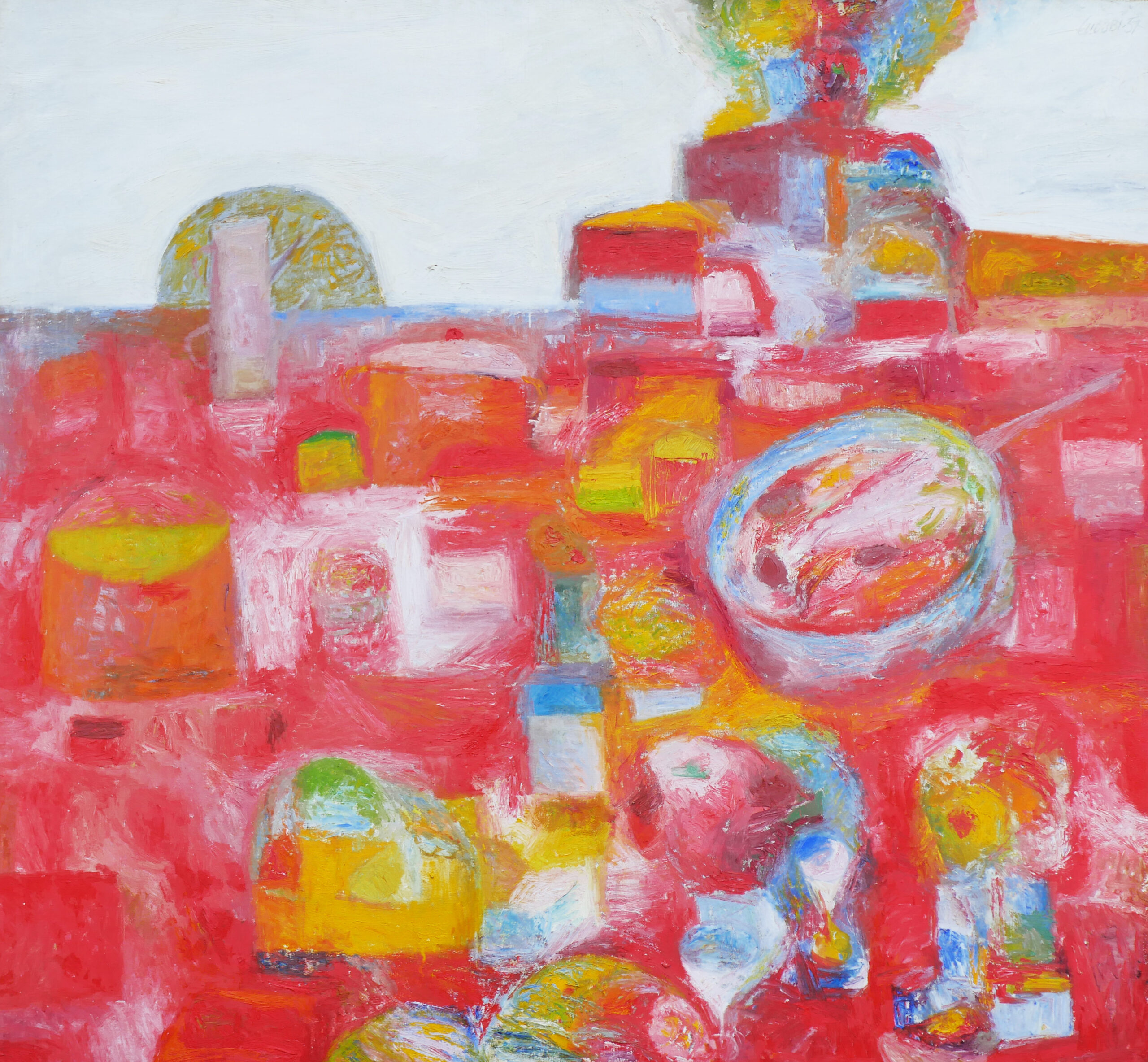
- “Still Life with Antipasto,” oil on canvas.
-
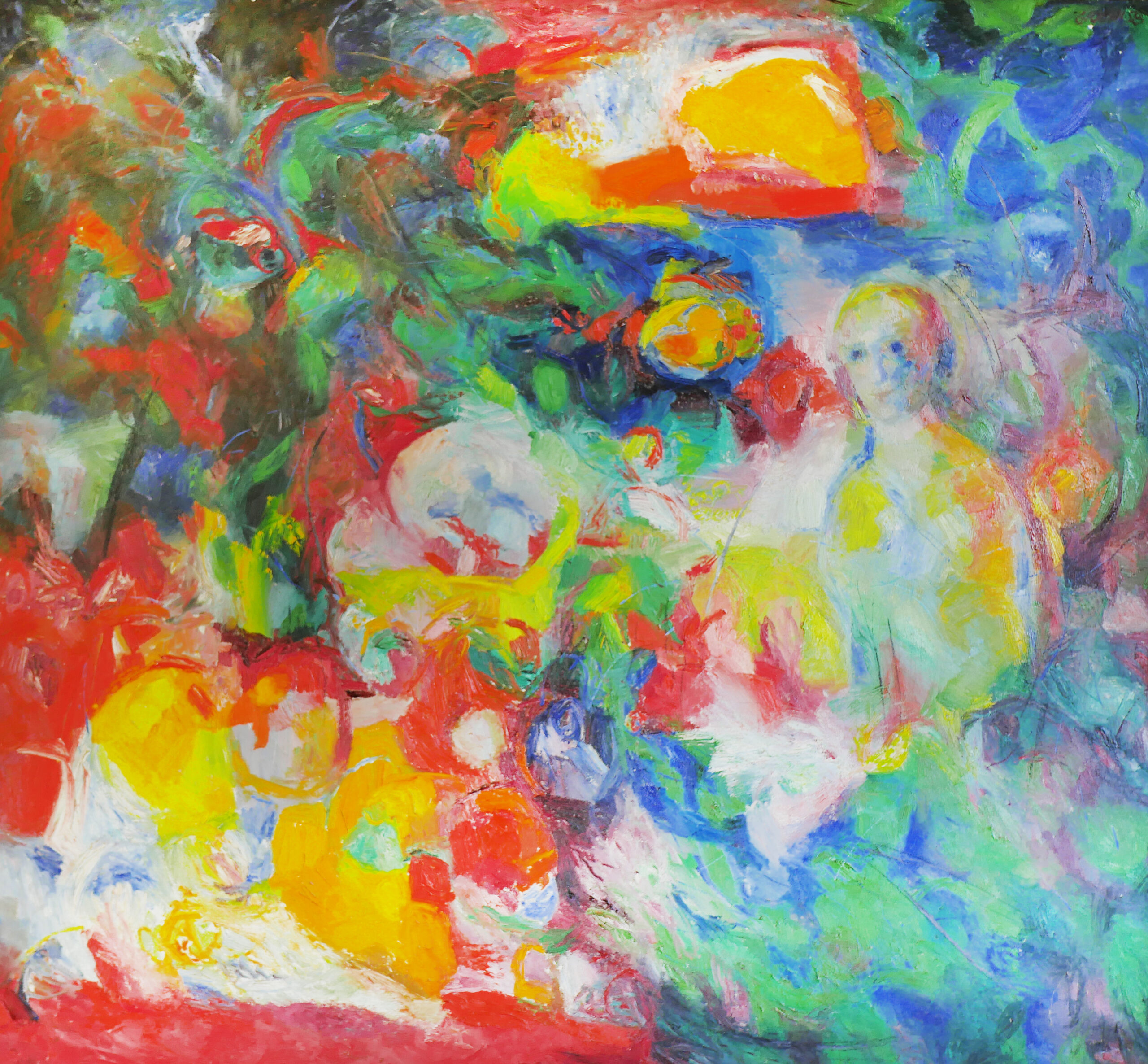
- “The Dream #3,” oil on canvas.
That love for life and art stayed with Giobbi throughout his life. Until this past year, Giobbi painted a watercolor daily. “It amazed me because he was having trouble moving, but he always did a watercolor,” says Baldassano. And when he could no longer paint, he drew, doing so daily until he died. “It was mostly muscle memory for him, but it made him feel good,” says Cham.
“He was talented and unpretentious,” Pépin says. “I hope his legacy stays with his paintings, as well as his cookbooks. I do hope that, for a long time, he remains one of the influential American artists.” Baldassano agrees with Pépin, saying he believes Giobbi’s “incredible museum record” is underappreciated. But Baunok, Ginger and Takahashi hope Giobbi will be remembered for the way he loved life. “I hope he’ll be remembered as the man who enjoyed an afternoon on Arthur Avenue with his merchant friends—Sal, Marco, Giancarlo and Rosa—just as much as he did a night at La Scala to see La traviata,” says Giner.
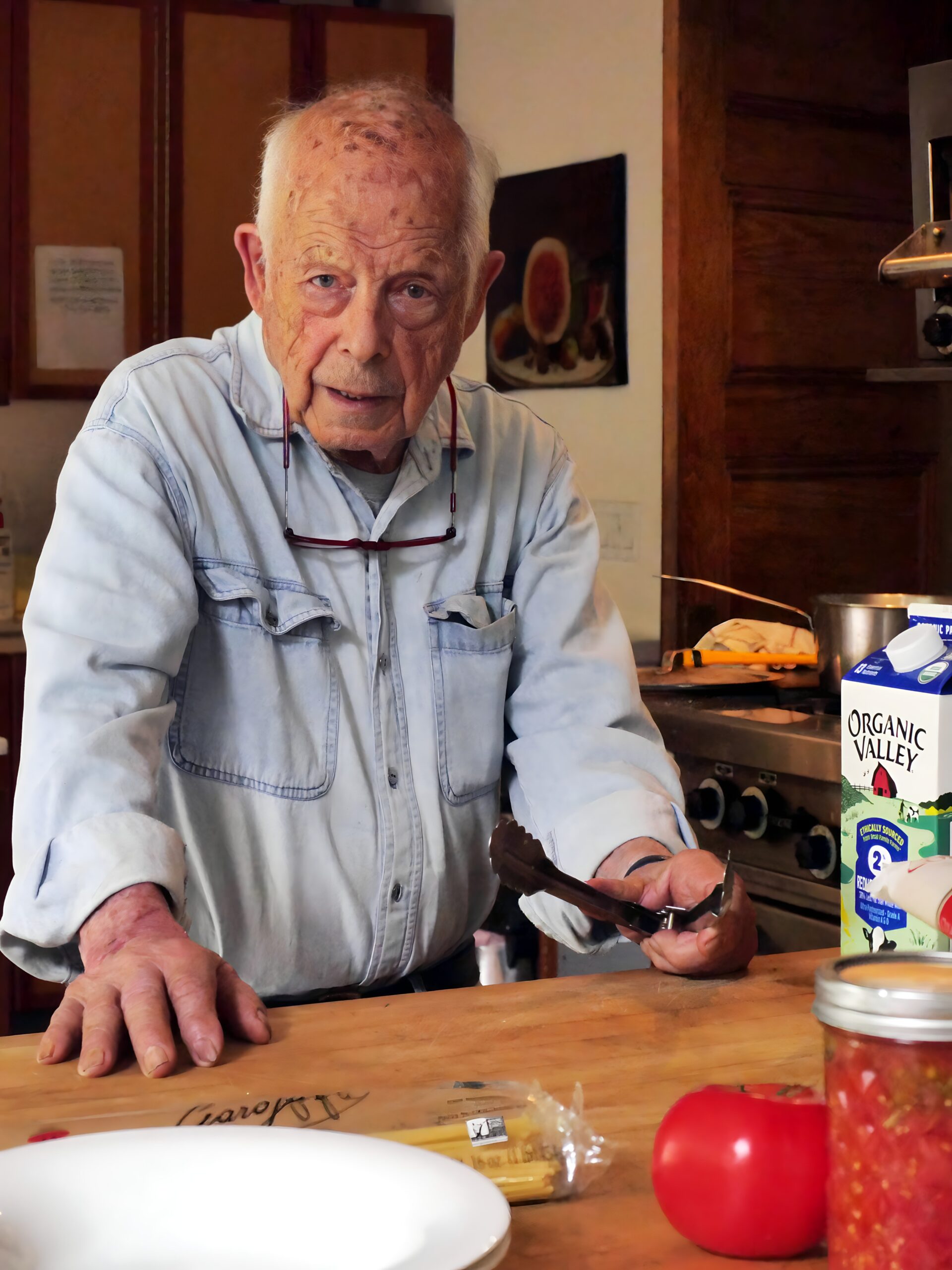
Ed Giobbi.
This article was edited by Isabella Aranda Garcia and fact-checked by Gia Miller. The photographer used Adobe Creative Suite to edit his photos.
This article was published in the July/August 2026 edition of Connect to Northern Westchester.

Gia Miller is an award-winning journalist and the editor-in-chief/co-publisher of Connect to Northern Westchester. She has a magazine journalism degree (yes, that's a real thing) from the University of Georgia and has written for countless national publications, ranging from SELF to The Washington Post. Gia desperately wishes schools still taught grammar. Also, she wants everyone to know they can delete the word "that" from about 90% of their sentences, and there's no such thing as "first annual." When she's not running her media empire, Gia enjoys spending quality time with friends and family, laughing at her crazy dog and listening to a good podcast. She thanks multiple alarms, fermented grapes and her amazing husband for helping her get through each day. Her love languages are food and humor.

Justin is an award-winning designer and photographer. He was the owner and creative director at Future Boy Design, producing work for clients such as National Parks Service, Vintage Cinemas, The Tarrytown Music Hall, and others. His work has appeared in Bloomberg TV, South by Southwest (SXSW), Edible Magazine, Westchester Magazine, Refinery 29, the Art Directors Club, AIGA and more.
Justin is a two-time winner of the International Design Awards, American Photography and Latin America Fotografia. Vice News has called Justin Negard as “one of the best artists working today.”
He is the author of two books, On Design, which discusses principles and the business of design, and Bogotà which is a photographic journey through the Colombian capital.
Additionally, Justin has served as Creative Director at CityMouse Inc., an NYC-based design firm which provides accessible design for people with disabilities, and has been awarded by the City of New York, MIT Media Lab and South By Southwest.
He lives in Katonah with his wonderfully patient wife, son and daughter.