

By Sophie Abt
Artwork by Justin Negard
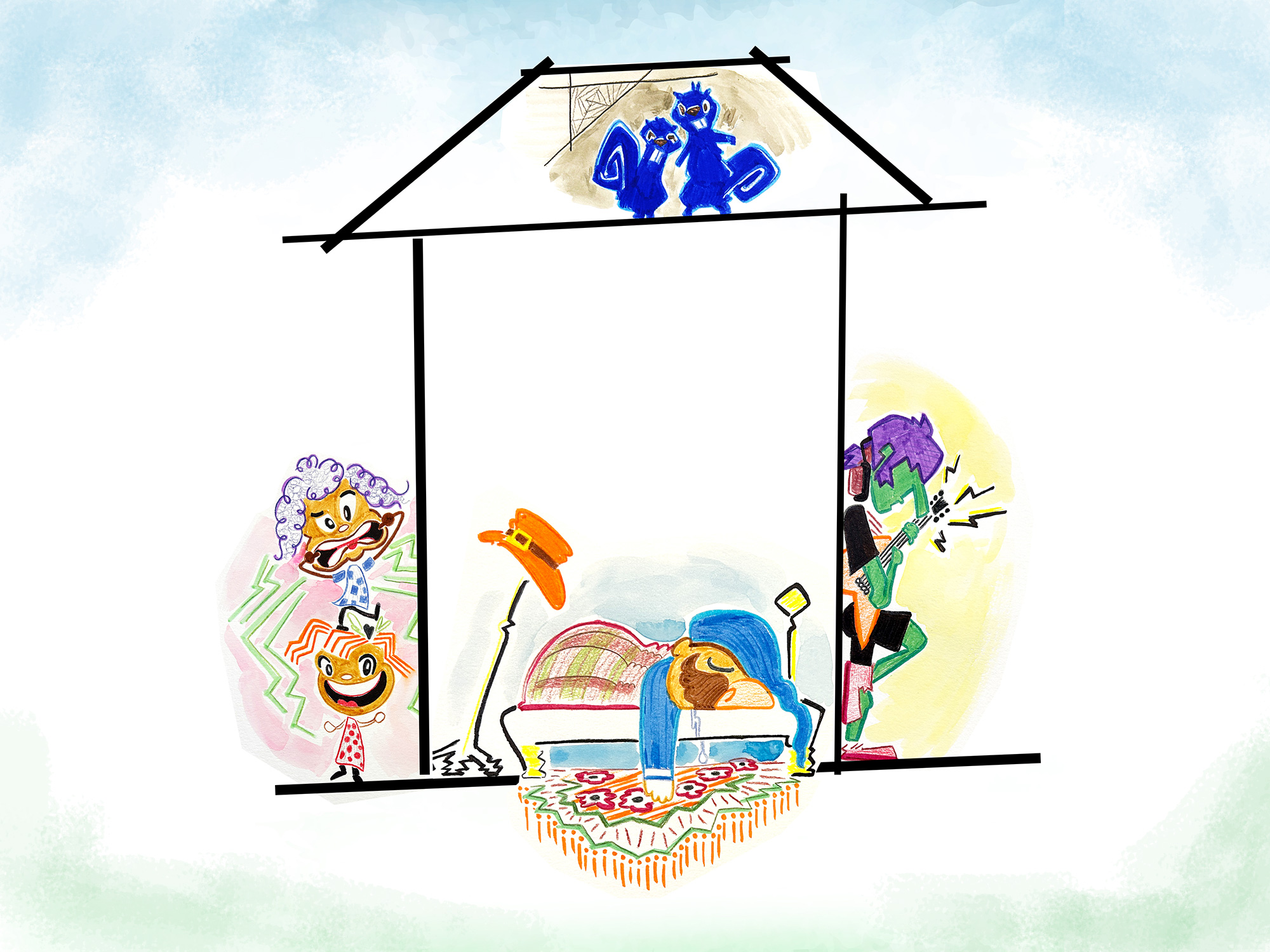
The day before Megan Albert’s in-laws came to visit, she realized she had a problem. Albert, an interior designer and the owner of Fieldhouse Design in Pound Ridge, had just completed her home renovation, and her in-laws would be the first guests to experience the new space. She was excited for their arrival, and as she put the finishing touches on her new guest room, she heard some scuffling coming from above. When she went into the attic to investigate, Albert was horrified at what she found.
“Right before they arrived, we discovered squirrels were living in the attic right above the guest bedroom, and you could hear them,” Albert remembers. “So during their visit, my husband and I were doing everything we could to keep my mother-in-law from discovering the squirrels because we knew she would be completely terrified.” Albert immediately shifted into problem-solving mode. She placed a sound machine in the room and suggested the use of earplugs, claiming it was because of noise from their new baby. But, of course, her real goal was to drown out the sounds of squirrels scampering around overhead. Thankfully, it worked. (Albert eventually told her in-laws what happened.)
Albert, who was the design director for Anthropologie at the time, laughs now, but the memory sticks with her. She understands exactly why her concern mattered: she wanted to make her guests feel genuinely wanted and cared for the moment they walked into that space. A guest bedroom may be temporary for visitors, but the impression it leaves is lasting. Whether your guests feel relaxed or restless will often come down to how well you’ve thought through the details and anticipated their needs.
First impressions matter
Your guest room might not look like a picture-perfect spare bedroom, and that’s okay. Maybe it’s a cozy extra room with a bed and matching nightstands. Or perhaps it’s a finished basement with an en-suite bathroom. For some homes, the guest space doubles as a home office, while others might need to transform a family room sofa into a welcoming sleep spot (doors to that room are recommended if this is your situation). And some lucky guests are tucked away into a guest house, while others climb to a finished walk-up attic or a room above the garage, creating the feeling of a secret hideaway.
Regardless of your guest room location, step one is to consider the guest. If your guest bedroom is filled with extra furniture, personal clutter and half-filled closets, but it happens to also contain a bed, what message are you sending? Even if accidental, are you telling your guests this room isn’t really for them?
“It’s definitely important to give your guests space to put their things,” says Christina Weiss, the Katonah-based owner of Westchester Dream Homes and a real estate agent with Houlihan Lawrence.
“If there isn’t any closet space available, then have a hanging rack you can roll in when guests are staying over just to make them feel comfortable and feel like they have a place to put their stuff.”
Albert recommends creating a space for guests to place their folded clothes so they don’t have to live out of a suitcase. “Try your best to include a dresser, because when people travel, they tend to pack more clothing that is folded—like pants, socks and undergarments—than things that need to be hung,” she says. “If you don’t have that much space, consider a nightstand with drawers or some shelves in the closet.”
And if your guest room doubles as an office, crafting room or extra coat storage, move those items out before your guests arrive. A clutter-free guest room creates a sense of calm and signals hospitality without you having to say a word.
Focus on the essentials
If there is one thing you should focus on, it’s the bed. A comfortable mattress and quality bedding are what will make or break your guests’ stay.
“You definitely want to have multiple layers on your bed because everyone sleeps differently, and your home’s temperature might be different from what they’re used to,” Weiss explains.
Even if your guest bed is always made, fresh sheets are a must. So if the linens haven’t been used in a while, washing them before guests arrive ensures they smell clean and signal that the space has been thoughtfully prepared. Albert recommends white cotton sheets for a crisp, clean look and scent. “White sheets with a little bit of bleach make everything smell very fresh and clean,” she says. “Also, have lots of pillows so people can choose how many they’d like to use.”
Lighting is another detail that can transform a guest’s experience. Overhead lighting alone can feel harsh, especially at night. By incorporating layered lighting, such as bedside lamps, ambient light and dimmable nightlights, you’re giving your guests options, which will help them feel relaxed and welcomed.
Along with lighting, consider the color and overall appearance of the room. Do you want to create a calming environment with soft neutrals and warm tones? Or would you like to add a little fun by incorporating a vibrant accent chair or patterned floral curtains for a more lively feel? Either way, the key is to align the room with the rest of your home’s aesthetic. “A guest room shouldn’t just be a white box for them to stay in,” Weiss says. “It should complement the aesthetic of your home.”
In fact, it can be a good thing for the room to retain some of your personality. “It’s your house, not a hotel after all,” Albert adds. “That’s what’s fun. Going to someone else’s house means experiencing their way of living.” Albert believes guest rooms can even be a great place to experiment with wallpaper, accent walls and artwork, especially if the rest of the home leans neutral.
And consider the noise. A nice and quiet room for slumber makes for happy guests the next day. Albert, recalling her very first hostess experience, suggests leaving earplugs or a sound machine. Because, as she learned, even the most carefully designed guest bedroom can be overshadowed by an unwelcome family of squirrels up above.
Go that extra mile
Thoughtful hosting often means anticipating guests’ needs, especially for items they may feel awkward requesting. “It’s nice to have the things people often forget when traveling,” Weiss recommends. A short list of must-haves, according to Weiss and Albert, includes:
- Band-Aids & pain relievers
- Earplugs & eye masks
- Feminine hygiene products
- Makeup wipes
- Shampoo & conditioner
- Soap or body wash
- Toothbrush, toothpaste & floss
- Water carafe & drinking glasses
And, although it’s not something guests would forget to bring, supplying the Wi-Fi password in written form so they don’t have to ask is always appreciated. Consider placing it in a small frame on the nightstand for an added touch, which can also prevent them from misplacing it.
As for how to present these items, there’s no need to recreate the guest bathrooms fully stocked with luxury brands that are currently taking over TikTok. While these videos may be satisfying, a simple tray in the bathroom, a small basket on the dresser, or a clearly designated drawer does the job just as well. Besides the financial impact of high-end travel-size products for every guest, Albert believes there’s another reason to take a more restrained approach. “I try not to leave a huge imprint,” she says. “You don’t have to buy small, individual bottles for each person. We don’t need all that plastic in the world; it’s really wasteful. Just buy regularly sized bottles of a nice shampoo and conditioner for guests to use.”
Once the basics are covered, go beyond what’s on display. Privacy is one of the most overlooked elements of guest comfort. Guests should have a door that closes and window coverings that offer control over light and visibility. “Having a closed-off space is your best bet,” Weiss says. “It helps guests feel safe and independent while staying in your home.” And, especially if you have young children who may still be learning about boundaries, a lock on the door will be greatly appreciated.
If your room is big enough and you want to create more of a hotel vibe, Weiss says there are a few “bonus” items you can add. “Depending on the layout of your house, especially if it’s harder to get to the kitchen as a guest, it’s nice to give them the ability to make coffee or tea in the morning when they wake up,” she says. “It’s something you can do without having to do any major construction. You just need some space for a hot plate or an electric kettle and a minifridge for creamer. And if you have more space, consider adding a wet bar and even a small cooktop.”
Remember who the room is for
Creating a great guest room isn’t just about looks—it’s about how it makes people feel. Comfort, convenience and thoughtfulness matter far more than matching furniture or perfect color palettes. Little touches like extra blankets, easy access to chargers, a small basket with snacks and water, or a guide to nearby restaurants show that you’ve taken the time to consider your guest’s overall experience during their stay. Even the smallest details—like clear instructions for the thermostat or labeled light switches—help them feel at ease without having to ask.
At its best, a guest room is more than a place to sleep. It’s a pause after travel, a space to unwind and a quiet signal that they belong—squirrels not included.
This article was edited by Rinn Kress and fact-checked by Gia Miller. The artist used ink, watercolors and Adobe Creative Suite to create the illustration.
This article was published in the March/April 2026 edition of Connect to Northern Westchester.

Sophie Abt
Sophie Abt is a freshman at Syracuse University pursuing journalism. She interned with Connect to Northern Westchester during her senior year at Fox Lane HS. At Syracuse, Sophie is a writer for the University Girl, an online publication, and she recently joined Z89 radio training to become a DJ. Sophie enjoys exploring ways to develop her creative voice.

Justin is an award-winning designer and photographer. He was the owner and creative director at Future Boy Design, producing work for clients such as National Parks Service, Vintage Cinemas, The Tarrytown Music Hall, and others. His work has appeared in Bloomberg TV, South by Southwest (SXSW), Edible Magazine, Westchester Magazine, Refinery 29, the Art Directors Club, AIGA and more.
Justin is a two-time winner of the International Design Awards, American Photography and Latin America Fotografia. Vice News has called Justin Negard as “one of the best artists working today.”
He is the author of two books, On Design, which discusses principles and the business of design, and Bogotà which is a photographic journey through the Colombian capital.
Additionally, Justin has served as Creative Director at CityMouse Inc., an NYC-based design firm which provides accessible design for people with disabilities, and has been awarded by the City of New York, MIT Media Lab and South By Southwest.
He lives in Katonah with his wonderfully patient wife, son and daughter.