

By Julie Schwietert Collazo
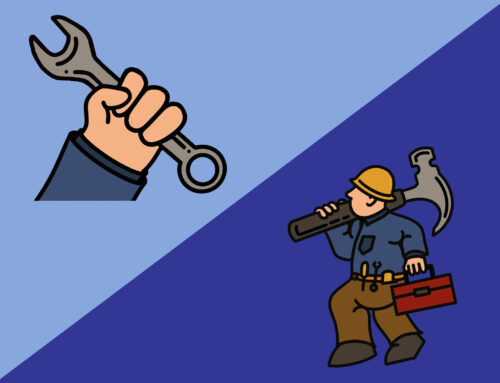
Artwork by Cara McPartland
“I have a fatal disease; it’s called life.” Marc Abrams, a Mount Kisco-based psychologist, is deadpanning, but he’s not joking. “The reality is that we are on a temporal pass, and we don’t know when that pass expires,” he says. In other words, life is short. And we will all inevitably receive bad news at some point along the way, whether that means an unexpected job loss, the death of a loved one, a devastating diagnosis or upsetting headlines. The key question, Abrams says, is, “How are you going to handle it? How will you make the most of the time you have, even with what life throws at you? “We cannot control what happens around us, but we can control how we respond to it, how we react to it, how we feel about it and what we should do about it,” he explains. “And unless we’re willing to ask ourselves those questions honestly, dealing with bad news is not an easy thing to do.”
Abrams, who has treated more than 2,000 patients over the course of his career, explains that a key way to determine a person’s ability to effectively navigate a crisis is whether they understand what part of the problem they can control. Unfortunately, many of us go into a spiral about the bad news we can’t control: the lost job, the sudden absence of a loved one, the terrifying diagnosis or a tragic national or international event. In the process, Abrams notes, we lose sight of what we can control: our reactions and emotional response. It’s important, he emphasizes, to understand the difference: “Emotions are not the event. They are the reaction to the event.”
Beyond big feelings
Abrams points to a term called “locus of control” that originated in the field of social psychology in the 1960s. A person with an internal locus of control believes they have control over what happens to them, and they are more likely to take responsibility for their actions. Someone with an external locus of control believes they have no control over what happens to them, and they tend to blame others or chance for their circumstances. Abrams points out that the Serenity Prayer places an emphasis on recognizing what we cannot change and asking for the courage to change the things we can; it’s a simple masterclass on the subject of an internal locus of control:
God, grant me the serenity
To accept the things I cannot change,
The courage to change the things I can,
And the wisdom to know the difference.
Stacey Roberts, LCSW and CEO of Greater Mental Health of New York, a nonprofit that provides care in Westchester and Rockland counties, acknowledges that “big feelings” can be the initial reaction when we’re confronted with a life crisis. But if we can step out of the initial “big feelings” reaction, we can begin to gain clarity—and control. “When we hear bad news, we can take a deep breath and digest it,” Roberts advises. “Try to take a pause. Depending on the situation, it can be healthy to step away for a minute and decide how to act. Then, connect.”
Roberts, whose organization serves approximately 15,000 people each year, says the Greater Mental Health of New York staff is especially skilled at helping with the “connect” piece of crisis response. Roberts, whose organization serves approximately 15,000 people each year, says the Greater Mental Health of New York staff is especially skilled at helping with the “connect” piece of crisis response. After initially processing the bad news, the organization helps clients by “figuring out how to make sure they’re safe and how we can connect them to someone in their network,” Roberts explains. “People manage [bad] news differently. What do they need in the moment?”
Whether it’s identifying a support group, providing logistical support to access other tangible services, or helping someone reach out to their network of family or friends or a larger community, Roberts’ team seeks to ensure that people affected by bad news don’t have to face it alone. “Loneliness is a huge problem,” says Roberts, so naming supports, reaching out to them, and agreeing on a check-in timeline can be vital when you’re in crisis.
Stocking your (emotional) toolkit
Roberts—like all of us—has experienced traumatic moments and draws on a personal experience to frame an approach to compassionate care for people who are trying to cope with bad news. “I digested it first,” Roberts explains. “Then I was able to figure out what support looked like for me. Next, I figured out what resources were available for me in that situation. Nothing was linear. Bad news [is not linear]. I also used my toolkit. I’m a writer, so I used my journal. I just jotted things down; that was the way I coped. I validated that I was angry, and then I realized it was a wider issue that was going to have ripple effects on my family.” Roberts also leaned on a support system, asking them to check in periodically.
Both Roberts and Abrams note that everyone’s “toolkit” may look very different—there’s no one-size-fits-all solution to coping with bad news. In addition to journaling, getting out into nature helps Roberts regain a sense of calm and return to face a problem with a clearer mind. But that approach may not be viable for everyone; someone else might have an entirely different method for finding relief or clarity.
“There’s no universal answer,” says Abrams. He adds that people tend to fall into response patterns that don’t always serve them. Often, we have to sit with the immediate discomfort, upset, anxiety, anger or sadness the bad news brings. Mindfulness, Abrams suggests, is essential, and that means being attentive to the present moment. We should pause for a minute to acknowledge whatever emotions we may feel, and then, before we start to spiral, take a deep breath and reflect. Abrams suggests asking yourself questions like “What does this situation tell me about what I should try next?” and “Where should I go with this information?” They can help you develop coping responses that allow you to grow and manage the aftermath of bad news in a healthier way.
Protecting your mental airspace
Dealing with a personal crisis is one matter, but we’re all living in a moment when a firehose of national and international bad news sprays a “What fresh hell is this?” stream on us daily. Both Abrams and Roberts say it’s critical to draw boundaries between ourselves and the terrifying headline du jour. “There’s nothing new about humans screwing up,” says Abrams. “The world is on fire, the price of eggs has gone up and people are being abused every single day. Instead of fixating on how bad things are, I want you to think about what a news event says about you.” Turning down the volume—often in a very literal sense—creates a space for you to consider your role, to identify that locus of control that Abrams says is so important.
“If you think, ‘These are not my values,’” he continues, “then ask yourself, ‘What can I do in my own immediate world that makes an impact and reflects my values?’ If people make changes within their own small circles, the concentric circles can join to create a larger impact. It’s rare that one person can singlehandedly change national and international events. But you can talk to people about what you value in life. You can have integrity. If you can do that, all the noise about the horrible things will begin to diminish. Turn that volume down. And turn the volume up on the motivation to be more impactful now.”
Roberts agrees that it’s crucial to draw clear boundaries, especially in a landscape of nonstop, unrelenting news. “The repetitiveness of it really does have an impact,” Roberts says. “If there’s a way to control what’s around you, manage it how you can.” You can utilize some of the same mechanisms that you have for dealing with personal bad news when you’re trying to cope with upsetting national or global news. Roberts suggests sitting down and thinking about what is already in your toolkit. Then add additional tools that can help you find your internal locus of control in these types of situation.
“Create a plan in advance,” Roberts reminds us. “Build your toolkit now so you know what you can turn to. Whatever you can create today will help you be more equipped down the road. This won’t prevent bad news from intruding on your life, but if we can have tools at our fingertips that we know will work, it can at least mitigate pieces of bad news in the moment, and we can buy ourselves more time to plan.”
This article was edited by Rinn Kress and fact-checked by Isabella Aranda Garcia. The artist created her work using Procreate.
This article was published in the May/June 2026 edition of Connect to Northern Westchester.

Julie Schwietert Collazo
Julie Schwietert Collazo is a writer, editor, fact-checker, and translator. She is also author of the travel guidebooks MOON New York State and the forthcoming MOON Hudson Valley and the Catskills.

Cara McPartland
Cara McPartland is a sophomore at John Jay High School. In her free time, you can find her listening to music, playing the cello or drawing. "I’ve been drawing since I was a kid, and it’s something I do whenever I have time," she says. "I'm inspired by TV shows, YouTube as well as people in real life (actors, musicians and others). One of my characters is actually based on Taylor Swift; he kind of has the same personality, and is a famous singer as well." Cara is a member of her school’s orchestra, and she spends her weekends working as part of the stage crew for the school productions.