
By Kayla Schmidt
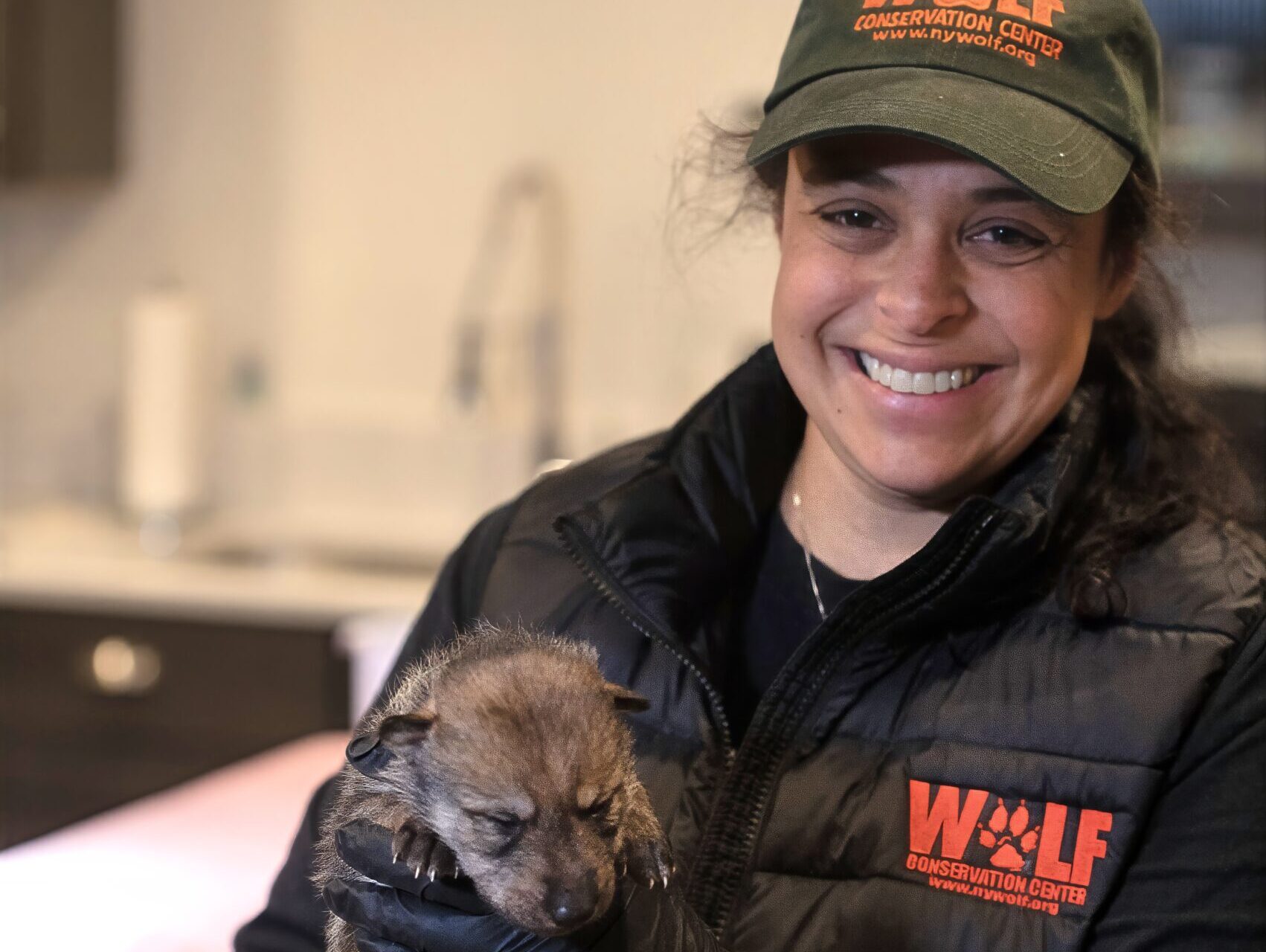
There’s an old saying that if you love your job, you don’t work a day in your life. For Rebecca Bose, curator at the Wolf Conservation Center in South Salem, that rings true. For over 26 years, she has opted for wolves instead of vet school, built a career around animals she deeply respects, and found a job she’s in no rush to retire from.
What inspired you to work with animals?
I’ve always loved animals. Starting in fourth grade, I rode horses, and I would beg, borrow and steal to be at the barn. When I got older, I started volunteering with a local veterinarian, and at the time, I thought being a vet was the only way to go. Then, when I graduated college, I learned about the Wolf Conservation Center through a 1999 New York Times article. I remember thinking, “How are there wolves in my backyard?” I weaseled my way in, vet school went out the window, and I was hired officially in 2002.
What does your role as a curator involve?
In the museum world, a curator is in charge of a collection—ours is just living. Because we’re a smaller organization, I wear a lot of hats: daily care, vet care, managing volunteers and working with other wolf centers. We’re a breeding and holding facility for two Saving Animals From Extinction (SAFE) programs—the Red Wolf Recovery Program and the Mexican Wolf Recovery Program, which are managed under the Association of Zoos & Aquariums (AZA). I serve as a husbandry advisor and participate on the steering committees for both programs. My thinking is always “wolf first”—they are the priority.
What qualifications do You need for this kind of job?
I have a bachelor’s in biology and a master’s in zoology. At a bigger zoo, you’d typically need a higher degree for a curator or director position, plus significant experience, which you get through climbing the ladder.
What is something people often misunderstand about your work?
That I just hang out with wolves all day and that they’re dangerous. I often get the question “Aren’t you afraid of them?” We treat them with a high level of respect. Our recovery animals, the red and Mexican wolves, aren’t our wolves; we’re simply a holding and breeding facility. Wolves that reside here in recovery programs are either breeding to add to the population under human care or may have the opportunity to be released into the wild. They reside out of guest view, and we have hands-off husbandry protocols, meaning they eat a natural diet of primarily road-killed deer to prepare them for release. The wolves we help come and go, and while we can certainly get attached, we understand that
these wolves are part of a bigger picture in saving the species. Also, if we handled them too much and then released them, they’d get killed since their exposure to human connection interferes with their survival instincts.
Tell us a funny story from your time on the job.
Wolf behavior is fascinating—packs are families, with their own dynamics. One snowy day, our male Silas had something our female Kinari wanted, and he was growling and showing his teeth. After a little while, and she walked up to him, completely ignoring the thing, and she started playing with him to shift his attention. The moment she saw her opportunity, she grabbed it and ran off! She went into that whole interaction with a plan.
Can you tell us about a memorable experience?
Our mission envisions a world where wolves thrive, and we have four pillars: education, advocacy, research and recovery. I’ve had the great privilege of actually taking wolves back into the wild. That’s why we exist—to put wolves back on the landscape.
What is your favorite part of your work?
I love veterinary medicine. It’s always been a passion. I still work one Saturday a month at the Pound Ridge Veterinary Center, which keeps my skills sharp, and I love the field of veterinary medicine. And whenever we get the chance to put a wolf back in the wild, that’s a highlight.
This article was edited by Rinn Kress and fact-checked by Isabella Aranda Garcia.
This article was published in the July/August 2026 edition of Connect to Northern Westchester.

Kayla Schmidt
Kayla Schmidt is a sophomore at Horace Greeley High School. She is part of the newspaper and the SADD club, and she is also the co-manager of the track team. In her free time, Kayla enjoys spending time with her friends, family, and dogs, along with reading (preferably on the beach).