
Writing and Photography by Justin Negard
When Dr. Harvey Cushing became a full-time neurosurgeon in 1904, brain tumor surgery still carried mortality rates of roughly 30 to 50 percent in most surgeons’ hands. But by 1910, Cushing reported a mortality rate of just 13 percent. “If you opened someone’s brain in 1900, they would just bleed out,” says Terry Dagradi, the coordinator of Yale University’s The Cushing Center. “Operations on the brain were basically a death sentence at that time.”
Cushing was the one who changed that. Over the course of his career at Johns Hopkins, Harvard and Yale universities, he helped establish neurosurgery as a distinct specialty by developing techniques and surgical approaches that made operations much safer. His research on the pituitary gland, tumors and intracranial physiology transformed medical science in ways still seen today, earning him international acclaim as one of the first specialists in neurosurgery.
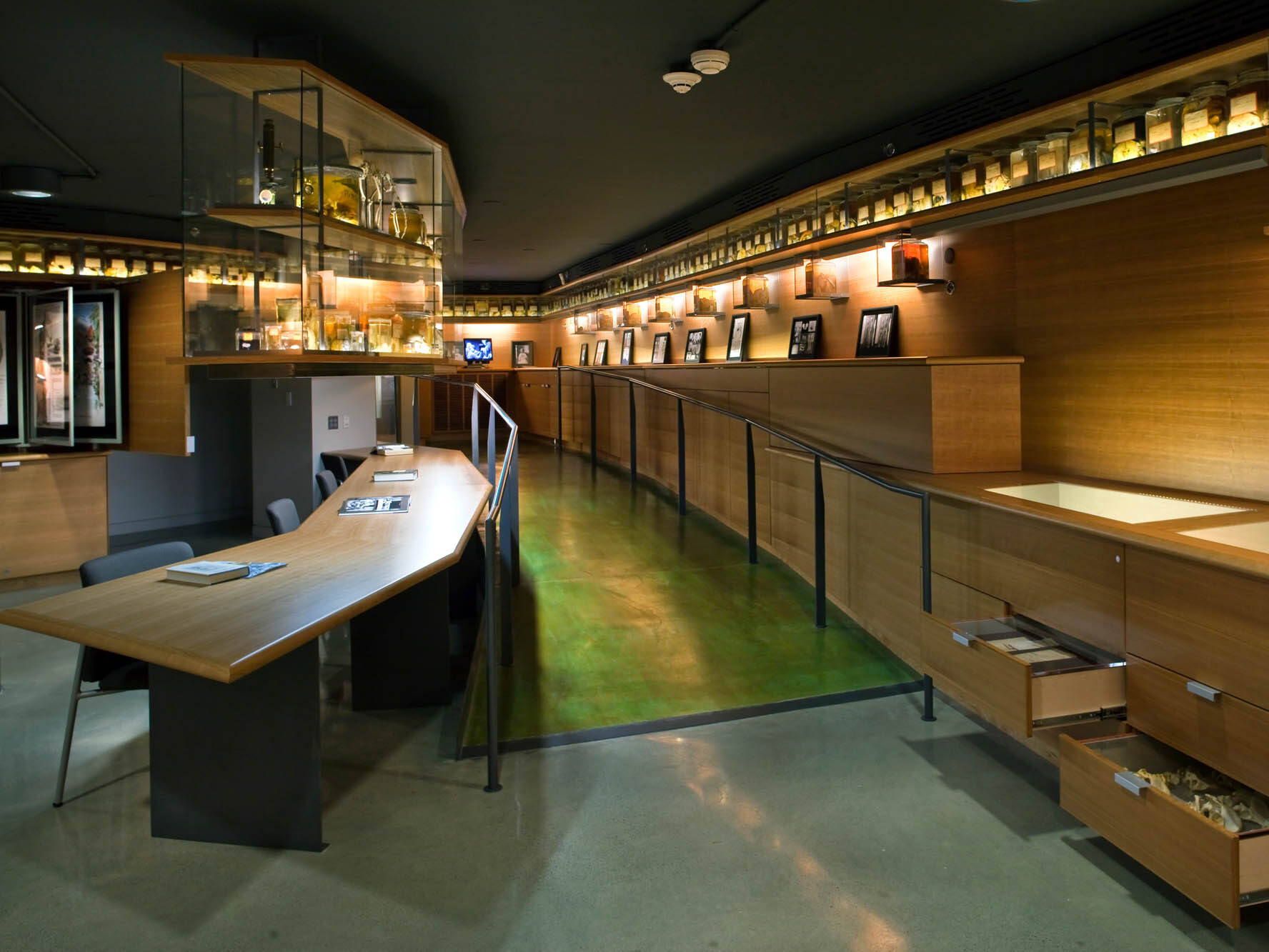
Today, Cushing’s work and story are on full display at The Cushing Center within the Yale School of Medicine in New Haven. In it, you will find writings, sketches, artifacts and photographs from Cushing’s life. Most notably, you will also observe the collection of preserved brains and tumor specimens that Cushing studied over the course of his career. It is a space dedicated to his life, his team and the very mission of the center—to inspire wonder about the human brain.
The medical library
To visit The Cushing Center, you enter at the Harvey Cushing / John Hay Whitney Medical Library. After walking through the Cushing Rotunda, filled with paintings of Cushing, and display cases that hold some of the historical medical devices from this era, you begin to sense his significance; it’s neither subtle nor coincidental. “Cushing’s friends from school funded the rotunda after he died,” says Dagradi. “It was their opportunity to celebrate their buddy and the most famous person in the class. They gathered money together and created this beautiful space.”
We recommend you budget some time to view the historical library, a reading room filled with leather-bound texts, wood-grained tables and that indescribable smell of old paper. Here, you will find rare books that Cushing bequeathed to Yale, along with collections from two of his medical contemporaries, Arnold C. Klebs and John F. Fulton. On a good day (and with the proper permission), you just might get a peek at a first edition of Copernicus, Galileo, Charles Darwin or Isaac Newton. When you’re done getting lost in literature, meet up with your scheduled tour group and head downstairs to The Cushing Center itself.
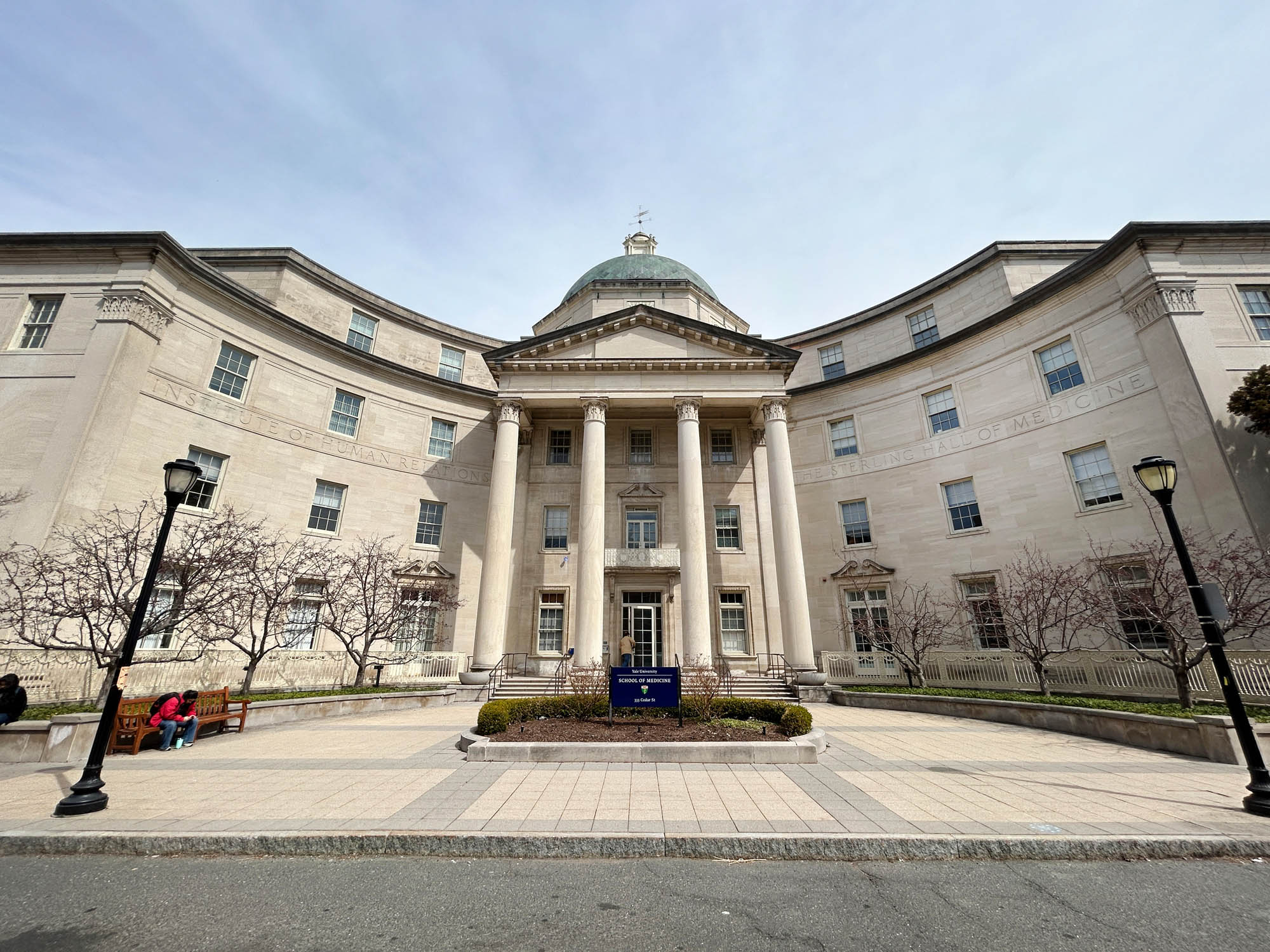
The Harvey Cushing/John Hay Whitney Medical Library.
The brain collection
Certainly, one of the more intriguing parts of The Cushing Center is the large collection of human brains and tumors housed in their original jars of formaldehyde. This collection, called The Cushing Brain Tumor Registry, is difficult to miss along the shelves of the center. Cushing’s own surgical patients provided the specimens, which he saved for future study to help him map the brain and improve outcomes for future patients. “Early on, he successfully removed a tumor from a young woman,” Dagradi explains. “She survived. The tumor is in his hands, and he wanted to research it. So he sent it to the lab and never heard back. After that disappointing moment, he decided he would keep things himself. Tumors and even whole brains became an opportunity for him to perform cross sections and begin observing the brain’s anatomy, which he mapped and drew.”
According to the center, the collection includes 2,200 case studies of human brain specimens, tumors and more, spanning decades of Cushing’s career. Initially, his secretary, Dr. Louise Eisenhardt (a world-renowned neuropathologist who attended medical school at Cushing’s encouragement and later became his “right hand”), managed the collection, matching each specimen to the patient’s history and photos. Today, The Cushing Center houses an extensive catalog of profiles and documented records of these patients’ journeys with Cushing.
Years after Cushing’s death, the brains were relocated to the basement of the Brady Memorial Laboratory and then to the sub-basement of the E.S. Harkness Hall student dormitory 40 years later. In the 1990s, several medical students discovered this collection, sneaking through dark crawl spaces to get a peek at “the brain room.” Successful future adventurers who reached the collection became members of the “Brain Society,” an unofficial club of brave souls who made the journey. Each member signed a whiteboard in the room—proof that they personally saw the collection. Today, that very whiteboard hangs near the entranceway of the center.
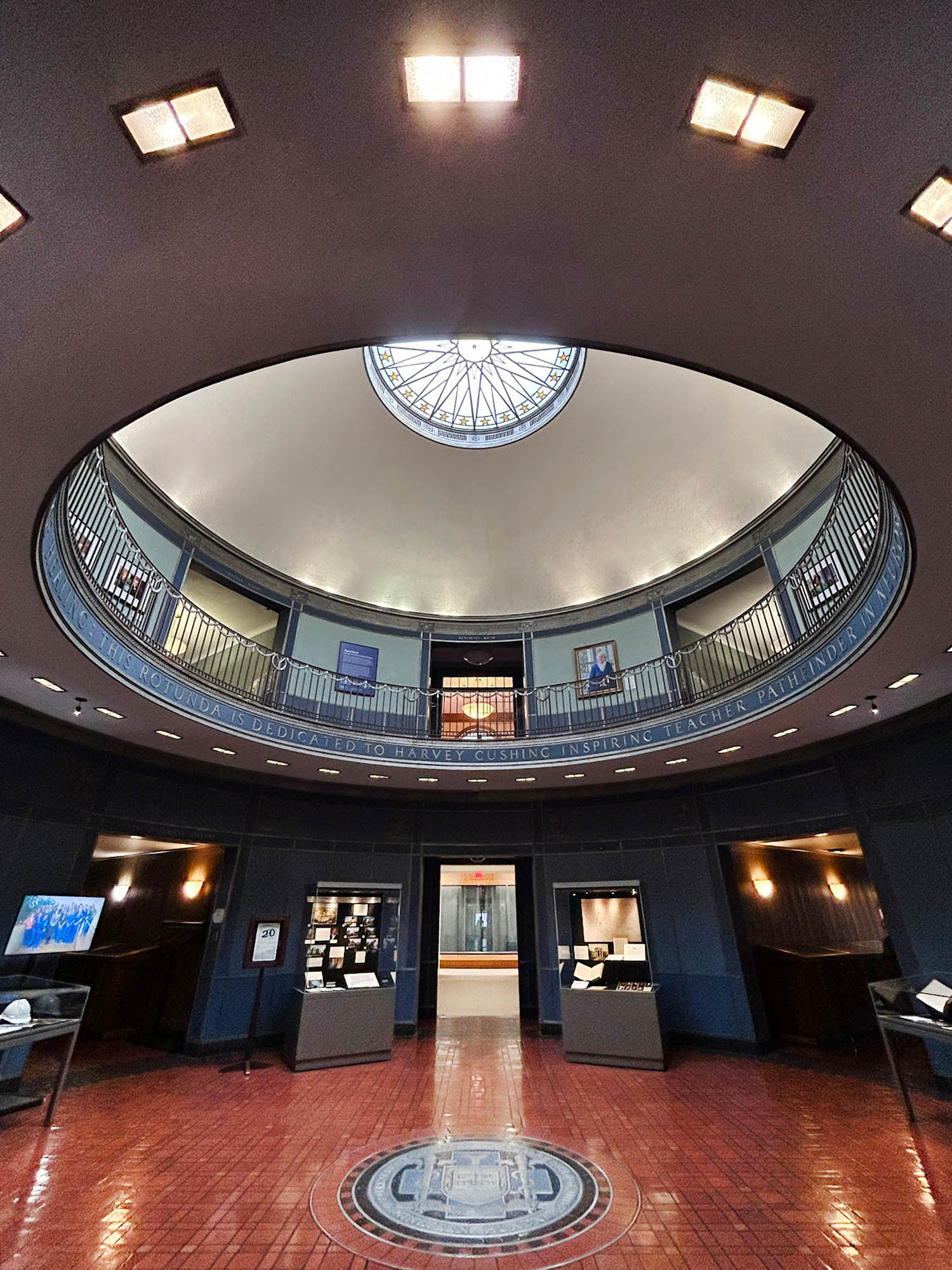
The Cushing Rotunda.
Stop the bleeding
At the turn of the century, bleeding out was highly likely for neurosurgical procedures. As a pioneer in his field, Cushing invented, co-created and adopted devices and techniques to solve this problem, many of which are on display at The Cushing Center.
For example, Cushing introduced the silver clip, which he used to tie off arteries during operations. He invented a pneumatic tourniquet made of rubber to wrap around a patient’s head to further control blood loss. He collaborated with inventor William Bovie to create the electrosurgical generator (a.k.a. the Bovie unit), which passes a high-frequency alternating current into the body, allowing the current to cut or coagulate blood. Cushing used this device to simultaneously cut and cauterize tissue during a procedure. He monitored blood pressure during surgery using a Riva-Rocci sphygmomanometer, which he encountered on a trip to Italy, and then created an enhanced version to use in the United States. As a junior medical student, he co-developed the first anesthesia chart to track pulse and respiration during surgery. Other innovations Cushings eagerly adapted to help advance neurosurgery include the electric headlamp, which improved visualization of pituitary tumors approached through the mouth or nose, as well as early use of the x-ray machine, which helped him study skull anatomy, bone structure and follow his patient’s progress post-surgery.
In 1929, after Russian physiologist Ivan Petrovich Pavlov (of doggy bell-ringing fame) attended the annual Physiological Congress, he visited Cushing at Peter Bent Brigham Hospital in Boston to observe him operate. After watching Cushing remove a brain tumor, Pavlov was impressed by the Bovie unit and asked to try it himself. Cushing handed Pavlov a piece of steak to experiment on, and Pavlov used the knife to sign his name. Cushing placed the autographed steak in a jar of formaldehyde, and today, “Pavlov’s beef-steak” is on display in the center, along with a photo of Pavlov and Cushing.
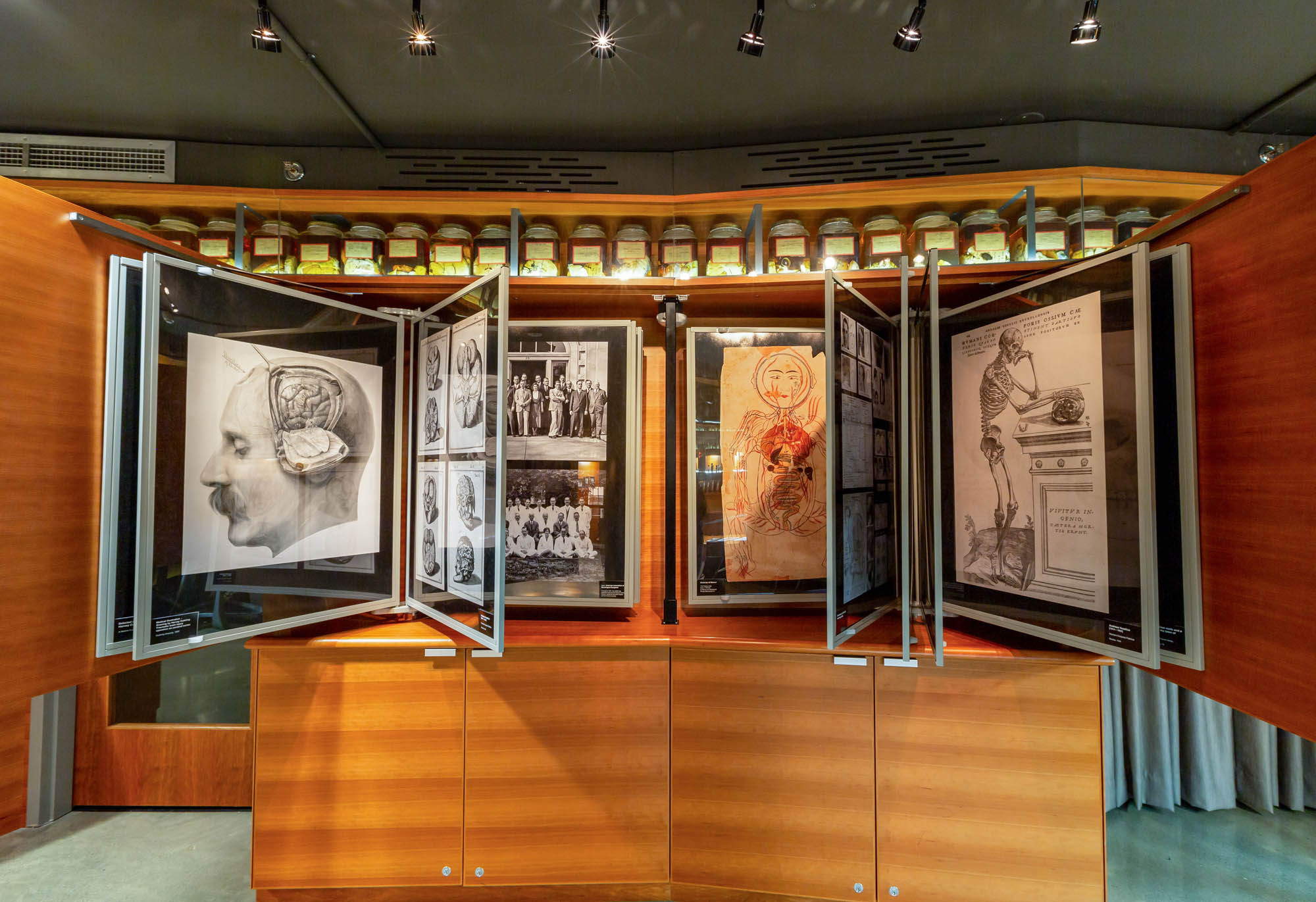
A collection of medical artwork drawn or appreciated by Cushing.
Where art and science overlap
The world may know about Cushing’s accomplishments as a neurosurgeon and his advancements in neuroscience, but what may be less known is his artistic prowess. At The Cushing Center, you will find detailed medical sketches by Cushing, done in exceptional detail and accuracy, to document his operations, patients and findings, alongside his notes.
While at Johns Hopkins, Cushing’s drawing skills improved under the guidance of medical illustrator Max Brödel, who founded the world’s first medical illustration department. Cushing was also a devoted fan of the 16th-century Renaissance physician and artist Andreas Vesalius, who pioneered human anatomy sketches and studies. You can find Vesalius’s work at The Cushing Center, along with images of him elsewhere in the Cushing/Whitney Medical Historical Library (as per Cushing’s preference). Cushing even bequeathed his entire rare book collection, including the largest known collection of Vesalius’s work to Yale, and three copies of Vesalius’s famous 1543 work, “De humani corporis fabrica libri septem,” to the library.
Photography was also an important part of Cushing’s work. He used photos as a visual record of a patient’s physical changes over time. This was particularly valuable in his studies of gigantism and tumor development, helping him track changes in their facial features, skull and extremities in his patients with greater accuracy.
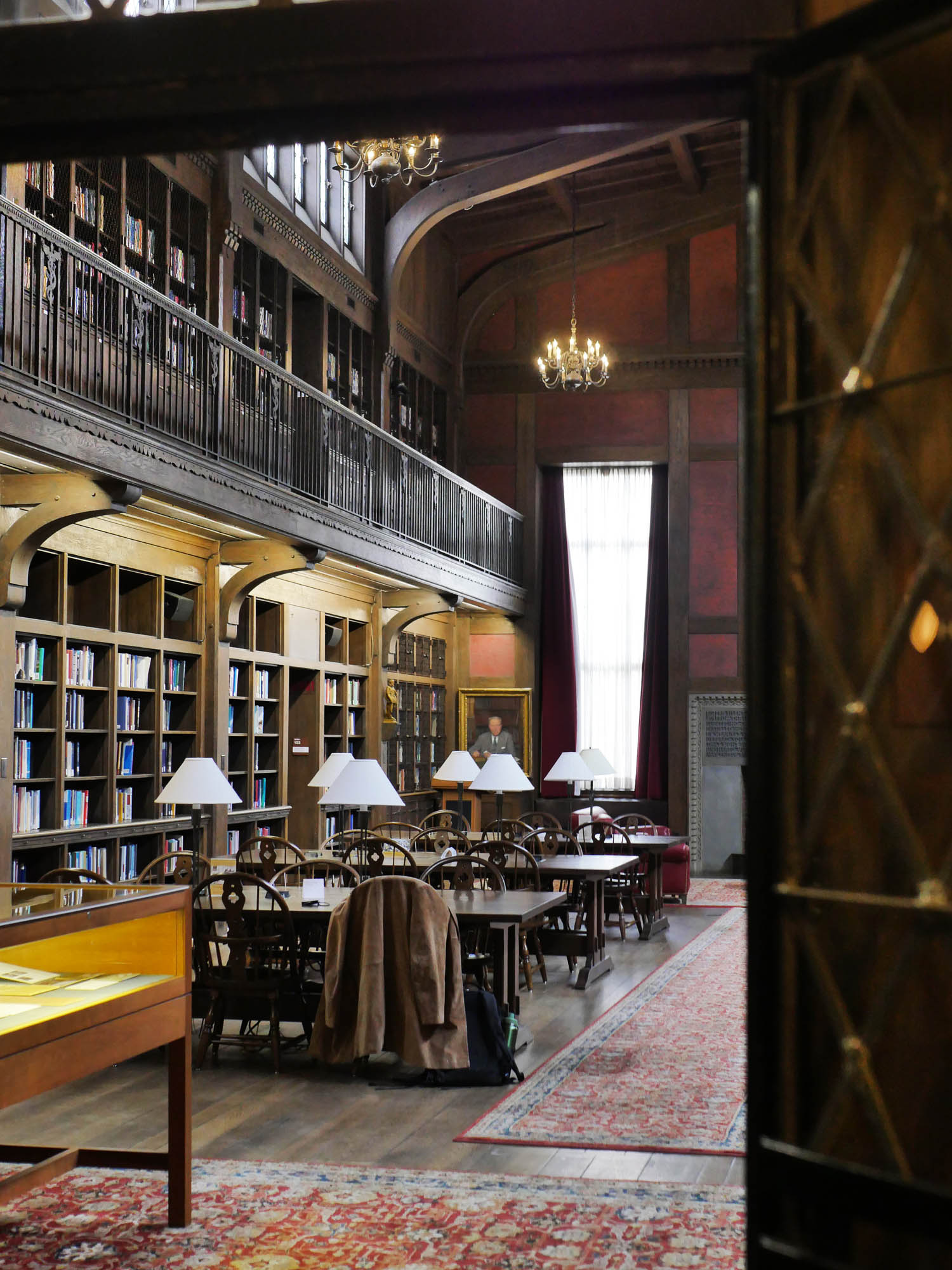
Inside the medical library.
The humanity
There is a second part to the center’s mission statement: “…to respectfully steward the remains of patients contained within the Cushing Brain Tumor Registry.” In other words, The Cushing Center is definitely about the science, and it’s also about the people.
Dagradi remembers a man from Houston who called searching for information about his family. “His sister died before he was born,” Dagradi remembers. “Yet he grew up hearing stories that Cushing comforted his mother, a patient, convincing her it was safe to have more children. This man really felt like he was born because Cushing reassured his mother.” Dagradi shared other stories as well, such as the grand aunt of someone who underwent an operation by Cushing when she was 21 years old. That woman lived to the age of 86. Another man learned that his great-grandmother was in the brain registry—she had suffered from the same aggressive tumor he was suffering from. In 2020, he too donated his brain in hopes that future researchers could compare his tissue to his great-grandmother’s to better understand their family disease and help future generations.
The Cushing Center takes great effort to remind visitors that these are not just specimens—they are the remains of human beings. The center doesn’t exist as a museum for the bizarre, but rather as a place you can visit to learn, study and honor the lives of Cushing’s patients and his team.
This article was edited by Julie Schwietert Collazo and Meryl Kaye. It was fact-checked by Gia Miller. The artwork is courtesy of The Metropolitan Museum of Art’s Open Access Initiative.
This article was published in the May/June 2026 edition of Connect to Northern Westchester.
Justin is an award-winning designer and photographer. He was the owner and creative director at Future Boy Design, producing work for clients such as National Parks Service, Vintage Cinemas, The Tarrytown Music Hall, and others. His work has appeared in Bloomberg TV, South by Southwest (SXSW), Edible Magazine, Westchester Magazine, Refinery 29, the Art Directors Club, AIGA and more.
Justin is a two-time winner of the International Design Awards, American Photography and Latin America Fotografia. Vice News has called Justin Negard as “one of the best artists working today.”
He is the author of two books, On Design, which discusses principles and the business of design, and Bogotà which is a photographic journey through the Colombian capital.
Additionally, Justin has served as Creative Director at CityMouse Inc., an NYC-based design firm which provides accessible design for people with disabilities, and has been awarded by the City of New York, MIT Media Lab and South By Southwest.
He lives in Katonah with his wonderfully patient wife, son and daughter.