
By Liz Colombini
Photography by William Taufic
As far back as she can remember, Jessica Reinmann has always had a purpose, and she’s always worked hard. At just 10 years old, Reinmann began babysitting, and by the age of 12, she was working at two local clothing stores, using the discounts to purchase clothing for herself. But now, at 50 years old, for the first time, she’s not sure what will come next.
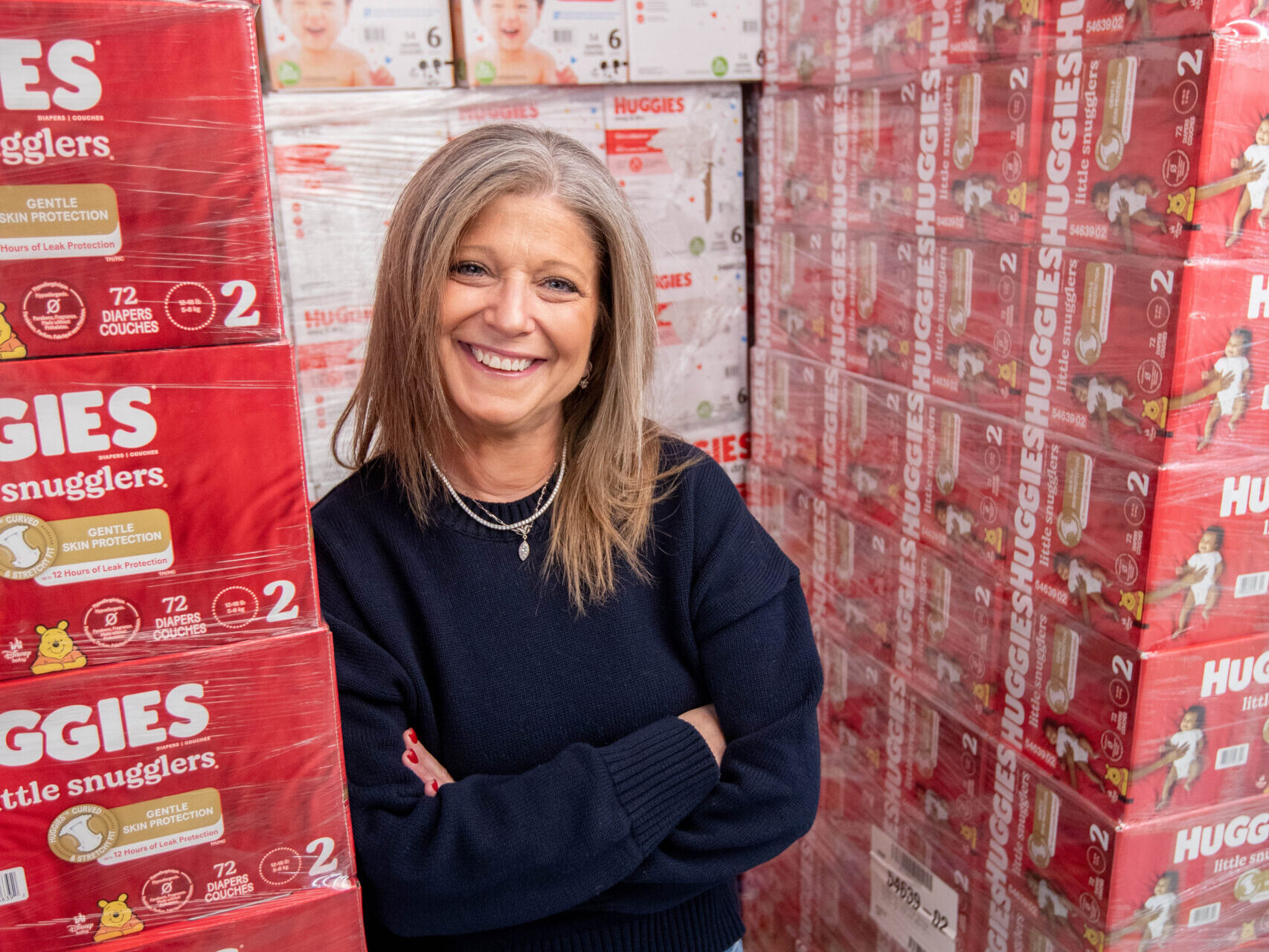
Just months ago, Reinmann was running for Congress in New York’s 17th District, a high-profile campaign that thrust her into the political spotlight. Before that, she spent a decade building 914Cares, transforming it from a trunk full of coats she spontaneously purchased from Target one November morning into a packed 12,000-square-foot warehouse that’s become Westchester County’s poverty-fighting powerhouse. It now distributes almost a million diapers annually, more than 500,000 period products and 5,000 bags of clothing to children from low-income families.
So why doesn’t she know what’s next? The answer, it turns out, comes from an unlikely place. The campaign itself. Reinmann just discovered something about herself that seems unusual for someone with her background: she can be in the spotlight, but she doesn’t like the limelight. “You could ask me to speak about poverty in front of a full house at Madison Square Garden, and I wouldn’t think twice; I wouldn’t be nervous,” she says. “But I don’t want to speak about myself. I like being in charge, but not being the face of anything. In fact, I’m uncomfortable with this whole profile piece!”
It’s a revelation that came at a steep price: 10 months of campaign misery. The constant travel, the endless fundraising, the pressure to compromise on her morals and always being in the spotlight hit her “like a wrecking ball.” But it’s also a revelation that explains everything: why she left her congressional race to endorse another candidate, why she’s taking a step back from the organization she founded and why her next chapter, whatever it is, will definitely be something in the background.
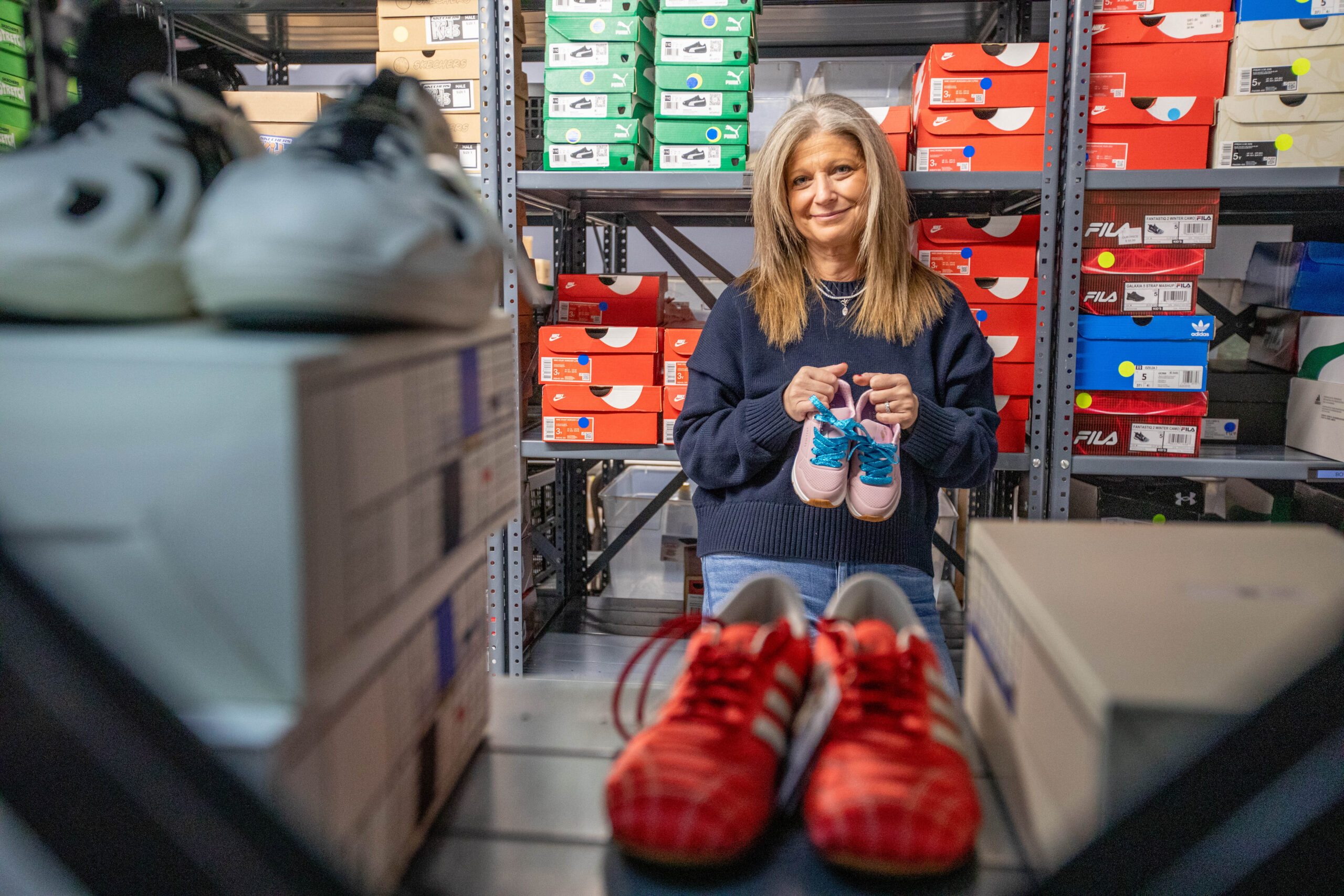
Jessica Reinmann holding kids shoes.
The girl with the knockoff jeans
Growing up on Long Island as the daughter of two union teachers who bought “the smallest house in the best school district,” Reinmann always had less than the other children in her class. “Everybody would be wearing the same jeans or the same whatever, and I always had the knockoff,” she says. “So I had to find ways around it. By middle school, I was really good at shopping in the back room at Loehmann’s, which I could walk to. And I always worked at clothing stores, so I always got discounts.” Reinmann’s parents would tell her she was lucky she was an only child because if she had siblings, she would have even less.
Reinmann attended SUNY Binghamton for college, which her parents could afford, but she took out loans for Cardozo School of Law. Shortly before law school graduation, Reinmann says she made “the biggest mistake of my life.” She had two job offers. The first was from the Manhattan District Attorney’s office; they offered Reinmann just under $40,000 to prosecute criminals—her lifelong dream, inspired by her years of watching Matlock with her grandfather (a Jewish NYPD officer in the 1950s). The other offer was from a big private law firm that originally offered her $80,000, then $125,000, and by the time she graduated, the offer was up to $160,000; the job would focus on real estate.
She went with the higher-paying job. The starting salary was higher than what either of her parents made individually, and she was facing crushing law school loans and high rent. She lasted 18 months.
“I was miserable every single minute of it,” she recalls. “I hated the work; it was so boring. I was working 20 hours a day. I took that job because it paid well, but it was awful.” The desperation drove her to email everyone she knew, asking for help finding a new position. The panic was existential. “I knew I needed to get out of there, and I didn’t know what to do,” she remembers. “My whole life was, ‘I’m gonna be a lawyer.’”
A legal recruiter came to the rescue, and she pivoted, becoming a recruiting coordinator herself at a firm then called Kasowitz, Benson, Torres & Friedman. She focused on recruiting lawyers from other firms and helped run the massive summer associate program with nightly events ranging from bowling to theater.
However, the better job couldn’t compensate for what was happening in her personal life. At 18, Reinmann was diagnosed with chromosomal translocation, a rare genetic condition that significantly increases the risk of miscarriages. She endured multiple miscarriages and intrauterine insemination (IUI) treatments, covered by her health insurance, before her daughter Molly was born in 2004.
When she returned to work twelve weeks postpartum, friends who’d chosen to stay home with their babies questioned her decision. Her answer was characteristically pragmatic: “Babies don’t need moms,” she recalls. “Thirteen-year-old girls need moms when they’re in middle school. That’s when life sucks, and that’s when you need your mom home.” That theory came from her personal experience. “I had such a tough time in middle school,” she explains. “I wasn’t very close with my mom, so I didn’t have anyone to talk to about it. I really wanted to be there for my daughter.” Her son Zack was born in 2008 after five rounds of IVF, also covered by insurance.
The summer before Molly started fifth grade (middle school in their district), Reinmann was working for Vinson & Elkins LLP, an international law firm where she rose to become the director of lateral hiring firmwide, when she made a split-second decision. She called her husband and said, “You know what? I’m quitting.”
“I left working at corporate law firms,” she says now, “because I was so sick of making rich people richer.” She knew she was fortunate; her husband’s job could afford them the life they’d grown accustomed to, and Reinmann could be home with her daughter as she endured middle school.
The coat moment
November 2014. Reinmann had been a stay-at-home mom for exactly two months and was trying to figure out what stay-at-home moms do. She decided to join a gym. “I hate the gym,” she notes. But on her way there, she drove down Lexington Avenue in Mount Kisco, an area where day laborers gather and immigrant families live. “It was really cold,” she recalls, “and there were four or five families walking down the street wearing T-shirts.” Using the little Spanish she knew, she asked them if they needed coats and if they were cold. They simply said they don’t have coats. “The whole thing was mind-blowing to me,” she recalls. “At the time, I assumed that meant they couldn’t afford coats. But as I built 914Cares and got to know immigrant families in our area, I also learned that most of them come from Ecuador and Guatemala, and they’ve never experienced anything like a New York winter. They couldn’t even comprehend how cold it would get.”
That day, instead of going to the gym, Reinmann went to Target. She bought every coat she could carry. The next day, she opened her trunk on Lexington Avenue. The families were very grateful. She’d bought children’s coats, adult coats—anything that would keep someone warm.
Then she drove to Chappaqua to meet with a friend, Dawn Greenberg, who was involved in nonprofit work. “What is happening?” she demanded. “We live in Westchester, and there are people who can’t afford coats?” Her friend’s response was surprising. “Oh, Jessica, you’re so sweet. How do you not know this?”
The truth was, she didn’t. In 2014, approximately six to seven percent of the residents in Mount Kisco lived below the poverty line. And in Chappaqua, where Reinmann lived, it was zero to two percent. “I’d driven on Lexington Avenue before,” Reinmann explains, “but I was always in a rush to pick up my daughter or running to the store, and it was usually on a weekend when day laborers weren’t typically out and children weren’t walking to school. This was the first time I leisurely drove down that road and was able to pay attention to what I saw.”
“In general, I think people live in the bubbles they create for themselves,” she continues. “This happens at every economic level. And when you are a working mom with two kids and you’re only home on the weekends, that time is spent on the soccer field or food shopping. I also traveled a lot for my job, so I was home even less.”
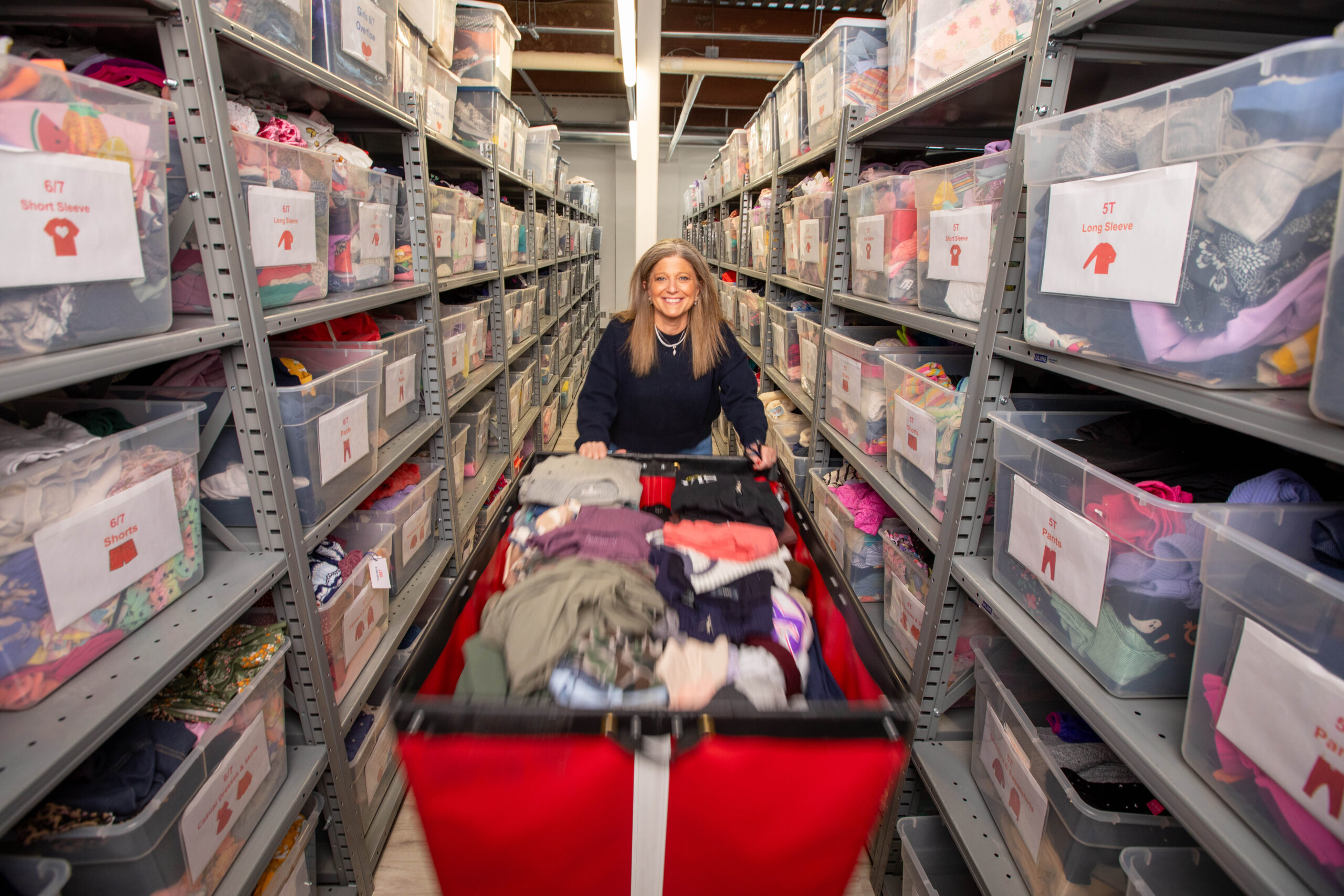
Jessica Reinmann surrounded by donated clothing.
Humble beginnings
That conversation with Greenberg started what would become Chappaqua Cares, and later 914Cares, with a simple philosophy: “I truly believe that 90 percent of people in the world want to help and want to give back. They just don’t know how. But if you give them an opportunity that’s convenient for them, they will do it.”
Reinmann and Greenberg quickly noticed a hole in the marketplace, and they wanted to help. “I was in a place of privilege, which I truly appreciated; it was something I didn’t grow up with,” Reinmann says. “I wanted to use that privilege to give back to my community because I view privilege, regardless of the color of your skin, as a requirement to give back to your community.”
It’s something she’s worked hard to teach her children over the years. To prove her point, Reinmann recalls a morning when her son was six years old and she was driving him to school. “He said to me, ‘I hate rich people; rich people are evil.’ I asked him what he meant, and he said he thought rich people were selfish. So I explained that his dad and I are very privileged, and some might even call us rich. Then I told him that I believed that it’s okay to be rich as long as you give your time and your money to people who are less fortunate than you.”
Those values and that trunkful of coats were just the beginning. Chappaqua Cares had a simple motto: “Donate time. Donate money. Donate things.” Reinmann and Greenberg connected with four local charities: Boys & Girls Club of Mount Kisco, Neighbors Link, The Community Center of Northern Westchester and The Pantry. Each week, they notified their neighbors, via email and Facebook, of opportunities to volunteer, donate money or donate requested goods. It allowed busy working parents to get involved just as easily as a stay-at-home mom.
Just one year after Reinmann’s Target shopping spree, they hosted their first Empty Bowls fundraiser, an international grassroots concept where community members come together to fight hunger. In the weeks leading up to the event, volunteers and local artists painted and glazed handcrafted bowls. At the November fundraiser, attendees received a painted bowl and filled it at one of six stations, serving meals like tomato soup with grilled cheese or New England clam chowder with a lobster roll. Guests kept their bowl as a reminder of all the empty bowls in the world. That first event raised over $60,000 for local food pantries.
They grew quickly, but in 2016, Greenberg stepped back from the day-to-day operations to focus on a project she began in 2013, the Chappaqua Children’s Book Festival, as well as to create and run the Chappaqua Friends of Hill organization, which supported Hillary Clinton’s presidential campaign. But Greenberg remained on the board.
In 2017, Reinmann was introduced to an organization called The Kids Kloset in White Plains, and Chappaqua Cares began holding diaper drives for them. When Reinmann learned The Kids Kloset’s building was being sold and they would no longer receive funding, she stepped in. “I talked to Dawn and said, ‘This can’t happen,’” Reinmann remembers. “There were only two clothing banks in the whole county; we couldn’t lose this one. I told her we needed to take this on, and she agreed.”
By “adopting” Kids Closet, that meant their organization was going county-wide, so in 2018 they rebranded as 914Cares, initially working out of Reinmann’s garage until they secured a space in North White Plains. Reinmann blended her organization’s model with The Kids Kloset’s model. Unlike most organizations that serve low-income people directly, 914Cares works exclusively through other nonprofits, which they call community partners. These include domestic violence shelters, food pantries, services for unhoused people and social service agencies across Westchester. Rather than individuals receiving assistance from 914Cares, partner organizations submit requests on behalf of their young clients. 914Cares fills those orders with everything from diapers and hygiene products to clothing and essentials. When the order is ready, the nonprofit picks it up and delivers it to their client. This wholesale model, rare among nonprofits nationwide, allows 914Cares to reach far more people than it could by serving individuals directly.
914Cares hired their first staff member, the former executive director of The Kids Kloset, once they opened their space in North White Plains. Today, they have over 200 community partners, eight staff members (Reinman, who served as CEO and worked in the office 40–60 hours a week until her run for Congress; she never took a salary), hundreds of volunteers and a 12,000-square-foot warehouse in Armonk.
A clear mission
Reinmann’s childhood feeling of not having “the cool stuff” aligned perfectly with The Kids Kloset’s philosophy of only giving clothing to others if you would put it on your kids. It became the foundation of 914Cares’ operating principle: they would focus on children, and everything they give must be something they’d give their own family. For Reinmann, that standard is personal: she didn’t want children from low-income families to feel the sting of receiving something second-rate, the way she’d felt as the kid with the knockoff jeans. She wanted every child who received a bag of clothing or a hygiene kit to feel like it could have come from anyone’s mom.
Even as 914Cares grew, Reinmann made sure the essence of her mission wasn’t lost; the smallest details were still carefully considered. Reinmann recalls what she describes as “a really big fight” with her team over hygiene kits. Through her conversations with people who work at temporary shelters, Reinmann had learned that bars of soap aren’t ideal for their clients—they’re easily dropped (which isn’t great in a communal shower), and they’re difficult to move from one place to the next. So Reinmann insisted on liquid body soap, but the bottles cost $5 each. Her team argued that they could buy two bars of soap for a dollar; they could help more families with bars. They won, but only because they found plastic cases for 10 cents that made the bars portable.
And then, COVID-19 hit. “Poverty-focused organizations grew tremendously during COVID,” she says. “Donations to arts organizations dried up. All the money was going to organizations like ours.” In April 2020, they launched a diaper bank, which collects and distributes diapers to families in need who cannot afford them, and in the fall, they began a program they named “Period Project,” which provided menstrual products to teenage girls when schools closed and students couldn’t access the supplies that New York State law requires schools to provide for free.
“Since it was the beginning of the pandemic when we launched our diaper bank, for safety, the organizations would email us how many diapers they needed,” Reinmann remembers. “Then we’d fill the entire hallway with carts of diapers overnight on Tuesday night. On Wednesday, the community partners would come in, pick up their diaper order and leave the empty carts in the hallway. This allowed us to maintain social distancing.” As an essential community service, 914Cares was fully open by July 2020, and when they launched the Period Project that fall, they had resumed normal operating protocol, so products weren’t left out overnight and organizations could pick up their orders whenever they were ready.
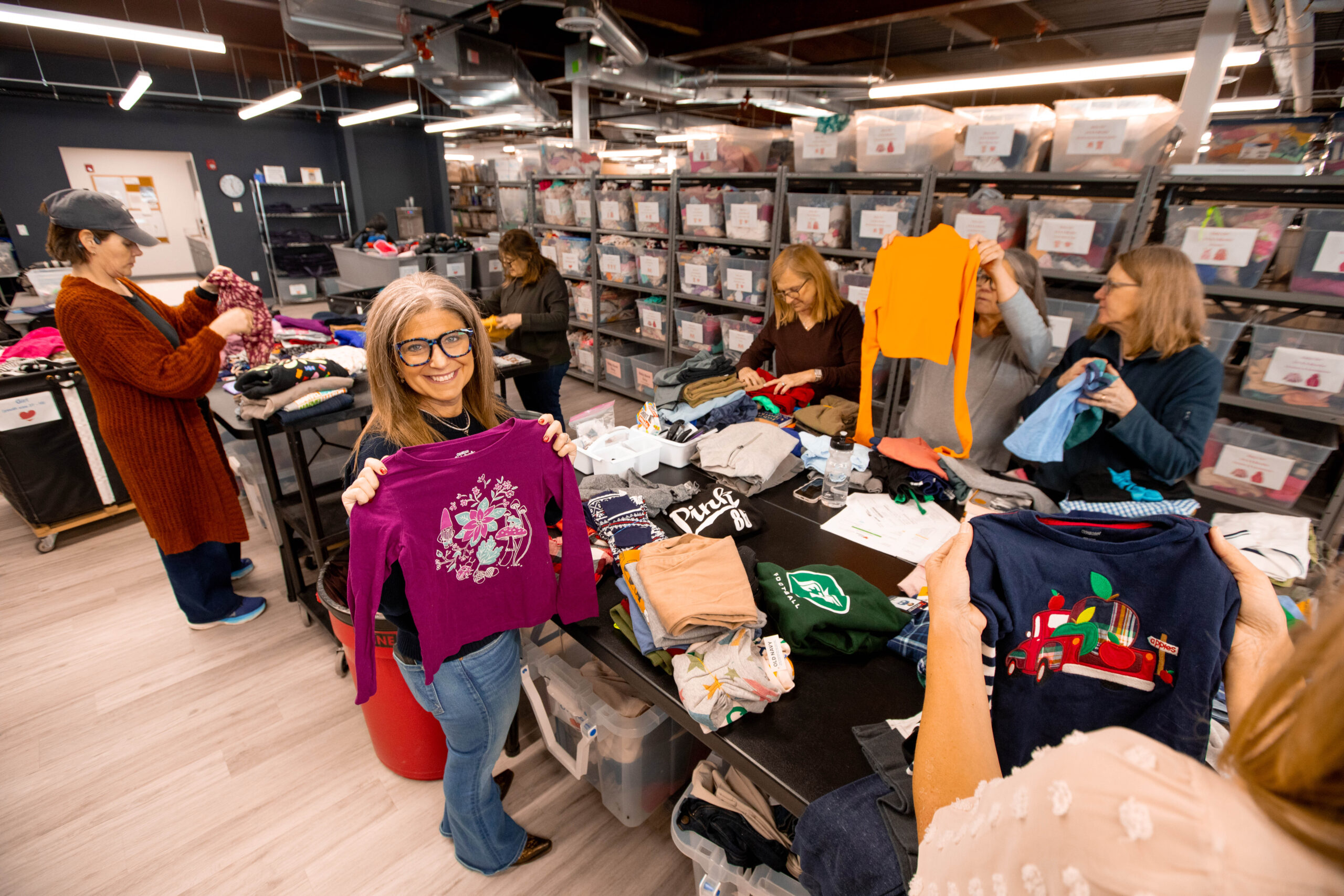
Reinmann and volunteers sorting donated clothes.
The switch to politics
In November 2024, Donald Trump won the presidency again. Within days, 914Cares’ board held an emergency call. Should they stockpile diapers before potential tariffs drive prices up? (They decided not to.) During that meeting, Reinmann had a different thought: “It’s been 10 years, and 914Cares is running itself. If a founder stays too long in any one place, it won’t survive them. If I left tomorrow, 914Cares would still exist. It’s time for me to do something more.”
Two or three nights later, she woke up with clarity: “Mike Lawler can’t be my congressman again. He’s not going to protect the children and the families that 914Cares supports. I’ve spent a decade of my life helping children in low-income families, but the poverty in our area has risen. I need to help them more.”
Reinmann wanted to help create a longer-lasting structural change, and running for Congress was the way to do it. “Members of the House of Representatives are supposed to represent their constituents.” She believed the country’s polarization stemmed from running the same types of candidates everywhere, ignoring each district’s unique needs. She saw herself as a bridge. She was a Republican until 2016, changing political parties because “I think Donald Trump is a vile human being; he’s everything I stand against. He’s undignified, and he does not believe in equality.” Plus, she had built a progressive organization. She believed she was the only person who could beat Lawler and actually represent New York’s 17th District.
“Lawler was so beholden to the Trump money machine,” she explains. “At one point, Elon Musk gave him $6 million. He received so much money from people who were talking about ending social service programs and the Department of Education. It was just really clear to me that everything I stood for and worked for was going to be challenged, and Lawler wasn’t going to be somebody who challenged the administration because he relies on them for funding. I believed we needed someone who was not a political operative, and if I didn’t jump in early enough, we were going to have the same old, same old—somebody who had run for some office somewhere and would be the person the party picked. Just like it was with Mondair. Just like it was with Sean Patrick Maloney. And we were going to lose because people needed someone different.”
Before telling her husband, Adam, she met with the woman who would become her finance director. When she finally shared the news, Adam needed time to adjust. They’d had an agreement for 30 years: no public discussion of religion, politics or money because that’s what people fight about; that’s how friendships are ruined. These topics should only be discussed inside their home. Her children were excited at first, but they soon realized politics means everyone is in the public eye, and their mom was rarely home. However, the person whose support mattered most was her mother-in-law, Rona, who had been her “rock” since Reinmann was 18. Rona cried with pride.
The misery of politics
Reinmann’s therapist kept asking, “Why are you running for Congress? You’re miserable. You’re not living your true self.” Reinmann’s answer never changed, but the toll was real. Two weeks before she dropped out, her husband, who met her at SUNY Binghamton when she was only 18, put her in front of a mirror. “You’ve never been this unhappy in your whole life,” he said. “You went through postpartum depression. You went through IVF five times. Look at yourself. You’re miserable.” And she was. “Fundraising is awful,” Reinmann explains. “I would spend eight hours a day sitting on my couch calling complete strangers; it was horrible. Plus, there was pressure coming from every direction to compromise on the issues I felt strongly about. And I traveled so much. I was never home at night or on the weekends; I rarely saw my family. Running for Congress or Senate is unlike anything else—it takes everything you have. You don’t have anything left to give your family.” And Reinmann hated the spotlight being directly on her instead of on a worthy cause.
The final straw came in December 2024, as the fourth quarter fundraising closed. Reinmann’s team presented her with a list of people she could call and request the maximum donation: $3,500 each. Reinmann looked at the names—they were volunteers and donors she’d worked with at 914Cares, and she had an epiphany. “I never asked any of these people for $3,500 for 914Cares, but I’m going to call and ask these people for $3,500 for a political campaign?” She thought about the translation she’d always made: “When I call and ask for money, and someone says, ‘I’ll give you $100,’ I instantly calculate how many diapers I could buy.”
But campaign donations didn’t translate to diapers. Even if she won, even if Democrats flipped the House, they would probably still have a Republican Senate, and they would definitely still have a Republican president. “Politically, nothing is getting accomplished until 2028,” she realized. She talked to George Latimer, the first-term congressman from Westchester. He confirmed her fears: “I’m doing nothing. I’m literally accomplishing nothing.”
Meanwhile, she’d met Cait Conley, another candidate in the race. Over the past 10 months, they’d become “friends and comrades in arms.” Reinmann felt confident that Connolly “cared just as much as I did about the people in our community.” The decision became clear. She would leave the race and throw her support behind Connolly. She’d raised $450,000. “Do you know what that would do for 914Cares?”
Three lessons
Reinmann doesn’t regret running. “I think I brought really important issues to the forefront of conversation,” she says. But the campaign taught her three critical things about herself:
First: “It’s okay to admit defeat. It’s okay to admit failure. I will survive another day.”
Second: “I’m pretty strong. I can take what people throw at me. I’m way more resilient than I ever gave myself credit for.”
Third, and most important: “I learned that I like executing much more than being in the public eye.”
At 914Cares, although she was the co-founder and CEO, she viewed the organization and its mission as a group effort. “I always talked about it as a team. I always talked about it as an entity. It was never like, ‘I’m the CEO.’” But running for Congress, by definition, makes you the front-facing person. You can’t hide behind your team; you can’t credit an organization. “And I learned that I really enjoy being the person who does everything in the background.”
“I was privileged to run,” Reinmann continues. “I didn’t have to work while running for Congress. Cait is the only candidate who is working while running, and I don’t know how she does it. It takes so much out of you; it’s almost impossible to do both.”
What’s next?
Through November, Reinmann is committed to Cait Conley’s campaign as a senior advisor, happily working behind the scenes. She’s also helping Democrats across Westchester, Putnam and Rockland counties prepare for the 2026 elections, and she’s still on the board at 914Cares. The goal remains unchanged: make sure Mike Lawler is no longer their congressman. After that? “I really don’t know.”
Reinmann is exploring her options. “I definitely want to go back to work,” she explains. “I need a place to be, and I need to work.” She’s considering working for a foundation, possibly at a law firm or perhaps a private one, helping direct their charitable spending. Or maybe she’ll work with the government to facilitate a nonprofit. But one thing is certain: “I will spend the rest of my life helping people. That’s just who I am.” Reinmann is clear-eyed about what her privilege allows her to do. She grew up with less than her neighbors, worked hard and now has a privileged life. She says she feels a responsibility, not just a calling, to use that privilege to help people who are less fortunate.
Right now, Reinmann has two clear goals: for 914Cares to survive and thrive without her at the daily helm and for Republicans in New York’s 17th District to lose. But her overall dream is even simpler. “If poverty didn’t exist in Westchester anymore, and I didn’t have a job, and 914Cares didn’t need to exist, that would be the best day of my life. That is the ultimate goal.
This article was edited by Isabella Aranda Garcia and Lygia Navarro. It was fact-checked by Gia Miller. The photos were taken at 914Cares with Canon optics and edited in Adobe Lightroom.
This article was published in the March/April 2026 edition of Connect to Northern Westchester.

Liz Colombini
Based in Yorktown Heights, Liz lives in the mountains with her partner, two kids, a few black cats and her dog Delta, who likes to herd their small flock of chickens. A self-proclaimed news junkie, she’s passionate about gardening, fitness and collecting tattoos, with each one telling its own story.