
Writing and Photography by Justin Negard
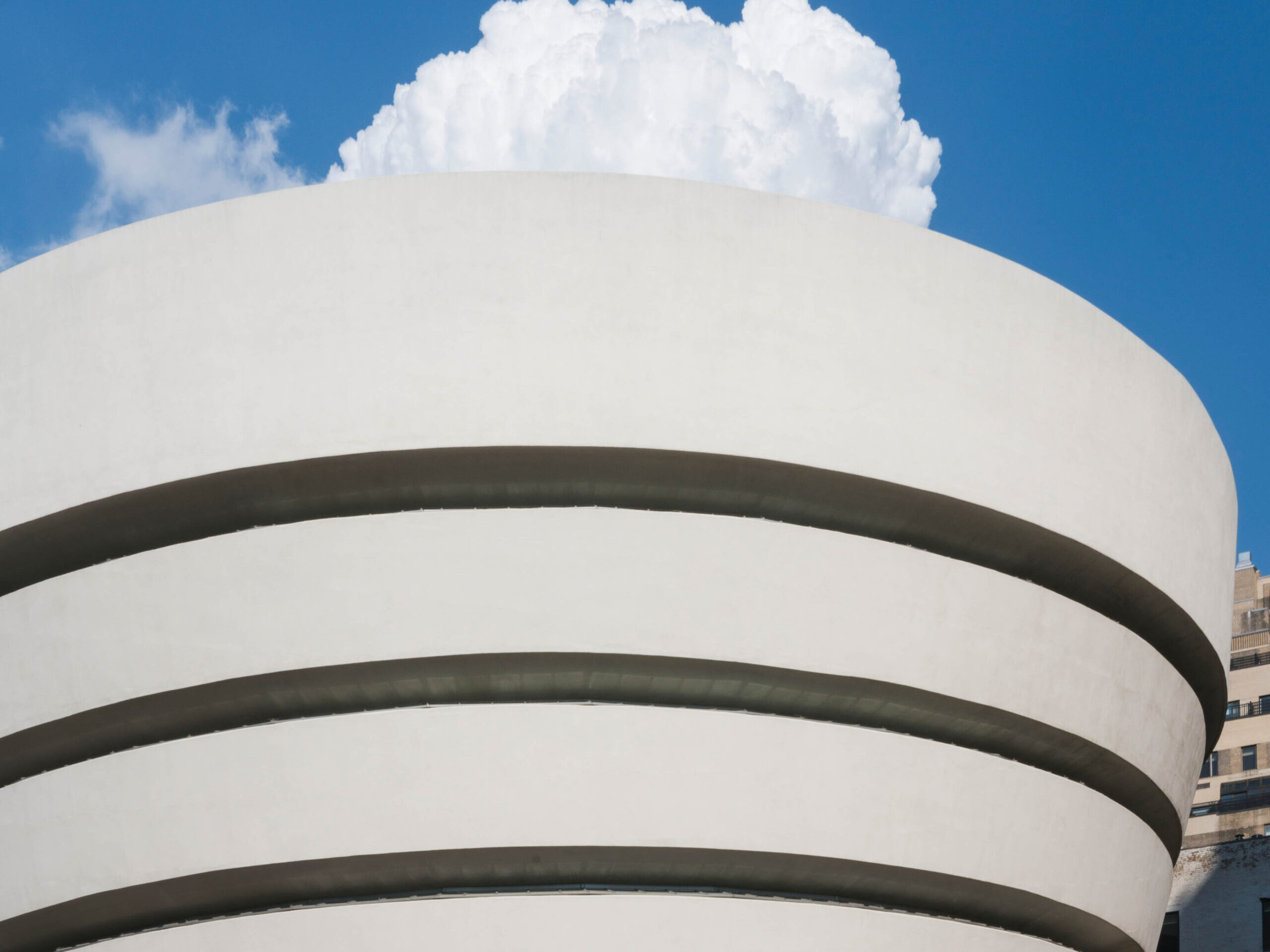
You know it when you see it: the white cylindrical building along Fifth Avenue’s Museum Mile. Resembling more of an alien spacecraft than a building, the Solomon R. Guggenheim Museum stands out from the neighboring brick and limestone Beaux Arts institutions around it. There are no iconic columns to be found, such as the ones on the Museum of the City of New York just a few blocks north. Nor is there a grand staircase for tourists and pigeons to sit on, like the one at the nearby Metropolitan Museum of Art. The Guggenheim Museum is entirely original—a modernistic marvel in a neighborhood dominated by ornate structures of a century ago.
To know New York City’s architecture is to know its history. A walk through the Upper East Side will provide a peek into the city’s Gilded Age. The Cooper Hewitt, Smithsonian Design Museum was once the Carnegie Mansion. Similarly, the Frick Collection was the home of Henry Clay Frick, an industrialist who left his home, paintings, sculptures and decorative arts for the public to enjoy. One can imagine the Victorian bourgeois stepping out of their horse-drawn carriages and into these luxurious estates. As for the Guggenheim? That’s anyone’s guess. Was it built fifty years ago or fifty years from now? (It was completed in 1959.) Is it a gallery for artwork or a work of art itself? (It’s both.) When, if ever, will it lift from its earthly bonds on Fifth Avenue and return to its home planet? (That’s anyone’s guess.) As soon as you get an answer to one question about this famed New York City museum, you have another. So let’s step into this building and learn more.
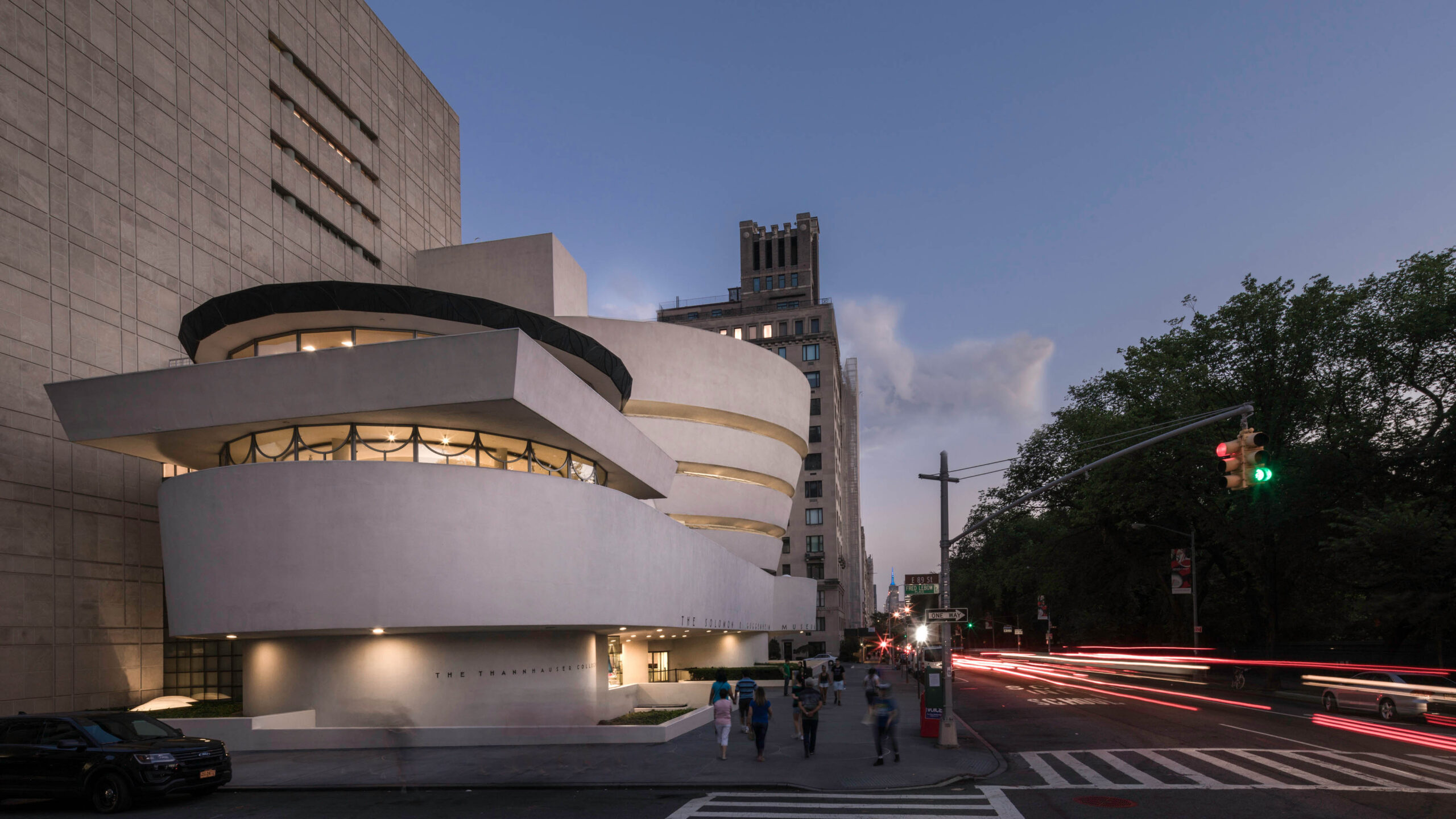
Solomon R. Guggenheim Museum, New York © SRGF. Photo by David Heald.
A temple of spirit
The Solomon R. Guggenheim Museum began, not surprisingly, with Solomon R. Guggenheim himself. Born into a wealthy mining family, Guggenheim was an avid art collector, and he founded the Solomon R. Guggenheim Foundation in 1937 to showcase his collection of works by Wassily Kandinsky, Alice Mason and other contemporary artists at the time. Guggenheim brought on German artist Hilla Rebay as the foundation’s curator, who assisted him in the creation of a proper museum to house his collection. Together, they created the Museum of Non-Objective Painting in 1939, which Rebay ran for the next few years. By 1943, Rebay was on the hunt for a more permanent home for the museum. On June 1, she penned a letter to Frank Lloyd Wright requesting his services to design a new “temple of spirit,” as she called it. “I need a fighter, a lover of space, an originator, a tester and a wise man.” Wright agreed.
The story of the Guggenheim Museum’s design and construction is a long one. Over the next sixteen years, Wright navigated budgets, locations, design revisions and many differing opinions. He focused on what he called “organic architecture,” where an entire space flows naturally from the ground. This was a reaction to what Wright called “the tyranny of the skyscraper”—he had great disdain for the prevailing urban architecture of the time. Finally, on October 21, 1959, months after Wright himself passed away, the Solomon R. Guggenheim Museum opened to the public.
Initial reception of the museum varied enormously. During its years of construction, critics described the building as a giant corkscrew, a washing machine and a marshmallow. Lewis Mumford of The New Yorker wrote a review titled “What Wright Hath Wrought,” which criticized Wright’s design as overshadowing the artwork it was intended to exhibit. “It is as if Wright had only one condition to impose on rival artists—unconditional surrender,” the piece stated. This review echoed the sentiments of a letter in The New York Times published three years prior, in which artists such as William de Kooning, Franz Kline and Robert Motherwell also disapproved of the building as a place to exhibit art. Meanwhile, Emily Genauer of the New York Herald Tribune praised the structure, calling the Guggenheim Museum “the most beautiful building in America,” adding that it “appears beyond question to be the majority opinion of architects, artists, critics and special guests who have been taken through the structure for weeks now.”
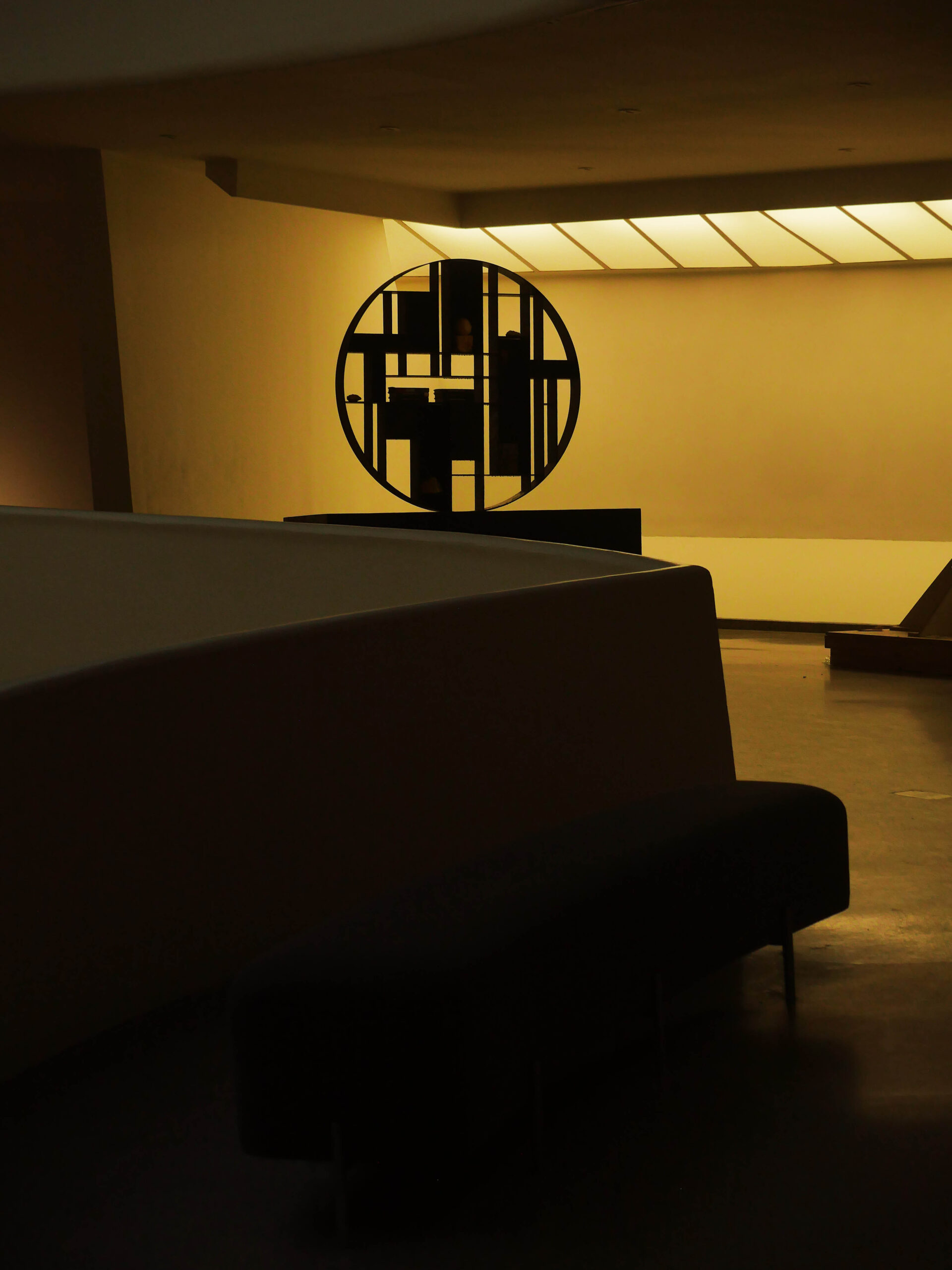
Art installation at the Guggenheim.
Then and now
More than sixty years later, the Guggenheim is a popular spot for art lovers and tourists visiting Manhattan. Upon entry, you will step into the rotunda, which forces you to take in the massive space and glass ceiling above. Wright’s intention was for visitors to ascend by elevator to the top and drift downward along the sweeping spiral slope. But you can always begin your ascent up the iconic ramp and wind your way into the various galleries on all six floors, like most visitors do.
First, the basics. The museum gift shop (obligatory, as they always are) is on the first floor, and there is no shortage of t-shirts, books and lapel pins to purchase. Visitors can also stop in Café Rebay on the third floor for a quick coffee and a remarkable view of Central Park just across the street.
The Guggenheim art collection consists of work by artists like Paul Cézanne, Claude Monet, Vincent van Gogh and Pablo Picasso, permanently on view in the Thannhauser Collection. And these are just a few of the legendary artists waiting to be explored. The museum hosts anywhere from five to fifteen exhibitions throughout the year, which are displayed in the various bays (the alcoves along the winding ramp of the building) and in the larger galleries beyond the rotunda.
Currently, the museum is showing “Robert Rauschenberg: Life Can’t Be Stopped” through May 3; it centers on the monumental 32‑foot‑long silkscreen Barge (1962–63) returning to New York after nearly 25 years. There is also “Gabriele Münter: Contours of a World,” which surveys Münter’s vivid, everyday scenes across more than fifty paintings and early photographs; it’s on display through April 26. And the Modern European Currents exhibition, on view through January 10, 2027, showcases additional works by Franz Marc and fellow expressionists.
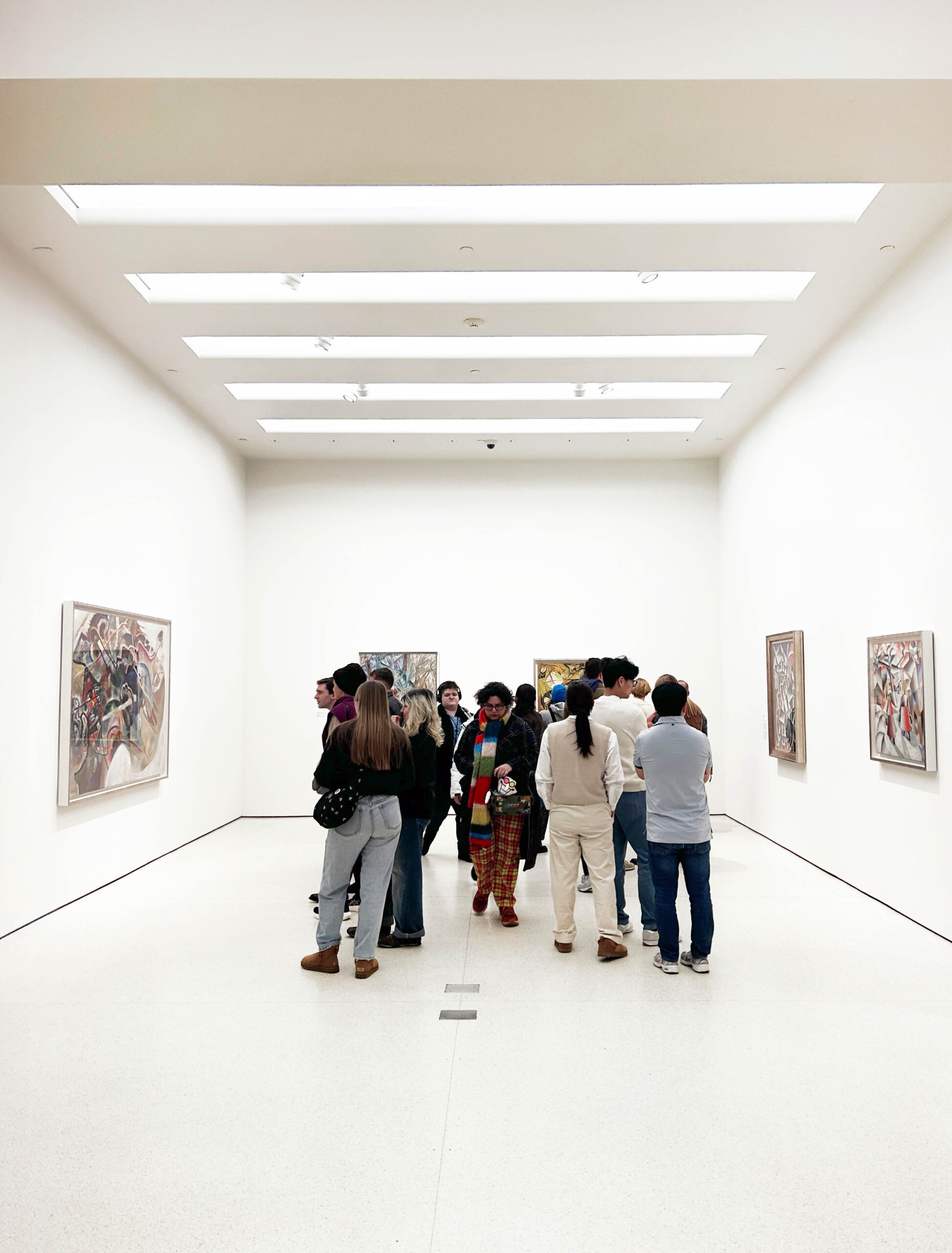
Guggs gather at the Guggenheim.
Guggs unite
The museum offers programs and classes for people of varying ages and needs. For those parents with babies in tow, stroller hour happens one Saturday each month from 9:30 to 10:30 a.m. Art Cart, designed for families and visitors of all ages, takes place every Saturday. Guided by a museum educator who provides you with art supplies, you’ll create a communal art project inspired by the works on display and the educator’s “motivating question.”
For teens, the museum has Teen Tuesdays, a free event where they can gather, make art (supplies are included) and hang out with their peers. There are also various events throughout the year (summers included) that focus on poetry, music, science and visual arts. For college students, the museum provides internships in the spring, summer and fall, as well as summer workshops, CUNY-partnership programs, sustainability courses and more. We highly recommend you check out the museum’s website for more information.
And finally, Guggenheim for All was developed in 2008 for visitors who are neurodiverse as well as students and professionals to explore and learn together. The program focuses on providing a comfortable learning environment to create and experience art at the Guggenheim, as well as reinforce strategies to make museum education programs accessible for people who are neurodiverse. This can include providing fidget tools, noise-canceling headphones, communication boards for nonspeakers, sensory maps of the museum and social stories so students can be better prepared for their visit. The museum also invites educators to explore innovative ways to design sensory-friendly classrooms for their students.
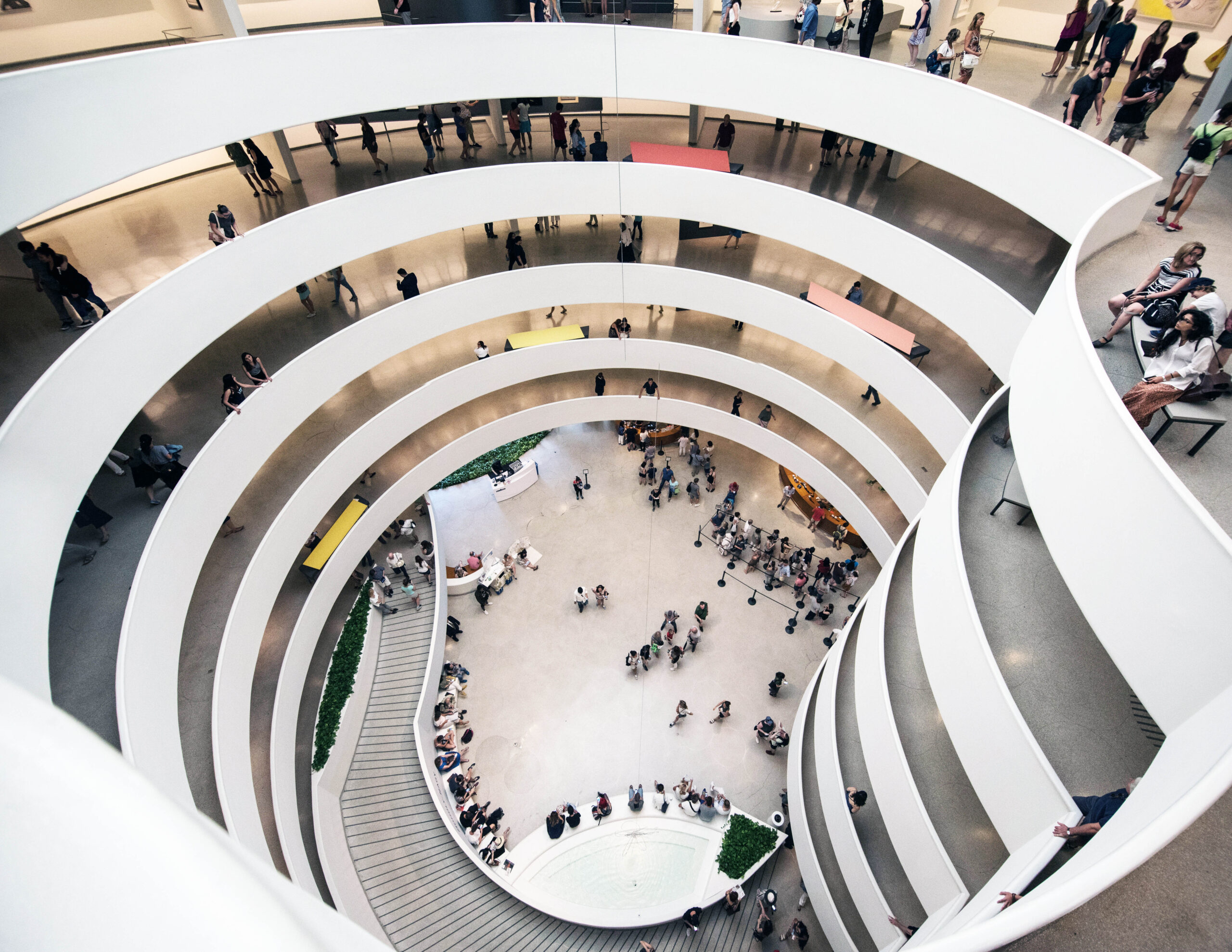
Looking down from the top of the main rotunda.
Landmark status
Decades after construction, this famous building is a true New York City landmark. It’s an integral part of Manhattan’s beloved Museum Mile and a popular destination for tourists and locals alike, averaging over 800,000 visitors in recent years. In 2019, the Solomon R. Guggenheim Museum was inscribed on the UNESCO World Heritage List (one of eight buildings by Wright added that year), solidifying its importance to art and history. While some critics still question how well the spiral galleries accommodate certain artwork, there’s no question that its recognition highlights its architectural importance.
Whether people come for the building itself, the art and programs within, or both, they are coming. This famed institution continues to grow and provide new outlets to see art, create art and simply have some good old-fashioned fun. So find your way to the Guggenheim Museum, take a stroll down the ramp (or up) and admire the architecture. Just please don’t forget to look at the art.
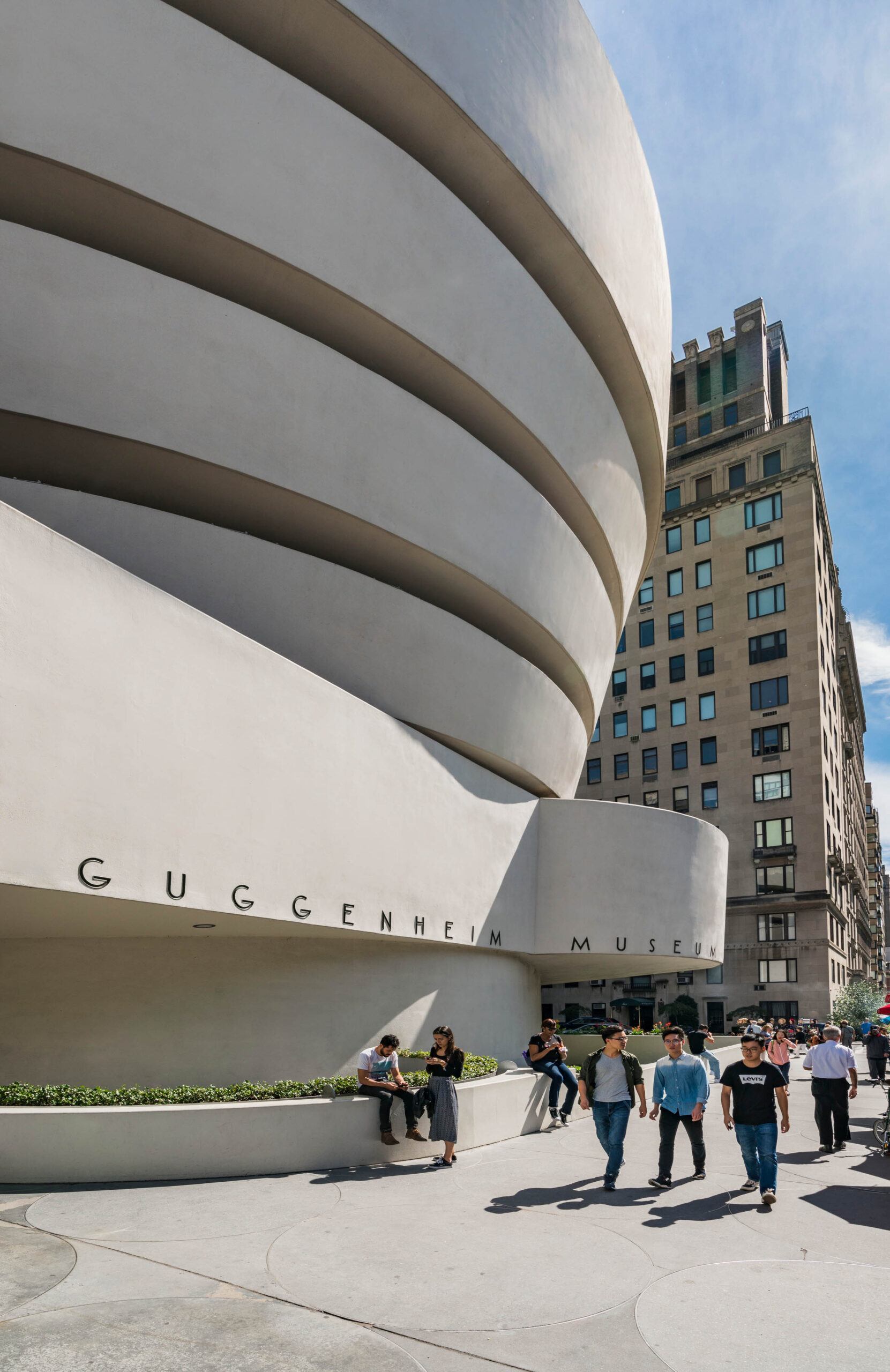
Solomon R. Guggenheim Museum, New York © SRGF. Photo by David Heald.
This article was edited and fact-checked by Isabella Aranda Garcia and Gia Miller. Justin’s photos were taken with Panasonic Lumix optics and edited in Adobe Creative Suite.
This article was published in the March/April 2026 edition of Connect to Northern Westchester.

Justin is an award-winning designer and photographer. He was the owner and creative director at Future Boy Design, producing work for clients such as National Parks Service, Vintage Cinemas, The Tarrytown Music Hall, and others. His work has appeared in Bloomberg TV, South by Southwest (SXSW), Edible Magazine, Westchester Magazine, Refinery 29, the Art Directors Club, AIGA and more.
Justin is a two-time winner of the International Design Awards, American Photography and Latin America Fotografia. Vice News has called Justin Negard as “one of the best artists working today.”
He is the author of two books, On Design, which discusses principles and the business of design, and Bogotà which is a photographic journey through the Colombian capital.
Additionally, Justin has served as Creative Director at CityMouse Inc., an NYC-based design firm which provides accessible design for people with disabilities, and has been awarded by the City of New York, MIT Media Lab and South By Southwest.
He lives in Katonah with his wonderfully patient wife, son and daughter.