Volunteering benefits you as well as others.
It can reduce stress, increase happiness and build confidence. Here’s the 4-1-1 on the philanthropic service organizations in our area.
By Gia Miller
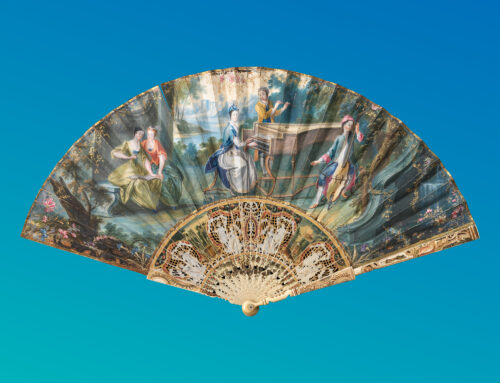
Artwork by Justin Negard
In the almost four years since we started this magazine, we’ve had the opportunity to meet many incredible people and nonprofits throughout our area. We are humbled by the amazing work they do to support our neighbors and others nationally or globally. But one thing we never understood was the difference between the various national and international philanthropic organizations with chapters in our area. Being on the “outside,” they all seemed similar to us, and we wanted to understand why someone would join one organization over another.
So we spoke to representatives from six organizations with local chapters, two of which are geared toward teenagers. The organizations we are featuring have no religious affiliations, but some do require you to believe in a higher power because, as one person explained, “you take an obligation, and if you don’t believe there’s a higher power, then nothing will hold you to that obligation.”
If you want to volunteer your time and give back to your community this year, but you’re not sure exactly where to start, may we recommend finding a local philanthropic organization? Here are several you can choose from.
What they share and what they don’t
During our research, we found there are some significant differences among the adult organizations, but there are some similarities as well. Perhaps most importantly, none of them are “just a bunch of old white men.” Their members range in age from young adults to old. They each host their own fundraising events (information on some of them is included here), donating most or all of what they raise back to the community, and they all support veterans in their own way.
Their membership requirements are also similar. Every group requires potential members to be invited or sponsored by an existing member, and they each have their own slightly different formal membership process. However, if you don’t know anyone in your local chapter, you can go to each organization’s website to be connected with someone who might want to sponsor you. And while all four organizations require members to pay dues to remain active (all said dues vary by chapter), attending meetings is encouraged but not required. Finally, everyone spoke to us about the friendships they’ve gained and how much they truly enjoy being around the other members.
The two teen groups are also similar, with the main difference being that one is for girls and their mothers, while the other is for boys and their parents.
 Freemasonry
Considered the oldest and most mysterious service organization in this article, and possibly the world, the actual origins of Freemasonry are a mystery as well. While their website says that “certain Masonic documents actually trace the sciences of geometry and masonry to the time of ancient Egypt and the building of King Solomon’s Temple,” officially, Freemasons can trace their roots back to the formation of the first Grand Lodge in London in 1717. Originally formed as an early version of a union for men who worked as stonemasons, Freemasons evolved to include men of power and influence throughout the world. Many of our former presidents were Freemasons, and George Washington was sworn in on a Bible from Manhattan’s St. John’s Lodge (that Bible, which is kept under lock and key, has been requested and used for swearing-in ceremonies by many U.S. presidents since that time).
“We’re not a secret society, but a society with secrets,” explains Richard Swann, who has served on the state’s Grand Line, held the roles of district deputy and worshipful master of his lodge, and is currently the treasurer of United Lodge #942. “Anybody can go on the Grand Lodge of New York website to see a list of every lodge in the state. And you can click a button that will direct you to the local lodge if you want to become a member. But you aren’t allowed to attend Masonic meetings unless you are a member. That’s where the secretive part comes in.”
Today, the Freemasons allow men “from all walks of life” to join, while women can join the co-ed Order of the Eastern Star, and there are two youth groups for girls and one for boys. They’re a social group with a strong commitment to community and charity. “The Masonic Medical Research Institute in Utica is one of the finest medical institutions in the world,” says Swann. The Masons host toy and coat drives, support food pantries, give scholarships, work with VA hospitals, and run the Shriners Children’s hospitals (all Shriners are Masons).
Members receive access to fraternal benefits, including an exclusive blood and organ donor program and broader medical assistance for you and your family. And they can also attend those secretive meetings, which Swann describes as very structured and formal.
 Lions Clubs International
Founded in 1917 by a Chicago businessman to address social issues stemming from World War I, the Lions Clubs International became a global organization within three years. When Helen Keller addressed their 1925 convention, she challenged them to become “knights of the blind in the crusade against darkness,” and they accepted. Today, they are a worldwide organization dedicated to community service, with a strong emphasis on vision care.
“The Lions Club is strictly focused on local community service and local giving,” says Judi McAnaw, president of the Somers chapter. “The majority of what we do is raise money for the community and provide hands-on help for local families. When we learned about a local family struggling with a health crisis, we immediately jumped in, donating $10,000 and finding multiple contractors to donate their time, all to make the home handicapped accessible.”
Lions aim to serve their community in various ways. The Somers chapter, for example, holds an annual Independence Day celebration and spring carnival, along with several other fundraising events. All money raised goes back into the community, supporting organizations like Make-A-Wish, Friends of Karen, the Community Center of Northern Westchester, and more.
And then there’s the vision component. The Somers chapter created an early screening program called Lions SEE, which stands for “screening eyes early.” They perform eye exams at local daycares for children ages six months to seven years old. “Recently, we tested a young boy who, it turned out, had significant astigmatism and farsightedness in his left eye,” says McAnaw. “It could have left him with permanent vision loss. Our screening caught it so early that it could be corrected without surgery.”
Students ages 12 and up can join Leos, which, like in Somers’ case, is sometimes run through the local high school.
 Rotary International
Rotary began in Chicago in 1905 as a club where professionals from different fields could exchange ideas and form “meaningful, lifelong friendships,” according to its website. That idea grew into a global organization dedicated to causes that help build international relationships and support peace. Rotary has seven key focus areas: promoting peace, fighting disease (notably polio), providing clean water/sanitation/hygiene, improving maternal and child health, supporting education, growing local economies and protecting the environment.
“Rotarians’ global motto is ‘service above self,’ which means we prioritize helping others over personal gain,” explains Tony Washington, the immediate past president of the Peekskill Rotary. “We’re guided by four principles, which are truthfulness, fairness to everyone, building better friendships and ensuring beneficial results for everyone. These principles serve as a four-way test that guides us personally, professionally and in our organization.”
Rotary clubs support their community in a variety of ways, and the Peekskill chapter provides scholarships to members’ children, funds projects (like a recording studio or greenhouse) for local public schools and donates funds to programs for youth during the summer. “Our Literacy Lovers program is near and dear to our hearts,” says Washington. “We’ve given away between 35,000 and 40,000 children’s books to anyone who wants them.” Rotary also supports the community through events like food drives—they recently collected over 2,300 pounds of non-perishable food items—and members donate their time and money to local nonprofits. The Peekskill Rotarians also host two annual festivals (the Cherry Blossom Festival in May and the Fall Festival in October) that serve as a primary source of funding for their grants.
Local Rotary clubs support the global organization as well. “During October, we ask that all members donate $100 to Rotary International for projects run around the globe,” Washington explains. “If we get 100 percent participation, then, in our chapter, the president wears a costume chosen by a member to a meeting. When I was president, I had to dress like George Washington. Another year, our president, who was a man, had to dress like Carmen Miranda. We always have a lot of fun with it.”
 The Benevolent and Protective Order of Elks
Founded by a group of actors in New York City, the Elks’ original mission was to provide housing and support for traveling actors. The Elks are credited with establishing Flag Day and building the country’s first VA hospital; they place a strong focus on creating/supporting youth and veterans programs.
“We’re not a drinking club, which is what everyone thinks,” says Richard DeSilva, a past state vice president and current secretary of the Yorktown Elks Lodge. “We do have a bar, which helps fund our organization so we can focus on charity. The Elks awards scholarships to members’ children and grandchildren, and we host community-wide kids’ athletic competitions where the winners earn prize money and advance to the next level.”
The Yorktown Lodge, which boasts over 500 members, is committed to charitable work in the community, with 20 committees organizing things like providing essential items to individuals staying in veterans’ homes or hospitals and executing the D.A.R.E. drug awareness program in collaboration with local police. They also donate several thousand dollars annually to the New York State Special Olympics and offer their 6,000-square-foot lodge free of charge to community groups that need a place to meet.
“Every year, we give grants to different groups,” says DeSilva. “Last year, we gave the Yorktown Parks and Recreation Department a $2,500 grant, which helped five kids living in low-income households attend summer day camp. We also provided $4,000 worth of school supplies to children this past fall.”
As a member, you can visit lodges nationwide and participate in Elks-only competitive sporting events, like darts, shuffleboard and horseshoes.
 For Teens: boys team charity & National Charity League
For teenagers, there are two national philanthropic organizations with relatively new chapters in our area. The boys team charity (btc) focuses specifically on boys and their parents, while the National Charity League (NCL) is for girls and their moms. Both are available to students in grades 7-12, have meeting and philanthropy hours requirements to remain active, and also have annual dues. NCL’s membership drive is from January 15 to March 1 each year, and btc’s is from
March 1 to 15.
Both organizations hold regular meetings for the entire group, and they also have meetings for each grade. For btc, there are about three general meetings annually, and grade-level meetings occur separately approximately four times per year. NCL holds monthly meetings that usually contain a larger group component as well as grade-level breakout meetings. For both groups, general meetings often feature speakers from local philanthropies or experts on relevant issues. Grade-level meetings for these groups will teach a practical skill, feature a teamwork activity or focus on a philanthropic project.
Volunteer hours are completed outside of meetings, and both organizations partner with various local charities to set up dates and times for their members to volunteer, making it easy for working parents to participate. Both groups are based in the Katonah area, and they are the only chapters of their kind in Westchester. NCL has members from North Salem to Rye, and btc’s members are primarily in northern Westchester.
“It’s such a great way to get involved in the community,” says Amanda Hufnagel, founder and president of the local NCL chapter. “It’s a great bonding opportunity for parents and their teens, plus it introduces them to volunteering and possibly finding a passion.”
Get involved
Now it’s your turn. Before you turn the page, we encourage you to take a few minutes to think about which organization interests you the most. It’s okay if your answer is “all of them.” Some of the people we interviewed are members of more than one. All of these organizations have websites where you can learn more and connect with your local chapter. With the exception of the teen organizations, membership is open all year round.
Once you’ve found your people and become a member, we ask one favor: please tell us about it, but keep those secrets if you become a Mason; we understand.
This article was published in the January/February 2026 edition of Connect to Northern Westchester.
To view all 2026 Connect to the Best winners, click here.

Gia Miller is an award-winning journalist and the editor-in-chief/co-publisher of Connect to Northern Westchester. She has a magazine journalism degree (yes, that's a real thing) from the University of Georgia and has written for countless national publications, ranging from SELF to The Washington Post. Gia desperately wishes schools still taught grammar. Also, she wants everyone to know they can delete the word "that" from about 90% of their sentences, and there's no such thing as "first annual." When she's not running her media empire, Gia enjoys spending quality time with friends and family, laughing at her crazy dog and listening to a good podcast. She thanks multiple alarms, fermented grapes and her amazing husband for helping her get through each day. Her love languages are food and humor.

Justin is an award-winning designer and photographer. He was the owner and creative director at Future Boy Design, producing work for clients such as National Parks Service, Vintage Cinemas, The Tarrytown Music Hall, and others. His work has appeared in Bloomberg TV, South by Southwest (SXSW), Edible Magazine, Westchester Magazine, Refinery 29, the Art Directors Club, AIGA and more.
Justin is a two-time winner of the International Design Awards, American Photography and Latin America Fotografia. Vice News has called Justin Negard as “one of the best artists working today.”
He is the author of two books, On Design, which discusses principles and the business of design, and Bogotà which is a photographic journey through the Colombian capital.
Additionally, Justin has served as Creative Director at CityMouse Inc., an NYC-based design firm which provides accessible design for people with disabilities, and has been awarded by the City of New York, MIT Media Lab and South By Southwest.
He lives in Katonah with his wonderfully patient wife, son and daughter.