
By Ilyssa Panitz
Photography courtesy of New York Sports Photo Group
According to the Michael J. Fox Foundation, more than six million people worldwide are living with Parkinson’s disease (PD), making it the second most common neurodegenerative disorder after Alzheimer’s disease. Often, PD symptoms begin with a slight tremor in the finger, thumb, hand or jaw that increases over time to include stiffness, slowed movement, balance issues, slurred speech and reduced facial expression, among other symptoms. PD progresses as the brain’s dopamine-producing neurons (located in the brain stem) slowly break down and die. Because dopamine serves as the chemical messenger that signals the brain to produce smooth, coordinated muscle movements, symptoms increase as the amount of dopamine decreases. But, unfortunately, noticeable symptoms don’t appear immediately. According to the National Institute of Neurological Disorders and Stroke, studies have indicated that most people with PD have lost 60 to 80 percent or more of these dopamine-producing cells when symptoms begin to appear.
And although there is no known cause, and therefore no known cure, an unexpected childhood pastime is now helping people manage and even improve their symptoms. Its popularity is, in part, thanks to one friend inviting another to play ping-pong in Pleasantville 16 years ago. Today, ping-pong is helping people with Parkinson’s worldwide improve their mobility, enhance their balance and boost their mood, while also inspiring them to connect with others.
The origin story
Back in 2009, composer, singer, songwriter and producer Nenad Bach (who has worked with a who’s who of the world’s top musicians, from Bono to Luciano Pavarotti, and famous actors like Martin Sheen and Ellen Burstyn) noticed something unusual: tremors in his right hand. Approximately one year later, Bach was diagnosed with Parkinson’s disease.
The diagnosis was a relief. Bach was worried it could be something worse, but he believed he could “deal with” PD. But four years later, Bach was devastated to lose the ability to play syncopation on his guitar—a technique that accents the off-beats and is Bach’s signature style. It meant he couldn’t perform many of his best songs in public.
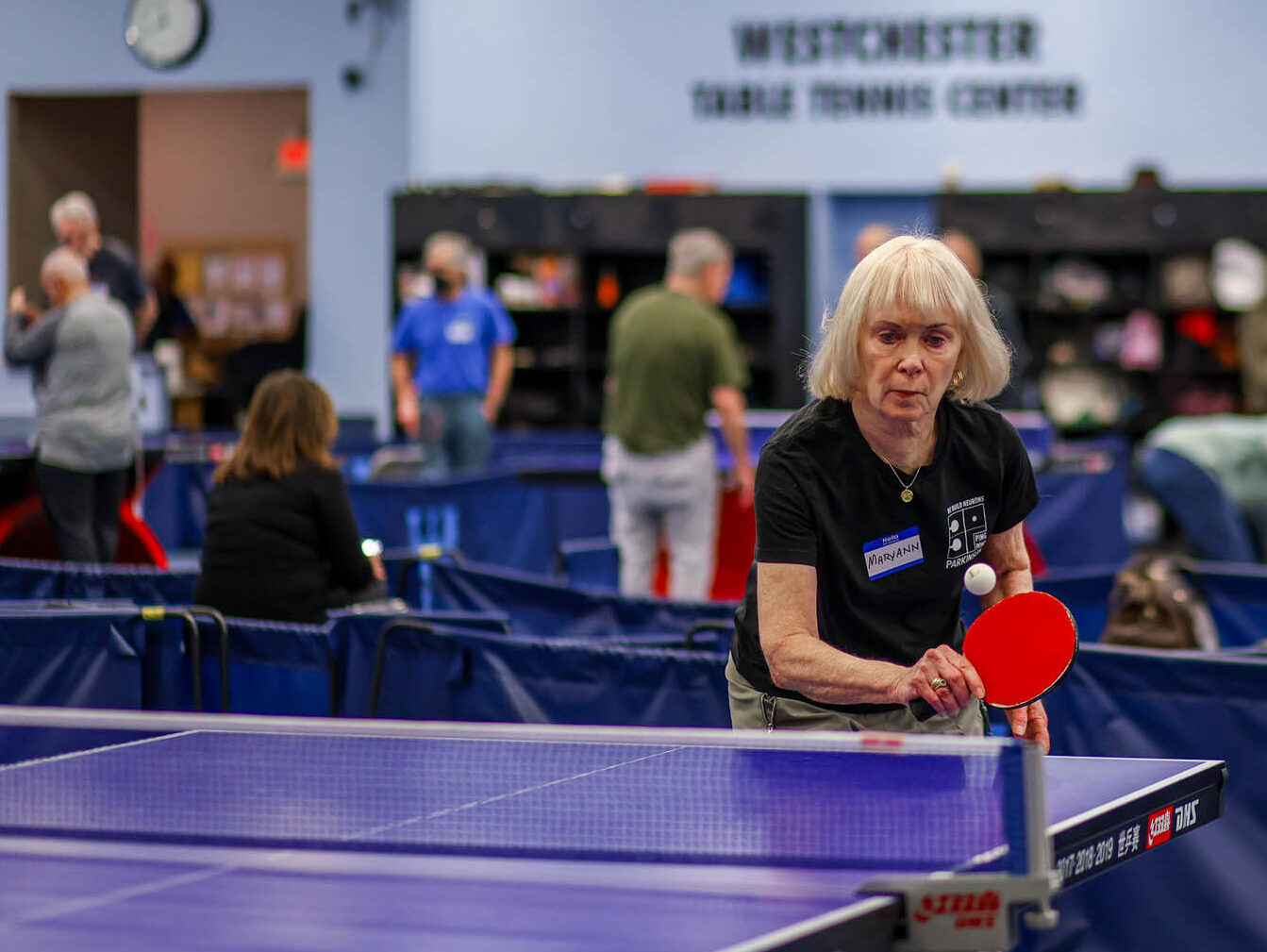
Then, everything changed with a single phone call from Bob Fuhrer, a longtime friend. He invited Bach to play ping-pong at Westchester Table Tennis Center in Pleasantville. Bach enjoyed the game, and he was amazed at how quickly the session flew by. Bach soon realized that ping-pong was doing more than lifting his spirits—it was improving his coordination and motor skills while challenging his brain. “I noticed it was reducing my symptoms,” he says. That progress encouraged him to keep playing and make ping-pong a regular commitment.
Bach’s experience isn’t unique. Dr. Anna Holer, chair of neurology at Northern Westchester Hospital and the chief of neurology at Phelps Hospital, explains that high-intensity activities like ping-pong can improve Parkinson’s symptoms. “There has been a lot of research on exercise, both cognitive and physical, with Parkinson’s,” she says. “Early studies indicated that dopamine levels stabilize or even improve in patients who participate in what we call high-intensity activities. Ping-pong features a lot of visual stimuli and involves quick movements; it engages fast-twitch muscles, balances slow-twitch muscles, and requires cognitive processing, all of which lead to a significantly higher level of networking in the brain.”
Inspired, Bach reached out to Will Shortz, owner of Westchester Table Tennis Center, to help create regular get-togethers for people with PD, which has developed into an international organization called PingPongParkinson (PPP). Though initially skeptical, Shortz says, “I decided to give it a try after seeing the positive impact it had on Bach. I thought if it helped him, it could also help others.” To help promote the event and draw attention, Bach reached out to several local newspapers. On March 1, 2017, roughly six people showed up to the first PPP session, and the group began to build over time. Today, there are more than 50 regulars in the Pleasantville chapter. Organizers also encourage family members, caregivers and general volunteers to participate in the weekly sessions, and they welcome drop-ins from people traveling in the area.
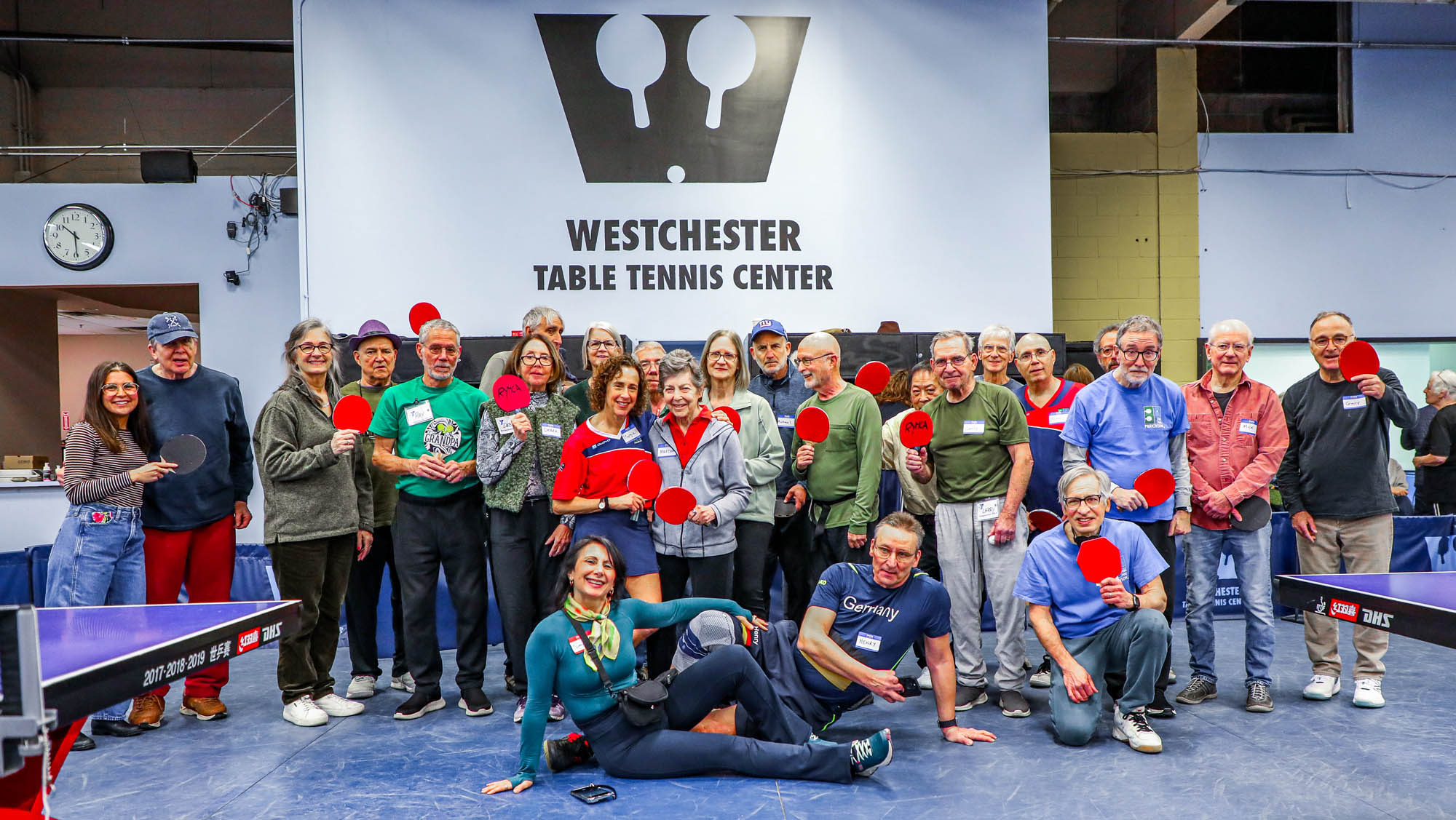
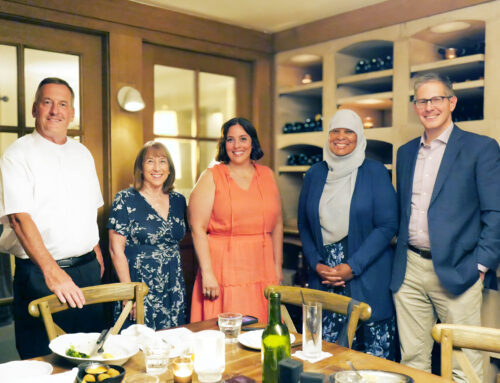
Participants at the 2026 PingPongParkinson New York Open, posing at the Westchester Table Tennis Center.
Growing a movement
What began as a local effort to share how table tennis could help improve symptoms for his “brothers and sisters with PD,” quickly grew into a global movement. In 2019, another chapter was created in Westwood, New Jersey, which Bach says was organized by neurologist Dr. Elana Clar and neuropsychologist Elizabeth Kera, Ph.D. Soon, chapters began to pop up across the country, in cities like Atlanta, Boston, Chicago, Philadelphia, and more.
And in early 2020, just before the pandemic shut the world down, Thorsten Boomhuis and Harry Wissler launched a chapter in Germany, transforming PPP into a global mission. “I really do not know how PPP grew to become a worldwide phenomenon,” says Bach. “I think it’s because people find the sessions effective, the community supportive and the overall experience transformative and meaningful.”
Today, there are approximately 500 chapters across 35 countries, including Canada, Australia, New Zealand and Africa, as well as in Europe and Asia; no chapter charges a membership fee. “Having Parkinson’s can be expensive,” Bach explains. “We wanted to keep the barriers to participation as low as possible.” So, PPP strives to find donors who can cover the expenses of running programs, renting space, hiring coaches and providing proper equipment for players.
In October 2019, just two years after the organization began, Bach held the first PingPongParkinson World Championship event, featuring three days of “healthy competition and camaraderie.” “I wanted to try something inclusive, fun and challenging,” Bach explains. This year’s event (the seventh—they held a virtual championship during the pandemic) will take place in Hanover, Germany, in late September. And clubs in various countries have held country-wide tournaments throughout the years; there have been German Opens and New Zealand Opens. Last year was the inaugural PingPongParkinson French Open, which will be held again this year in Le Mans, France, in mid-September. And the first Mediterranean Games will take place in Malta at the end of June.
Bach is actively working to remove barriers and reduce obstacles for people with Parkinson’s in the sports community, including advocating for athletes with Parkinson’s to be included in the Paralympic Games. “We at PingPongParkinson are proving we can do it,” says Bach. “Maybe one day that decision will change.”
Local love
The local PPP group, which is run by a core team when Bach is traveling, meets every Wednesday from 7 to 8:30 p.m. at the Westchester Table Tennis Center. These meetings have become so much more than just a game.
Wanda Levinsohn of White Plains, who received her diagnosis in 2016, joined in November 2025 after her husband’s cousin in California told her about the group. Since then, Levinsohn has formed new friendships and says she’s drawn to the “fun connection and warm environment,” adding that being surrounded by her peers helps her feel less alone because “everyone is accepting and interested in how I am doing.”
There’s a recommended structure for each 90-minute session, developed by Bach and Dr. Art Dubow through significant research, reading, discussions and feedback from participants. This can include warm-ups using light weights to help protect muscle mass; coordination, balance and vocal exercises; music; and group interaction, all of which encourage mobility. In Pleasantville, participants begin the evening by introducing themselves, then move into light exercise and rhythmic movement. “We concluded this warm-up routine is the best option because it’s always challenging and working different parts of the body,” Bach explains. “It’s table tennis specific; it’s Parkinson specific; and it is a reliable, well-rounded exercise warm-up.”
Next, PD patients play ping-pong in groups that can include family members, caregivers and volunteers. Pleasantville resident Margie Alle credits PPP and the sport with helping to slow her symptoms, noting that constant decision-making, tracking the ball’s movements, anticipating shots and improving movement have helped her build new neural pathways. In fact, she won the first-ever Women’s Singles gold medal at the International Table Tennis Federation (ITTF) Parkinson World Table Tennis Championships in 2019.
At the end of each session, everyone regroups for activities like juggling colorful scarves, counting aloud and singing together, all of which are designed to improve coordination, movement and cognitive engagement. John Spring of Montrose, who has been playing with the group since his diagnosis four years ago, says using his hands and reflexes during ping-pong matches has helped him with coordination. He also credits PPP with “slowing the progression of my Parkinson’s” and says the singing, which he enjoys, is improving his speech.
PD can impact an individual’s communication skills, causing slurred speech, decreased volume and difficulty articulating words. But according to Parkinson’s NSW, singing strengthens vocal muscles, improves breath control and increases voice loudness as well as stability.
“Singing is also beneficial for people with Parkinson’s and many other neurological and debilitating conditions thanks to its physical and emotional benefits,” Bach explains. “In fact, there are many Parkinson’s choirs around the world.”
Bach says the songs selected for PPP sessions are uplifting, meaningful and simply fun. They also encourage people to express themselves so they feel connected to each other while helping with articulation. “We challenge the brain in many ways by mixing it up because novelty is a trigger for neuroplasticity,” Bach explains. “When the brain encounters something unusual, it has to adapt. So someone could use their left hand for a change or try juggling. We keep people engaged and help take away the fear of Parkinson’s.” He says many people report finding more joy and purpose in life or that PPP has transformed their lives.
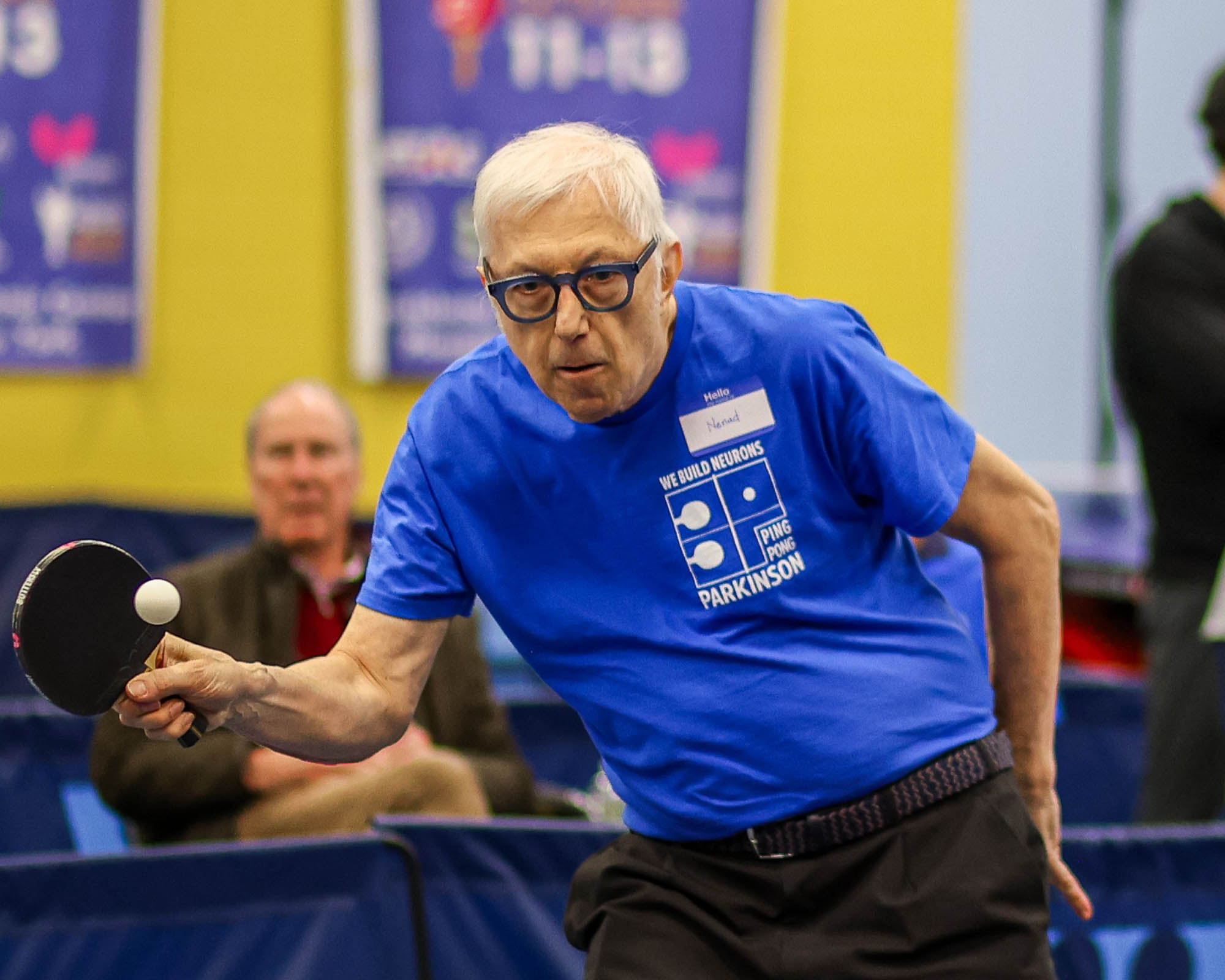
Nenad Bach, PingPongParkinson founder & board member.
Changing lives, including his own
PPP is the miracle Bach himself was looking for. Even though he travels around the world, he makes it a point to play ping-pong at least three days a week. Many weeks, he’ll play six or seven times before taking a day or two off. In March, he participated in Sports Day, an event to encourage sports and social contact for people with Parkinson’s, which was hosted by ProParkinson SK, a Slovakian nonprofit. Bach was a special guest. Sixteen of the 50 Sports Day participants played in the table tennis tournament.
Although Bach lost two games and won one, he says, “I had a great time taking part in the tournament and challenging myself against better players.” In addition to ping-pong, Bach is now recording his eighth album, “Forgotten Songs”—it’s filled with songs he wrote but never recorded, as well as some newly written and recorded songs.
What began as a simple game has grown into something far more powerful: a way for people living with PD to move more freely and experience more stability and ease of movement as well as rediscover joy. “I believed I had something meaningful to share,” Bach says.
Through PPP, people with Parkinson’s are learning that their diagnosis doesn’t mean giving up a full, vibrant life. They’re having fun and laughing, one serve at a time.
This article was edited by Julie Schwietert Collazo and Isabaella Aranda Garcia. It was fact-checked by Virna Sandler. The photographer took photos using Canon optics, and they were processed using Adobe Creative Suite.
This article was published in the May/June 2026 edition of Connect to Northern Westchester.
Ilyssa Panitz
This Rye Brook resident built a reputation for interviewing many Hollywood stars for TV, radio, print & online in addition to covering stories on pets, lifestyle, relationships & women’s issues. She also created a divorce journalism platform, comprised of various columns, a TV series & hosting a weekly radio show.